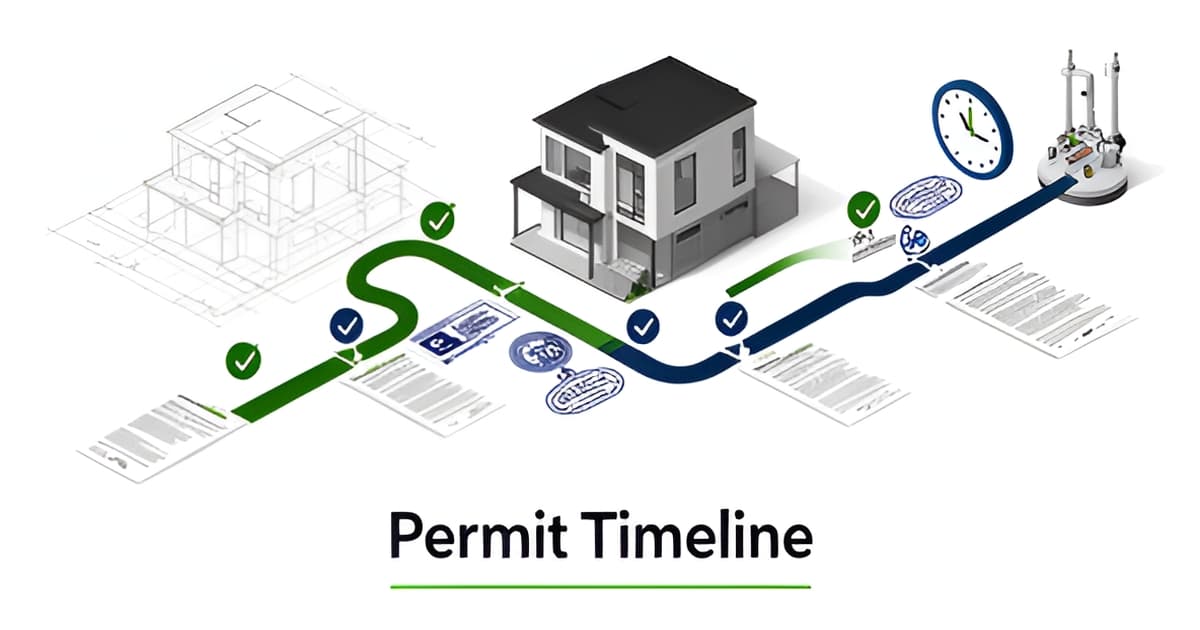
ADU Permit Process in California: Timeline and Approval Steps
Key Facts
- California's 60-day ADU permit clock starts only after the city confirms your application is complete — not when you submit it, per practitioner analysis.
- An incomplete ADU application costs 3–6 weeks per rejection, according to LA-area permitting data.
- One Van Nuys ADU project lost 12 weeks to two completeness rejections before its 60-day review clock even started, documented by permit practitioners.
- ADU plan-check corrections run 1–3 rounds, each adding 2–4 weeks to the timeline, practitioner data shows.
- Fire-zone routing adds a separate 2–6 week Fire Department review — one Sunland-Tujunga project stretched to roughly nine months, a documented case study.
- LADWP utility connection queues run 4–12 weeks and operate entirely outside California's 60-day permit rule, according to practitioner analysis.
- A Castro Valley ADU with complete, code-checked plans won planning approval in one week and a building permit in about four months, its permitting team reports.
The 60-Day Myth: Why ADU Permits Take Longer Than Promised
California law promises a 60-day review of your ADU permit application — but ask any homeowner who has actually gone through the process, and you'll hear a very different number. The gap between the statute and reality comes down to one detail most applicants miss.
Under Government Code §65852.2, local agencies must act on a complete ADU application within 60 days. The catch, according to practitioner analysis of LA-area permitting, is that the clock starts only when the building department officially confirms completeness — not the day you submit. A missing soils report, title block, or energy compliance sheet sends the package back without ever entering the review queue.
The hidden delays stack up quickly:
- Incompleteness rejections add 3–6 weeks per return, and a resubmission restarts the queue
- Plan-check corrections run 1–3 rounds, each adding 2–4 weeks
- Very High Fire Hazard Severity Zone routing triggers a separate fire department review of 2–6 weeks
- Utility connection queues — LADWP alone runs 4–12 weeks — operate entirely outside the 60-day rule
One documented Sunland-Tujunga project illustrates the worst case: fire-zone routing plus fire-hardening corrections stretched the timeline to roughly nine months. In Van Nuys, two completeness returns burned 12 weeks before the 60-day clock even started. And in Reseda, a finished ADU sat uninhabited for eight weeks waiting on a utility appointment after the certificate of occupancy was issued.
Preparation quality is the clearest differentiator. A Castro Valley project with complete, code-checked plans reached building permit approval in about four months, with planning sign-off in just one week, as one case study documents. The lesson: the 60-day rule has never guaranteed the full filing-to-occupancy timeline — it covers only the building department's plan check.
For Altadena homeowners, especially those navigating fire-zone requirements after recent wildfire damage, working with a builder who understands submittal checklists and correction deadlines matters enormously. Confirming fire zone status before drawings are finalized is one of the most avoidable delays practitioners identify. Before hiring anyone, verify their credentials — the Altadena Builder Directory offers a free CSLB license-lookup tool, and every listing in the registry is license-verified against the California Contractors State License Board.
The Four Delay Triggers (and How Preparation Eliminates Them)
Most ADU delays in California don't come from slow city departments — they come from four predictable, preventable mistakes applicants make before and during review. Understanding them is the difference between a four-month permit and a nine-month ordeal.
Trigger 1: Filing an incomplete package. The 60-day statutory review clock under Government Code §65852.2 only starts once a jurisdiction confirms your application is complete, not the day you submit. According to ADU permit practitioners, a missing soils report, title block, or energy compliance sheet sends the package back without ever entering the review queue — costing 3–6 weeks per return. A Van Nuys project lost 12 weeks to two completeness rejections before its clock even started.
Trigger 2: Unconfirmed fire zone status. Properties in Very High Fire Hazard Severity Zones (VHFHSZ) trigger a separate fire department review adding 2–6 weeks, plus fire-hardened material requirements. In one documented Sunland-Tujunga case, late fire-zone routing and fire-hardening corrections stretched the project to roughly nine months. Confirming VHFHSZ status before drawings are finalized eliminates this entirely — a critical step for hillside communities like Altadena.
Trigger 3: Slow correction responses. Plan-check corrections are the norm, not the exception — 1–3 rounds are typical, each adding 2–4 weeks. Miss the response deadline and the application drops back into the general review queue, adding a minimum of 2–3 more weeks. As one permit manager put it, treating that deadline as flexible is one of the most common avoidable delays.
Trigger 4: Late utility applications. LADWP, LAFD, and SoCalGas run on independent schedules outside the 60-day rule. LADWP connection queues run 4–12 weeks after permit issuance; a Resenda project waited 8 weeks for power even after receiving its certificate of occupancy. File utility applications the day the permit issues.
The contrast between two real projects proves preparation — not luck — drives the timeline:
- Sunland-Tujunga: fire-zone routing discovered late, plus hardening corrections — ~9 months total
- Van Nuys: two completeness rejections — 12 weeks lost before review began
- Castro Valley: complete plans and upfront code checks — planning approval in one week, building permit in ~4 months
The Castro Valley project, documented by its permitting team, succeeded because comprehensive, code-compliant plans were in place before submittal — the same factor ADU advisors identify as the single most important step to prevent rejections.
Working with a builder who understands these triggers matters. The Altadena Builder Directory lists license-verified ADU builders and design-build firms, each checked against CSLB records, so you can confirm your team's credentials before entrusting them with your permit package.
Your Step-by-Step ADU Permit Timeline, From Plans to Utility Connection
The difference between a 4-month ADU permit and a 9-month ordeal rarely comes down to luck — it comes down to sequence. Follow this roadmap and you control the levers that matter.
Step 1: Verify completeness before you file. California's 60-day review clock under Government Code §65852.2 starts only when the jurisdiction confirms your application is complete, not the day you submit it. According to permit-management practitioners, a missing soils report, title block, or energy compliance sheet triggers a return costing 3–6 weeks — one Van Nuys project lost 12 weeks to two completeness rejections before its clock even started.
Step 2: Confirm fire zone status before drawings are finalized. If your parcel sits in a Very High Fire Hazard Severity Zone, expect a separate Fire Department review adding 2–6 weeks plus fire-hardened material requirements. Discovering this late drove one Sunland-Tujunga project to roughly 9 months total — a delay that's fully avoidable with an early zone check.
Step 3: Respond to corrections immediately. Plan-check corrections are the norm, not the exception — expect 1–3 rounds at 2–4 weeks each. Missing a response deadline sends your application back to the general queue for a minimum of 2–3 additional weeks.
Step 4: File utility applications at permit issuance. This is where many timelines quietly collapse:
- LADWP connection queues run 4–12 weeks after permit issuance
- SoCalGas connections add another 2–6 weeks
- These utilities operate entirely outside the 60-day statutory review obligation
- A Reseda project waited 8 weeks for a power appointment even after receiving its certificate of occupancy
File the day your permit issues and the utility queue runs parallel to construction instead of after it.
The acceleration option: pre-approved plans. LA County's Standard ADU Plans Program offers free, pre-approved catalog plans plus a Private Designer Catalog, explicitly designed to speed review and approval. A well-prepared Alameda County project using thorough upfront design reached building permit approval in about 4 months, with planning approval in just one week — proof that preparation quality, not jurisdiction luck, drives outcomes.
Before engaging any design-build help, run the contractor through the free CSLB license-lookup tool on the Altadena Builder Directory — every listing there is license-verified against the California Contractors State License Board. Verification takes minutes; a bad hire costs months.
Choosing the Right Builder: License Verification Before You Sign
The contractor you sign with will shape your permit timeline as much as the building department does. That's because the most common ADU delays — incomplete submissions, missed correction deadlines, late fire-zone discoveries — are preparation failures, not bureaucracy failures.
Consider the numbers. According to practitioner data on ADU permit delays, incompleteness rejections cost 3–6 weeks per return, and the 60-day review clock under Government Code §65852.2 doesn't even start until a package is confirmed complete. Plan-check corrections are the norm, not the exception: 1–3 rounds are typical, each adding 2–4 weeks. An experienced design-build firm anticipates these cycles and builds them into both the plans and the schedule.
The best firms also confirm fire zone status before drawings are finalized. Properties in Very High Fire Hazard Severity Zones trigger a separate Fire Department review adding 2–6 weeks, plus fire-hardened material requirements — a factor that drove one documented Sunland-Tujunga project to roughly nine months total. Discovering your lot sits in a fire zone after the plans are done is among the most expensive mistakes an ADU applicant can make.
When evaluating builders, ask how they handle the permit phase specifically:
- How many correction rounds do they typically see, and who responds to correction notices — them or you?
- Do they confirm VHFHSZ fire zone status before finalizing drawings?
- Will they assemble the complete submittal package — soils report, energy compliance, structural calcs — before filing?
- Do they start utility applications at permit issuance rather than after construction?
Their answers reveal whether they've been through the process or are learning on your dime.
Before you sign anything, verify the license. California makes this free and fast through the Contractors State License Board lookup, where you can confirm a contractor's license number, classification, and bond status in minutes. A permitting guide from ADU industry advisors echoes the same principle on the design side: comprehensive, code-compliant plans upfront are the single most important step in avoiding rejections — and only a legitimately licensed firm can be held accountable for delivering them.
The Altadena Builder Directory simplifies this step: every listing is license-verified against CSLB records before it appears, so the verification work is already done. The directory's free CSLB lookup tool also lets you independently check any California contractor — including firms you find elsewhere. Featured placements, such as JMB Builders LLC (CSLB #1103479), are always labeled as paid, so you know exactly what you're looking at. Ratings come only from real, attributed public sources, never paid rankings.
A verified, experienced builder won't eliminate correction cycles — those are part of the process. But they will keep a two-round correction from becoming a six-month stall.
ctaText: Browse the Altadena Builder Directory — every ADU builder listing is license-verified against CSLB records before it appears.
socialProofText: Every listing in the Altadena Builder Directory carries a verification seal once its license is confirmed against California CSLB records — no paid rankings, clearly labeled featured placements.
Frequently Asked Questions
Does California really have to approve my ADU permit in 60 days?
Why did my ADU permit application get rejected before it was even reviewed?
How long does the whole ADU permit process actually take in California?
What can I do to speed up my ADU permit approval?
My ADU permit was approved — why can't I move in yet?
How many rounds of plan corrections should I expect on my ADU permit?
The Clock Is in Your Hands: Preparation Beats the Permit Lottery
California's 60-day ADU review promise is real — but it only covers the building department's plan check, and only after your package is confirmed complete. As practitioner case studies show, incompleteness rejections, fire-zone routing, correction cycles, and utility queues can stretch a filing-to-occupancy timeline to nine months, while a well-prepared project like Castro Valley's reached building permit approval in about four months. The difference isn't luck or jurisdiction — it's preparation: complete submittal packages, early fire-zone confirmation, prompt correction responses, and utility applications filed the day the permit issues. Your next steps are straightforward: pull your jurisdiction's submittal checklist, verify your VHFHSZ status before drawings are finalized, and ask any prospective builder exactly how they handle the permit phase. Before you sign, confirm their credentials — the Altadena Builder Directory's free CSLB license-lookup tool lets you verify any California contractor in minutes, and every listing in the registry is already license-verified. A few minutes of verification now can save you months of avoidable delay.