ADU Setbacks in LA County: Rear Yard Rules Explained
Key Facts
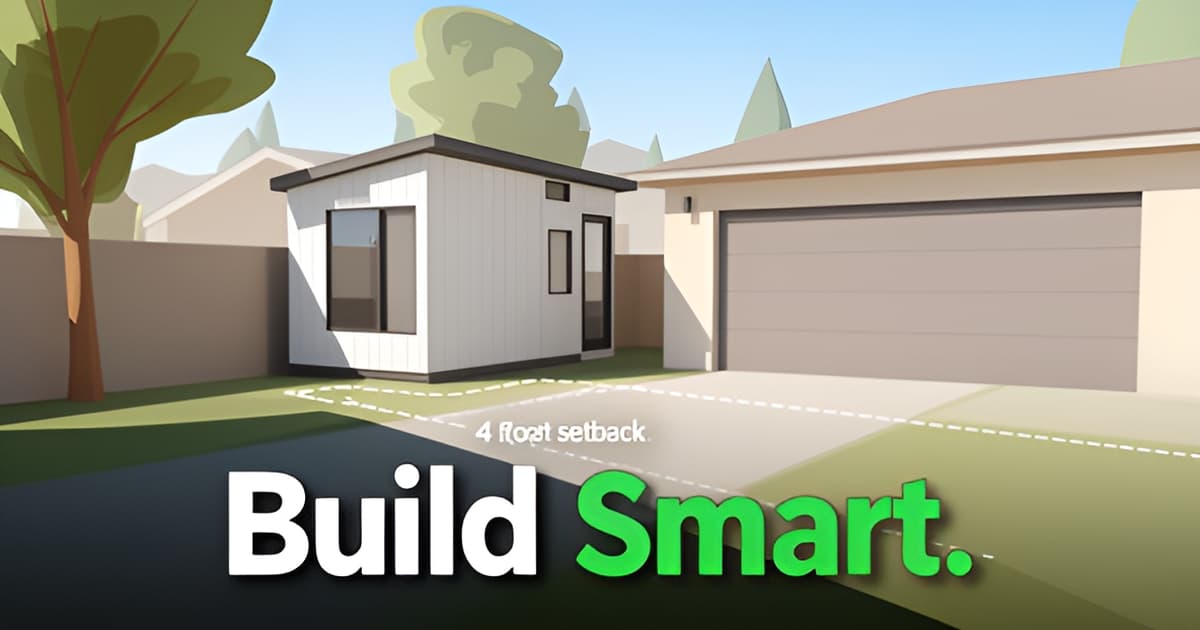
- California state law caps side and rear ADU setbacks at just 4 feet for new construction, and cities generally cannot require more, per state setback guidance.
- Garage and existing-structure conversions qualify for zero setbacks — even if the building already encroached on the property line — per ADU zoning analysis.
- ADUs accounted for 37% of all new homes in LA County in 2025, according to ADU industry data.
- Altadena approved 458 granny flats between 2017 and 2022, per Altadena Heritage.
- LA County contains 88 separate cities, each with its own planning department — so ADU rules vary dramatically by jurisdiction, per ADU permit research.
- Most LA ADU permits take 4–6 months, stretching to roughly 9 when easements or utility site visits are involved, per contractor experience.
- Garage conversions cost roughly $100,000 versus $220,000–$400,000 for new detached ADU construction, per LA ADU zoning data.
The Setback Confusion Facing Altadena Homeowners
If you've started researching ADU setbacks for your Altadena property, you've probably hit the same wall as everyone else: one website says you need 20 feet from the rear lot line, another says 4 feet, and a neighbor swears his garage conversion needed nothing at all. That confusion isn't your imagination — it's the predictable result of building in a county with no single rulebook.
Here's the core problem: Los Angeles County contains 88 separate cities, each running its own planning department, plus vast unincorporated areas governed by County rules. The City of LA operates under its own ADU ordinance, Ordinance 186,481, while unincorporated communities like Altadena fall under County Ordinance 2020-0059, reviewed by Regional Planning and the Department of Building & Safety. A rule you read about a Pasadena or Long Beach project may simply not apply to your lot — or it may, and you won't know which until you're deep into the process.
For most Altadena lots, the rear yard is the only realistic place for a detached ADU. Front setbacks typically run 15–25 feet per the underlying zone, which often eliminates the front of the property entirely. That leaves the space between your house and the rear lot line — and the setback rules governing that strip determine whether your project is even possible.
Homeowners on smaller lots fear the math won't work: if the rear setback were 15 or 20 feet, a modest lot might have no buildable depth left. That fear drives a lot of abandoned plans before anyone talks to a planner. And the stakes are real, because local demand is enormous:
- 458 granny flats were approved in Altadena between 2017 and 2022
- ADUs accounted for 37% of all new homes in LA County in 2025
- Permit timelines in LA typically run 4–6 months, stretching toward 9 when easements or review boards get involved
The single most important fact — and the one most conflicting advice obscures — is that California state law caps side and rear ADU setbacks at 4 feet for new construction, and cities generally cannot require more. Local ordinances can add conditions, but they cannot use a rear-yard rule to block a compliant 800-square-foot state-law ADU. Even better, conversions of legal existing structures can qualify for zero setbacks, including garages that already sit close to a property line.
That means the "my lot is too small" assumption is usually wrong. The real risks are subtler: utility easements along rear lines, fire-rated wall requirements within 5 feet of a property line, and measuring to the surveyed line rather than the fence. Before you rule your yard out — or hire anyone — it's worth verifying what your lot actually allows. The Altadena Builder Directory lists ADU builders serving the area, each license-verified against the CSLB, so you can confirm credentials before a single plan gets drawn.
The 4-Foot Rule: How State Law Overrides Local Setbacks
If a city planner tells you your ADU needs to sit ten feet off the rear lot line, state law says otherwise. California's ADU statute — Gov. Code §65852.2, renumbered by SB 477 effective March 25, 2024, per the state HCD — caps side and rear setbacks at 4 feet for new construction, and cities generally cannot require more.
The protection goes further than the setback itself. No floor-area, lot-coverage, open-space, or lot-size rule can block an 800 sq ft state-law ADU placed with 4-foot side and rear setbacks, under Gov. Code 66321(b)(3) and LAMC 12.22 A.33(c)(1)(iii), as ADU zoning analysis documents. That guarantee applies whether you're in the City of LA or unincorporated LA County — including Altadena, where 458 granny flats were approved between 2017 and 2022, according to Altadena Heritage.
Conversions escape the setback question entirely. Legal existing structures converted to ADUs — garages, accessory buildings — can have zero setbacks, even if the structure already encroached on the property line when built. Zero setbacks also apply to rebuilds in the same location and dimensions (LAMC 12.22 A.33(c)(8); Gov. Code 66323(a)(2)). For Altadena homeowners rebuilding after the fires, or working with an older garage sitting close to the lot line, this is often the fastest and cheapest path — a garage conversion runs roughly $100,000 versus $220,000–$400,000 for new construction at $300–$500 per square foot.
Local control survives in two places:
- Front setbacks stay local — typically 15–25 feet per the underlying zone, and state preemption does not apply there.
- Second-story ADUs can face up to 5 additional feet of required setback.
- ADUs within 5 feet of a property line may need 1-hour fire-rated exterior walls.
One practical caution: measure to the actual surveyed lot line, not the fence. As Vision ADU puts it, "Always measure to the actual surveyed line, not to the fence. Mistakes here cause permit denials."
The 4-foot rule tells you where your ADU can sit — but utility easements along rear lines and fire-rating triggers still shape real-world placement. Before you commit to a floor plan, run it past a contractor who knows the local ordinance; the Altadena Builder Directory lists ADU builders and fire-rebuild specialists, every one license-verified against the CSLB, so you can confirm credentials before the first site visit.
The Hidden Constraints Setbacks Don't Capture
Clearing the 4-foot setback hurdle is only half the battle. The rear yard hides a second layer of constraints that no setback chart will show you — and these are the ones that actually derail projects.
Utility easements are the biggest silent killer. Power lines frequently run along rear and side property lines, and building within an easement requires a special permit from the utility company. According to contractor Avi Levi, whose firm has completed over 180 ADUs, "If we have an easement, an architects' review board, or a public utility... that needs to physically go to the property, immediately you're looking at nine months" — well beyond the typical 4–6 month permit timeline.
Then there's fire safety. ADUs built within 5 feet of a property line may trigger a 1-hour fire-rated exterior wall requirement, per state setback guidance. That means added material costs and construction complexity if you're maximizing the 4-foot rear setback.
Watch for these other rear-yard traps:
- Eave overhangs count toward setbacks in many cities, though eaves can typically extend 2 feet into a required setback — plan your roofline accordingly.
- Measure to the surveyed property line, never to the fence. As practical guidance warns, "Mistakes here cause permit denials."
- Second stories may add up to 5 feet of required setback in some jurisdictions.
Where you live inside LA County also matters enormously. The County contains 88 separate cities, each with its own planning department, so permitting experiences vary greatly by jurisdiction. City of LA projects follow LAMC 12.22A.33 under Ordinance 186,481, while unincorporated areas like Altadena fall under Ordinance 2020-0059, with zoning review handled by Regional Planning and building-code review by the Department of Building & Safety — two separate agencies that must both approve your plans.
One cautionary tale from a licensed general contractor: the City of LA once required a demolition permit for a garage that no longer existed, based on 1914 building permits, plus a mandatory 30-day neighbor notification within 500 feet. An inexperienced designer unfamiliar with local ordinances "can add months to your project timeline."
This is why experienced local help pays for itself. Before hiring anyone, verify credentials through the Altadena Builder Directory's free CSLB license-lookup tool — every listing in the registry is license-verified against the California Contractors State License Board, so you can confirm your builder is qualified to navigate these exact pitfalls.
From Setback Check to Shovel in the Ground
Knowing the 4-foot rule is one thing; getting a shovel in the ground is where most ADU projects actually succeed or stall. The gap between reading the code and passing plan check is filled with surveyed lot lines, easement surprises, and a realistic sense of what your jurisdiction can process — and how fast.
Start with the lot itself. As one ADU guide bluntly puts it: measure to the actual surveyed line, not to the fence, because mistakes here cause permit denials. Fences drift over decades, and your 4-foot rear setback is measured from the legal lot line, not where the fence happens to stand today.
Check for easements before you draw a single wall. Power lines running along rear and side property lines often carry utility easements, and building within one requires a special permit from the utility — a complication that can add months. Contractor Avi Levi, who has completed more than 180 ADUs, warns that an easement, a review board, or a utility site visit can push timelines to roughly nine months.
Your next decision shapes everything downstream:
- New detached build — 4-foot side and rear setbacks under state law, at $220,000–$400,000 ($300–$500/sq ft) per LA ADU zoning data.
- Garage conversion — zero setbacks required, roughly $100,000, and often the fastest path on a typical lot.
Budget realistically either way. CalHFA offers grants of up to $40,000 toward pre-development and closing costs, and experienced builders recommend holding a 10–15% contingency. An ADU is a new housing development, not a garage remodel — plan accordingly.
On permitting, expect 4–6 months for most ADU permits in LA, even though state law now requires ministerial approval within 60 days under SB 543. Understaffed departments routinely miss the deadline, so build slack into your calendar. One caution from a licensed general contractor: an inexperienced designer unfamiliar with the local ADU ordinance can add months to your timeline. Given that Altadena alone saw 458 granny flats approved between 2017 and 2022, plenty of local designers know the county's process — the Altadena Builder Directory lists license-verified ADU builders and design-build firms, each checked against CSLB records, so you can confirm credentials before signing anything.
Build With a License-Verified Altadena Contractor
You've mapped your setbacks, checked your easements, and confirmed the 4-foot rule applies to your lot. The last variable in a compliant rear-yard ADU is the builder you hand the plans to — and in a county with 88 separate permitting jurisdictions, the wrong contractor can add months to your timeline.
The stakes are real. ADUs accounted for 37% of all new homes in LA County in 2025, and Altadena alone saw 458 granny flats approved between 2017 and 2022. Demand has drawn plenty of builders into the market — not all of them licensed, and not all of them familiar with rear-yard ADU nuances like fire-rated walls within 5 feet of a property line or utility easements along rear lot lines.
That's why the Altadena Builder Directory verifies every listing against the California Contractors State License Board before it appears. Once a license match is confirmed, the listing displays a verification seal, and ratings come only from real, attributed public sources — never paid rankings. Before you sign anything, check any California contractor yourself using the free CSLB license-lookup tool.
What a license-verified local builder brings to a rear-yard ADU:
- Experience navigating LA County's dual review process — Regional Planning for zoning and Building & Safety for code compliance
- Familiarity with rear-lot pitfalls: easements, fire-rating triggers, and eave measurement rules that catch inexperienced builders off guard
- Realistic timelines — most LA ADU permits take 4–6 months, and roughly nine when easements or utility site visits enter the picture
- Budget discipline, including the 10–15% contingency experienced builders recommend for surprises behind a fence line
One contractor currently featured in the directory — clearly labeled as a paid placement — is JMB Builders LLC (CSLB #1103479). You can verify that license number yourself through the CSLB lookup tool, the same way the directory does.
The featured placement is always labeled, so you always know what's editorial and what's sponsored. What never changes is the baseline: every listing is license-verified against CSLB before it earns a spot. For a project where a few feet of setback can make or break permit approval, that verification is the final step in building compliant.
Frequently Asked Questions
What is the maximum rear setback for a new ADU in Altadena or LA County?
Do I need any setback at all if I convert my garage into an ADU?
Why do different websites give conflicting setback numbers for LA County ADUs?
My lot is small — will a rear setback make my ADU impossible?
What hidden issues besides setbacks can derail a rear-yard ADU?
Should I measure my rear setback from my fence or the actual property line?
Your Rear Yard Is More Buildable Than You Think — Verify Before You Build
The confusion around ADU setbacks in Altadena comes down to one fact: LA County contains 88 separate cities, each with its own planning rules — but California state law cuts through all of it. For new construction, side and rear setbacks are capped at 4 feet, and no local floor-area or lot-size rule can block a compliant 800-square-foot ADU. Conversions of existing garages can qualify for zero setbacks, often making them the fastest, cheapest path at roughly $100,000 versus $220,000–$400,000 for new builds. The real risks are subtler: utility easements along rear lines, fire-rated wall triggers within 5 feet of a property line, and measuring to the surveyed lot line rather than the fence. Your next steps: confirm your lot lines, check for easements, and choose between a conversion and a new build. Then find a builder who knows Altadena's dual-review process. The Altadena Builder Directory lists ADU builders serving the area, every one license-verified against the CSLB — so you can confirm credentials before the first plan gets drawn.