Altadena ADU Builder Selection: Site Constraints That Change Your Bid
Key Facts
- Hillside lots and wildfire zones add 10–15% to ADU costs in comparable markets, per Bay Area cost research.
- Hillside foundations run $20,000–$40,000 versus $15,000–$20,000 for a standard flatland slab, according to Saratoga cost analysis.
- Retaining walls on sloped lots can add $15,000–$40,000, with full hillside site prep reaching $50,000, per hillside ADU benchmarks.
- Wildfire-zone (WUI) compliance adds $10,000–$25,000 for detached ADUs and is legally enforced during plan check, per cost breakdowns.
- An estimated 78% of contractors won't mention site prep, permit surprises, or delay penalties upfront, per hidden-cost analysis.
- Utility connections range $5,000–$25,000, with distance from the main house the key cost variable, according to hillside cost research.
- Roughly 40% of lots in comparable hillside communities need $15,000–$30,000 in soil stabilization, per ADU cost research.
Why Two Bids for the Same ADU Can Differ by Tens of Thousands
You collect three bids for the same 750-square-foot detached ADU, and the spread between the highest and lowest is $60,000. Before assuming someone is overcharging, look at what each bid actually includes — because on an Altadena lot, the site itself can swing the price more than the floor plan ever will.
Altadena's hillside terrain and wildfire exposure create exactly the conditions that make ADU bids diverge. In comparable hillside, fire-prone markets like Saratoga, California, ADU costs run 10–15% above regional averages due to hillside site work, fire-zone compliance, and design review standards, per detailed ADU cost breakdowns. That premium alone can explain a $30,000 gap on a $300,000 project.
The biggest single variable is often the ground itself. Hillside foundations run $20,000–$40,000 versus roughly $15,000–$20,000 for a standard flatland slab, and retaining walls add another $15,000–$40,000 where grade changes demand them, according to the same Saratoga cost analysis. Expansive soils common in foothill communities can require $10,000–$25,000 in foundation upgrades — costs invisible until a soils report surfaces them.
Utility distance is the silent bid-killer. Connections range from $5,000 to $25,000 depending on how far the ADU sits from the main house, and an ADU 20 feet from the meter costs far less to connect than one 80 feet out at the back of a deep lot. Sewer lateral trenching adds $5,000–$10,000 more, and hillside lots sometimes need pump systems where gravity flow won't work.
Then there's wildfire-zone compliance, which is not negotiable. In comparable fire-prone markets, WUI requirements add $10,000–$25,000 for detached ADUs — Class A roofing, ignition-resistant cladding, ember-resistant vents, tempered glass — and they're enforced during plan check and inspection. Fire-resistant siding alone costs 22% more in wildfire zones, per Bay Area ADU cost research.
Here's the problem: many contractors leave these costs out of the initial number. One contractor source estimates that 78% of contractors won't mention site prep surprises, permit complications, or delay penalties upfront — meaning the lowest bid is frequently the least complete one.
The common hidden line items that separate bids include:
- Grading and retaining walls: $15,000–$40,000 on sloped lots
- Hillside or engineered foundations: $20,000–$40,000
- Utility connections and sewer laterals: $10,000–$35,000 combined
- WUI fire compliance: $10,000–$25,000 for detached units
- Soil stabilization: $15,000–$30,000 on roughly 40% of comparable hillside lots
The fix is to compare bids line by line, not total to total. Ask every bidder to itemize grading, foundation type, utility trenching, and fire compliance — and confirm each contractor's license before trusting their numbers. The Altadena Builder Directory's free CSLB lookup tool lets you verify any California contractor in seconds, so you know who's actually qualified to price your hillside lot accurately.
The Four Site Constraints That Move Your Number: Slope, Soil, Utilities, and Fire Zone
Two ADU bids on identical floor plans can differ by $50,000 or more, and the difference often has nothing to do with the builder's markup. It comes down to what each bidder assumes about your lot — slope, soil, utility distance, and fire zone.
In comparable hillside, fire-prone markets like Saratoga, California, site conditions push ADU costs 10–15% above regional averages, according to hillside-market cost analysis. Altadena homeowners should treat the numbers below as benchmarks from analogous terrain, not Altadena pricing.
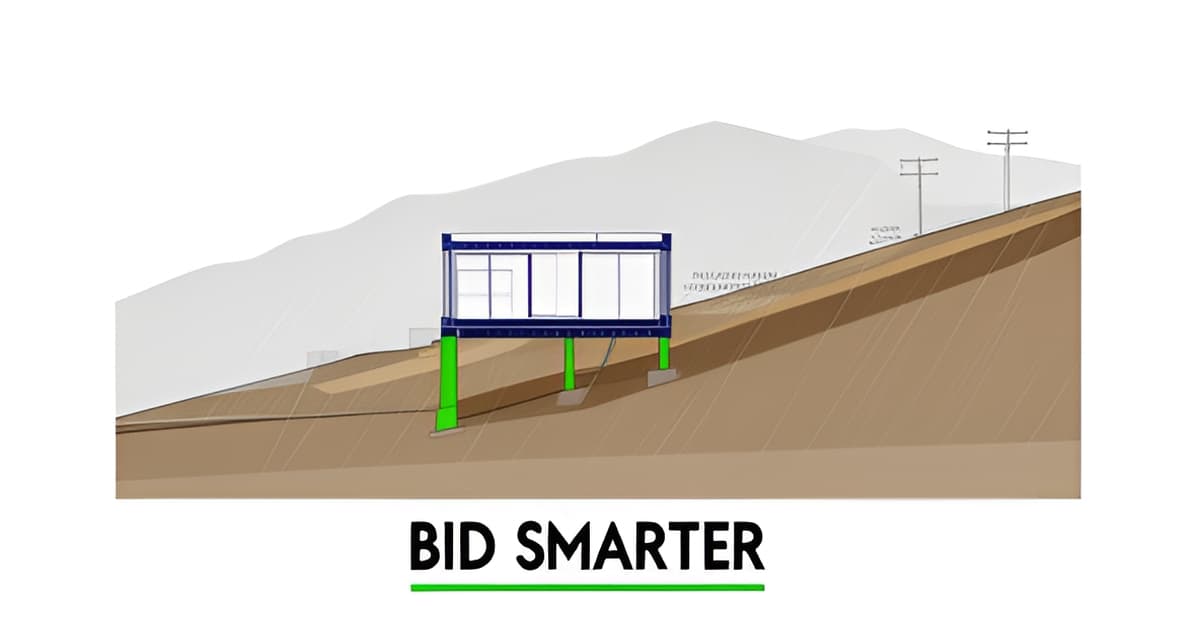
Slope. Grade changes that require retaining walls add $15,000–$40,000, and hillside foundations — raised, pier-and-beam, or engineered slabs — run $20,000–$40,000 versus $15,000–$20,000 for a standard flatland slab. Full hillside site preparation can reach $25,000–$50,000. A builder who assumes flat ground in the bid is guessing.
Soil. Expansive clay may demand post-tensioned slabs or pier foundations, adding $10,000–$25,000. In Saratoga and Los Gatos, an estimated 40% of lots need $15,000–$30,000 in soil stabilization. A geotechnical report costs $3,000–$5,000 and is required for most new construction — getting one before collecting bids prevents every bidder from pricing on assumptions.
Utilities. Connection costs range $5,000–$25,000, with distance as the key variable: an ADU 20 feet from the house costs far less to connect than one 80 feet away at the back of a deep lot. Sewer lateral trenching adds $5,000–$10,000, and hillside lots may need pump systems where gravity flow fails. Measure these distances before requesting bids.
Fire zone. Wildland-urban interface compliance adds $10,000–$25,000 for detached ADUs — Class A roofing, ignition-resistant cladding, ember-resistant vents, tempered glass — and it is required by law and enforced during plan check and inspection. Fire-resistant siding alone costs about 22% more in wildfire zones. A bid that omits these items is incomplete, not cheaper.
Why do bids vary so much on the same lot? One contractor's analysis found that 78% of contractors won't mention site prep, permit surprises, and delay penalties upfront — meaning a low bid may simply exclude retaining walls, trenching, or fire compliance that another bidder included.
- Ask every bidder to itemize grading, foundations, utility connections, and fire-zone compliance separately.
- Order the geotechnical report before the first site visit.
- Flag exact utility and sewer distances in each bid request.
- Verify any contractor's license through the CSLB before signing — the free lookup tool at Altadena Builder Directory attributes license data to the California Contractors State License Board and shows a verification seal once a match is confirmed.
Because ADU feasibility is highly site-specific, builders with documented hillside and fire-zone experience tend to avoid the costly design-review revision cycles that generalists trigger, per ADU-specialist commentary. Every listing in the Altadena Builder Directory registry is license-verified against CSLB, including featured (labeled paid) placement JMB Builders LLC, CSLB #1103479 — so you can compare bids knowing each contractor's license checks out.
How to Read a Bid Like a Builder: Line-Item Comparison on Site Work
The cheapest bid is often the most expensive one. When contractors price an ADU without knowing your soil, slope, or utility distances, they're not quoting your project — they're quoting their assumptions, and you pay the difference later.
The fix starts before you collect a single bid. Commission a geotechnical report first; at $3,000–$5,000, it's a small investment that forces every bidder to price the same reality. That matters because soil conditions alone can swing costs by tens of thousands of dollars — expansive clay may require post-tensioned slabs or pier foundations adding $10,000–$25,000, and roughly 40% of lots in comparable hillside communities like Saratoga need $15,000–$30,000 in soil stabilization, according to hillside ADU cost analysis.
Next, measure the actual distances from your proposed ADU site to water, sewer, gas, and electrical connections, and include those measurements in every bid request. Utility connections range from $5,000 to $25,000, with distance as the key variable — an ADU 20 feet from the house costs far less to connect than one 80 feet away. Sewer laterals add $5,000–$10,000 in trenching, and hillside lots may even need pump systems if gravity flow won't work.
Then require every bidder to itemize these entries separately:
- Grading and site preparation (hillside site prep can run $25,000–$50,000)
- Foundation type and engineering (hillside foundations: $20,000–$40,000 vs. $15,000–$20,000 for a standard slab)
- Utility trenching and connections
- Wildfire-zone (WUI) compliance, which adds $10,000–$25,000 for detached ADUs and is legally enforced during plan check and inspection
- Title 24 energy compliance, which adds 5–8% to budgets
Why insist on this level of detail? Because bid opacity is a documented problem. One contractor's analysis of hidden ADU costs estimates that 78% of contractors won't mention permit surprises, site prep, energy compliance, or delay penalties — and rain or permit delays inflate labor costs 12–18% on a majority of projects. A bid that omits retaining walls, WUI materials, or trenching isn't cheaper; it's incomplete, and those costs resurface as change orders.
This is why a higher, fully disclosed bid frequently wins on total cost. As one builder puts it, a proposal that appears higher may simply reflect transparency about all anticipated expenses rather than overpricing. Line-item comparison is how you tell the difference.
As you evaluate bidders, verify licenses through the free CSLB lookup tool on Altadena Builder Directory, where every listing is checked against California Contractors State License Board records — including builders like JMB Builders LLC (CSLB #1103479), a featured, labeled paid placement.
Choosing a Builder for a Hillside, Fire-Zone Lot — and Verifying Them
On a sloped lot in a fire zone, the cheapest bid is often the most expensive mistake. Contractors unfamiliar with hillside design review trigger revision cycles that cost months and tens of thousands of dollars before a single shovel hits dirt.
The research is blunt about why specialization matters. Builders who don't understand local hillside and design-review requirements cause multiple rounds of design review revisions, inflating permitting costs and timelines. And ADU specialists caution that the generalist "one contractor for everything" pitch tends to fall apart on detached ADU projects, where site work dominates the budget.
Hillside lots amplify this risk. Site preparation alone can run $25,000–$50,000, and a hillside foundation costs $20,000–$40,000 versus roughly $15,000–$20,000 for a standard flatland slab, per comparable Saratoga benchmarks. A builder who has never priced engineered foundations or retaining walls may bid low — then hit you with change orders. WUI fire compliance adds another $10,000–$25,000 for detached ADUs and is required by law and enforced during plan check, so any bid omitting it is simply incomplete.
When shortlisting bidders, screen for these signals:
- Documented hillside ADU projects — ask for addresses or permit numbers you can verify
- WUI compliance experience: Class A roofing, ember-resistant vents, ignition-resistant cladding
- Itemized bids covering grading, foundations, utility trenching, and fire-zone materials
- A valid CSLB license in good standing, confirmed before you sign anything
Verification takes minutes. The Altadena Builder Directory offers a free CSLB license-lookup tool that lets you confirm any California contractor's standing, with license data attributed to the California Contractors State License Board. Listings in the registry display a verification seal once a license match is confirmed, and ratings come only from real, attributed public sources — featured placements, such as JMB Builders LLC (CSLB #1103479), are always labeled as paid.
Because bids differ substantially due to hidden site-prep and compliance costs many contractors don't disclose upfront, per industry analysis, a higher bid from a hillside-experienced builder often reflects full disclosure rather than overpricing. Verify the license first, then compare the line items — not just the bottom line.
Frequently Asked Questions
Why did I get ADU bids that differ by $50,000 or more for the exact same floor plan?
How much extra does a hillside lot add to an ADU budget?
Is wildfire-zone (WUI) compliance really required for a detached ADU in Altadena?
Do I really need a soils report before collecting bids, or is it a waste of money?
How does the distance from my main house affect my ADU bid?
Should I just hire the cheapest contractor, or does hillside experience matter that much?
Your Lot Wrote the Bid Before the Builder Did
On an Altadena hillside lot, the spread between ADU bids isn't usually about markup — it's about what each contractor assumed your site would need. Slope can add $15,000–$40,000 in retaining walls, expansive soils can force $10,000–$25,000 in foundation upgrades, utility distance swings connections by $20,000, and WUI fire compliance — legally enforced during plan check — adds another $10,000–$25,000 that a low bid may simply omit. Industry analysis suggests 78% of contractors won't mention these site-prep surprises upfront, which is why the cheapest bid is often the least complete one. Your next steps are straightforward: order a geotechnical report before collecting bids, measure your utility distances, and require every bidder to itemize grading, foundations, trenching, and fire compliance separately. Then verify each contractor's license before comparing numbers. The Altadena Builder Directory's free CSLB lookup tool confirms any California contractor's standing in seconds, and every listing in the registry is license-verified — so you can compare line items, not guesses, with confidence in who's behind them.