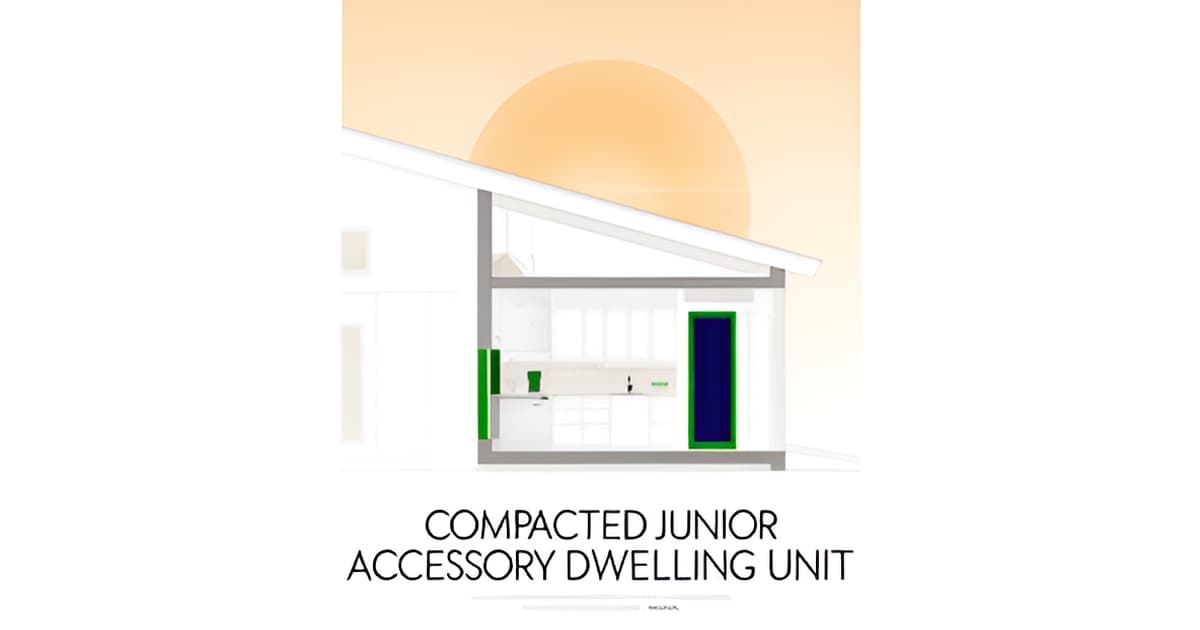
Convert a Room to a JADU in California: Requirements and Costs
Key Facts
- One Sebastopol homeowner completed her JADU for just $10,000, per the California ADU Center.
- JADUs of 500 square feet or less are exempt from development impact fees and school fees under SB 543.
- Starting January 1, 2026, JADUs with their own bathroom are freed from the owner-occupancy requirement under AB 1154.
- Sewer lateral replacement on homes older than 20 years can cost $15,000–$20,000, per an ADU conversion webinar.
- Simplest conversion ADUs run roughly $200 per square foot excluding finishes — about half the cost of detached construction at $400 per square foot.
- JADU efficiency kitchens require a sink no larger than 16"x16" and appliances under 120 volts with no gas allowed.
- Cities must determine JADU application completeness within 15 business days under the 2026 rules.
Why a JADU Is California's Cheapest Legal Rental — and What Makes It Tricky
If you've priced out a detached ADU lately, the sticker shock is real: a new detached build runs roughly $400 per square foot, and even a two-car garage conversion lands between $120,000 and $150,000, according to a recent ADU conversion webinar. A Junior ADU (JADU) offers a way out — because it lives inside your home's existing walls, the cost profile is dramatically different.
The numbers tell the story. One Sebastopol homeowner completed her JADU for just $10,000, according to the California ADU Center. More broadly, the simplest conversion ADUs benchmark around $200 per square foot — excluding finishes — roughly half the cost of detached construction. Because a JADU caps at 500 square feet of interior livable space and can share a bathroom with the main house, you avoid the biggest line items: full plumbing runs, separate HVAC, and major structural work.
New state law sweetens the deal further. Under SB 543, JADUs of 500 square feet or less are exempt from development impact fees and school fees, per a legal analysis of California's 2025 ADU legislation. And starting January 1, 2026, AB 1154 eliminates the owner-occupancy requirement for JADUs with their own bathroom — a meaningful change for investors and homeowners planning to relocate.
But before you budget $20,000 and call it done, know where JADU projects go sideways. The same webinar that celebrated low conversion costs flagged the hidden expenses that blindside homeowners:
- Sewer lateral replacement: if your lateral hasn't been replaced in 20 years, expect $15,000 to $20,000 — often discovered mid-permit.
- Electrical panel upgrades: many older California homes still run 75-amp panels, which typically can't support a new unit's load.
- Fire and sound wall assemblies: shared walls and ceilings between units must be fireproofed and soundproofed — and many contractors wrongly assume standard fire-rated drywall and insulation suffice.
- Garage-specific requirements: converting an attached garage can trigger replacement parking under state law, and shear wall retrofitting with foundation anchoring may be required.
The lesson from experienced practitioners: value-engineer by not moving plumbing, plan around existing window openings, and hire professionals who know your local jurisdiction's quirks. If you're in the Altadena area, the Altadena Builder Directory is a free registry where every ADU contractor listing is license-verified against the California Contractors State License Board — including a free CSLB lookup tool to vet any contractor yourself. (Featured listings like JMB Builders LLC, CSLB #1103479, are labeled paid placements.)
A JADU remains California's cheapest path to a legally rentable unit — just budget for the surprises hiding behind your walls.
The 2026 JADU Rulebook: Size, Entrance, Kitchen, and Bathroom Requirements
Converting a room into a JADU means working inside your home's existing footprint, but the state still draws hard lines around size, access, and what counts as a kitchen. Miss one detail and your permit stalls. Here is what California law requires as of 2026.
Size: the 500 square foot cap
Under SB 543, a JADU maxes out at 500 square feet of interior livable space — a clarification that matters when you're measuring closets, hallways, or garage conversions. You may also expand the existing structure by up to 150 square feet, but only to accommodate ingress and egress, and the total must stay under 500 square feet, per the ADU Center's guidance.
Entrance and access
Your JADU needs its own separate exterior entrance — residents can't walk through the main house to get in. The 150-square-foot expansion allowance exists precisely so you can carve out a code-compliant entry without blowing the size cap.
The efficiency kitchen spec sheet
The kitchen is the make-or-break item for most conversions. An efficiency kitchen must include:
- A sink no larger than 16" x 16" with a 1.5" maximum drain line
- A cooking appliance — no natural gas or propane, and nothing requiring more than 120 volts
- Counter space and storage "of reasonable size in relation to the size of the JADU"
Bathroom: sharing is allowed
A JADU does not need its own bathroom — it just needs access to one within the main house, according to conversion guidance from ADU experts. That said, AB 1154 (effective January 1, 2026) changed the calculus: if your JADU shares a bathroom with the primary residence, owner-occupancy is still required. Give the unit its own bathroom and that requirement disappears entirely.
The deed restriction
Every JADU requires a recorded deed restriction that runs with the land, prohibiting the unit from being sold separately from the main residence. This is permanent — it binds future owners, not just you.
Where the law lives now
Don't rely on older blog posts citing Government Code § 65852.22. SB 477 renumbered the state's ADU statutes in March 2024, and the current JADU provisions sit at Government Code §§ 66313, 66321, and 66333, as confirmed by California's HCD. Because local jurisdictions interpret these rules differently, it pays to work with contractors who know your building department's quirks — Altadena Builder Directory lists CSLB-verified ADU builders serving the area, each checked against the state license board.
One more 2026 change worth noting: JADUs of 500 square feet or less are now exempt from development impact fees and school impact fees, and rentals must run longer than 30 days — no short-term stays.
New for 2026: Owner-Occupancy Changes, Fee Exemptions, and Rental Rules
If you've been waiting for the right moment to convert a spare room or garage into a rentable JADU, January 1, 2026 is it. Two new laws — AB 1154 and SB 543 — reshape who can rent a JADU, what fees apply, and how long cities can take to review your application.
The biggest change: owner-occupancy. Under AB 1154, the owner-occupancy requirement now applies only when the JADU shares a bathroom with the main house, per legal analysis from Best Best & Krieger. If your JADU has its own bathroom, you can rent the entire property and live elsewhere. Attorneys note this aligns JADU rules with the ADU standards in place since 2020.
The fee exemption may matter even more. SB 543 exempts JADUs of 500 sq ft or less of interior livable space from development impact fees and school impact fees — charges that can add thousands to other housing projects. The same bill confirms the 500 sq ft cap refers to interior livable space and permits combining a converted ADU and a JADU with a detached ADU on a single lot.
AB 1154 also replaces overlapping definitions with a single set of clear rules for all ADUs under 500 sq ft built inside single-family homes, removing inconsistencies that California YIMBY notes previously stalled projects. Here's a quick summary of what changes on January 1, 2026:
- Owner-occupancy required only when the JADU shares a bathroom with the main house
- No development impact fees or school fees for JADUs of 500 sq ft or less
- Rentals must run longer than 30 days — short-term rentals are prohibited
- Cities must determine application completeness within 15 business days, with appeal determinations within 60 business days
The 30-day minimum rental term closes the door on Airbnb-style use. A JADU can generate steady rental income, but it cannot function as a vacation rental — a trade-off lawmakers accepted to keep these units in the long-term housing supply.
The 15-business-day completeness timeline also gives applicants real leverage. If your city drags its feet, you now have a statutory clock to point to, which is one reason experienced local professionals matter so much. The Altadena Builder Directory lists ADU and remodel contractors who know their jurisdictions' quirks, and every listing is verified against the California Contractors State License Board.
One caution: older guides still state that owner-occupancy applies to all JADUs. That rule is superseded — treat the 2026 bathroom-based standard as current, and confirm details with your local building department before finalizing plans.
Budgeting Your Conversion: Real Costs and Where They Balloon
The honest math for a JADU conversion spans two extremes: one Sebastopol homeowner completed hers for $10,000, while even the simplest conversion ADUs run roughly $200 per square foot excluding finishes. For a 400-square-foot unit, that benchmark puts you at $80,000 before you pick a single light fixture. Your final number depends almost entirely on what your house is hiding.
Three budget risks account for most of the blowups, and all of them surface only after demo begins. Plan for them before you sign a contract.
- Sewer lateral replacement: if the lateral hasn't been replaced in 20 years, expect $15,000–$20,000 — often triggered the moment you add kitchen plumbing to the permit scope.
- Electrical panel upgrades: many older homes still run a 75-amp panel, which won't support an efficiency kitchen and its 120-volt appliances alongside the rest of the house.
- Shared wall assemblies: walls and ceilings between units must be both fire-rated and soundproofed. Many contractors assume basic fire-rated drywall and insulation suffice — that's incorrect, and fixing it mid-project means opening finished walls twice.
Garage conversions carry an extra wrinkle: if the space sits adjacent to the kitchen, code may force removal of backsplashes or cabinets to satisfy the fire separation, and some garage or basement conversions require shear wall retrofitting with foundation anchoring. None of this shows up in a per-square-foot estimate.
Architect Alex Tzang's value-engineering advice from a recent ADU webinar is the best antidote: limit what you undo and maximize what you create. Keep plumbing in its existing locations — moving a drain line is one of the most expensive line items in any conversion. Plan around existing window openings rather than cutting new ones, and keep the design simple. Every wall you don't move is money that stays in your pocket.
The good news on the fee side: JADUs of 500 square feet or less are exempt from development impact fees and school fees under SB 543, and they typically don't need a separate HVAC system. Those exemptions can offset thousands against the surprise costs above.
Because local jurisdictions interpret these rules differently, hiring a contractor experienced with your city's quirks matters as much as the bid itself. Every ADU builder listed in the Altadena Builder Directory is verified against the California Contractors State License Board — you can run any contractor's license number yourself with the free CSLB lookup tool before you compare bids. Browse the license-verified registry to find qualified ADU builders near you (the featured listing, JMB Builders LLC, CSLB #1103479, is a paid placement).
Hiring the Right Contractor in Altadena: Verify Before You Build
Even a technically simple JADU conversion can go sideways if your contractor doesn't know the local rules. Architect Alex Tzang, speaking at an SMC ADU webinar, advises homeowners to hire professionals experienced with their specific jurisdiction — because cities and counties apply state ADU law differently, with their own quirks in plan check, permitting, and inspection.
The stakes are higher than they might seem. The same webinar warns that many contractors assume basic materials like fire-rated drywall and insulation are sufficient for shared walls and ceilings between units — this is incorrect. Conversions that create a unit next to a living space must meet fireproofing and soundproofing requirements, and garage or basement conversions may require shear wall retrofitting with foundation anchoring. A builder who has never navigated these details can leave you facing costly corrections at inspection.
Before you sign anything, verify the basics:
- Confirm the contractor holds an active California license with the CSLB.
- Ask specifically about JADU or conversion ADU work they've completed, including fire and sound wall assemblies.
- Check whether they've pulled permits in your jurisdiction before — local plan-check expectations vary.
- Get the license number in writing and match it to the company name, not just a salesperson's card.
This verification step matters especially in a project where hidden costs can escalate quickly. A conversion ADU benchmark puts even the simplest conversions at roughly $200 per square foot excluding finishes, and surprises like a sewer lateral replacement ($15,000–$20,000) or an electrical panel upgrade in an older home can add tens of thousands. An experienced local builder will spot these issues during the site assessment, not mid-construction.
For Altadena homeowners, the Altadena Builder Directory offers a free registry of contractors serving the area — ADU builders, remodelers, and design-build firms — with every listing license-verified against the California Contractors State License Board. The directory also includes a free CSLB license-lookup tool so you can verify any California contractor yourself before hiring, and ratings appear only from real attributed public sources, with no paid rankings. (The featured listing, JMB Builders LLC, CSLB #1103479, is labeled paid placement.)
Taking ten minutes to verify a license against state ADU standards and a contractor's track record is the cheapest insurance you'll buy on a project where the difference between a smooth conversion and an expensive redo often comes down to who's holding the hammer.
Frequently Asked Questions
How much does it actually cost to convert a room into a JADU in California?
Do I still have to live on the property if I rent out a JADU in 2026?
Does a JADU need its own bathroom and kitchen?
Can I list my JADU on Airbnb for short-term stays?
What's the maximum size for a JADU, and can I expand my home to build one?
How do I make sure my contractor actually knows JADU rules in my city?
Your JADU Starts With the Right Team Behind the Walls
Converting a spare room or attached garage into a JADU is still California's most affordable path to a legal rental — especially with 2026's fee exemptions and relaxed owner-occupancy rules. But as we've seen, the real cost lives behind your walls: a sewer lateral replacement can run $15,000–$20,000, an outdated 75-amp panel may need upgrading, and shared walls require proper fire and sound assemblies that many contractors get wrong. The difference between a $10,000 success story and a budget blowout usually comes down to who you hire. Before you compare bids, verify licenses, ask about JADU-specific experience, and confirm your contractor has pulled permits in your jurisdiction. The conversion ADU benchmark of roughly $200 per square foot is only achievable with a builder who spots problems during the site assessment — not at inspection. That's why the Altadena Builder Directory exists: a free registry where every ADU contractor listing is license-verified against the California Contractors State License Board, plus a free CSLB lookup tool to vet any contractor yourself. Take ten minutes to browse the license-verified listings — it's the cheapest insurance you'll buy on this project.