Craftsman Home Builders in Pasadena: Matching the Neighborhood Character
Key Facts
- Craftsman homes appreciated 43.7% over six years — outpaced only by ranch homes — according to Realtor.com research.
- Pasadena requires citywide design review of all new construction through a three-phase process, per the Pasadena Municipal Code.
- Larger projects in Landmark Districts can face 6–8 weeks or more of Historic Preservation Commission review before permits, local preservation specialists note.
- Certificate of Appropriateness review in districts like Bungalow Heaven costs $0 — the real investment is time, per the neighborhood association.
- Mills Act contracts cut property taxes 20–75%, averaging about 50%, for qualifying historic homeowners, preservation experts report.
- Pasadena is 'ground zero for California Craftsman, and the Craftsman movement nationwide,' the LA Times reports.
- Nearly every authentic Craftsman predates 1978, triggering EPA RRP lead-safe rules requiring certified contractors, buyer guides warn.
Why Pasadena Is the Toughest Place to Build a Craftsman Home
Building a Craftsman home in Pasadena means constructing in the city that defined the style. As the LA Times reports, Pasadena is "ground zero for California Craftsman, and the Craftsman movement nationwide." That heritage cuts both ways: it creates extraordinary buyer demand, but it also means every new build faces intense scrutiny from preservationists, design review boards, and neighbors who know exactly what authentic character looks like.
The first layer applies everywhere in the city. The Pasadena Municipal Code requires design review of new construction and alterations throughout the City, following a three-phase process: Preliminary Consultation, Concept Design Review, and Final Design Review. Concept review evaluates concrete criteria — compatibility with surroundings, massing, proportion, siting, and solid-to-void relationships.
The second layer applies in Landmark Districts like Bungalow Heaven, Pasadena's first, designated in 1989. There, demolitions, exterior alterations, and new construction require a Certificate of Appropriateness before any building permit is issued. Staff-level reviews commonly take several weeks, while larger projects before the Historic Preservation Commission can take 6–8 weeks or more.
Builders who underestimate this timeline pay for it. Key facts to plan around:
- Design review is mandatory citywide — there is no "easy" parcel in Pasadena
- Commission-level review in Landmark Districts can add two months or more before permits
- COA review itself carries no fee, but must be sequenced before permitting
- Exemptions exist for interior work, paint colors, landscaping, and non-street-visible alterations
The payoff for navigating this process is real. Realtor.com research shows Craftsman homes appreciated 43.7% over six years — outpaced only by ranch homes — and the style's median build year of 2000 confirms that new construction emulating the style keeps it commercially relevant. Craftsman listings routinely draw multiple offers with buyers waiving contingencies.
The challenge is that these same buyers want what one agent calls "a kind of soul that new construction can't imitate." A builder who can deliver authentic proportions, honest materials, and streetscape compatibility — while clearing both regulatory layers — builds in one of the most rewarding niches in Southern California. The Altadena Builder Directory lists license-verified custom home builders familiar with exactly this kind of review-driven work, and its free CSLB lookup tool lets homeowners confirm any California contractor's credentials before signing.
The Design Vocabulary Review Boards Actually Look For
Pasadena's design review boards don't reward vague "Craftsman-inspired" gestures — they evaluate specific, stated criteria. The city's Concept Design Review explicitly examines compatibility with surroundings, massing, proportion, siting, and solid-to-void relationships, which means your drawings need to speak that language from the first submittal.
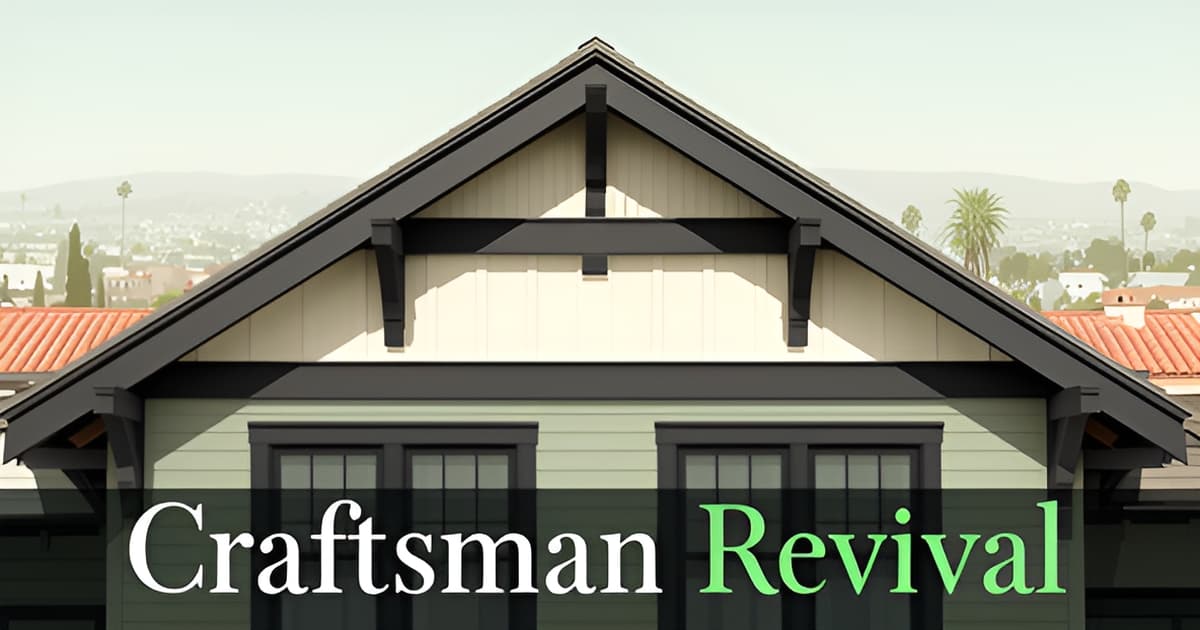
The exterior vocabulary is well documented. Hallmarks include low-pitched gabled roofs with wide overhanging eaves, exposed rafters and beams, and substantial front porches supported by tapered or square columns resting on stone, brick, or river-rock bases, according to buyer guides to Pasadena's Craftsman stock. Natural materials — wood siding or shingles, textured stucco, clinker brick — carry the honest, handmade character that preservationists like Pasadena Heritage's Bridget Lawlor describe as "artful and handmade, not a particle board thing that will break soon."
Interior details matter too, especially when a project faces buyer scrutiny in a market where Craftsman homes have appreciated 43.7% over six years:
- Built-ins — bookcases, buffets, and window seats that make rooms feel purposeful
- Quarter-sawn white oak flooring and generous wood trim
- Leaded and art glass, inglenooks, and pony walls with colonnades
Streetscape elements are where review boards measure compatibility. As local preservation specialists note, the districts that pass muster share visible front porches, consistent setbacks, low front fences, rear or alley-facing garages, and mature shade trees. A new build that pulls its garage forward and walls off its porch fails the siting test before anyone discusses roof pitch.
The deeper standard traces to the Greene Brothers, whose Pasadena work — over 100 California Bungalows, including the 1908 Gamble House — drew on Japanese architecture and produced what many consider the pinnacle of West Coast Arts & Crafts design. Their guiding philosophy echoes Gustav Stickley's 1909 dictum that houses should be built on "honesty, simplicity, and usefulness." Modern practitioners apply it through a "light touch": additions that feel seamless with the existing house, matching the scale and details of the original rooms.
For homeowners assembling a project team, the Altadena Builder Directory lists custom home and design-build firms whose licenses are verified against CSLB records — a practical filter when you need a builder fluent in traditional materials rather than a generic production contractor.
Navigating the Three-Phase Review and Certificate of Appropriateness Process
Most homeowners assume historic review means months of red tape and steep fees. In reality, the Certificate of Appropriateness process in Pasadena's Landmark Districts costs nothing to file — the real investment is time and preparation.
Start with the citywide baseline. The Pasadena Municipal Code requires design review of all new construction, following a three-phase path: Preliminary Consultation, Concept Design Review, and Final Design Review. Concept review evaluates compatibility with surroundings, massing, proportion, siting, and solid-to-void relationships — so your builder should design to those criteria explicitly, not retro-fit them later.
If your lot sits in a Landmark District like Bungalow Heaven, a Certificate of Appropriateness is required before any building permit can be issued for exterior work or new construction. Approval confirms compliance with the Secretary of the Interior's Standards, and review is free. Staff-level decisions typically take several weeks; larger projects that go before the Historic Preservation Commission can take 6–8 weeks or more.
The good news: plenty of work skips district review entirely.
- Interior renovations and remodels
- Paint color changes
- Landscaping and routine maintenance
- Alterations not visible from the street
That last category matters — rear-facing additions and alley-side garage work often proceed with far less friction than street-visible changes.
The regulatory burden comes with real offsets. Owners of qualifying historic properties can pursue a Mills Act contract, which reduces property taxes by roughly 20–75%, averaging about 50%. For a century-old bungalow in Bungalow Heaven, that savings can meaningfully change the project's long-term math.
Two practical constraints deserve early attention. First, pre-1978 homes trigger EPA RRP lead-safe rules, which require certified contractors for any work disturbing painted surfaces — nearly every authentic Craftsman qualifies. Second, California clients increasingly request wildfire-resilience features such as air filtration, energy recovery ventilators, and fire-resistant materials, and these can be integrated without compromising period character.
Before committing to a builder for review-sensitive work, verify licensure. Altadena Builder Directory offers a free CSLB license-lookup tool so you can confirm any California contractor's credentials, with license data attributed to the Contractors State License Board. Every listing carries a verification seal once a license match is confirmed — including featured (paid, labeled) placement JMB Builders LLC, CSLB #1103479.
How to Vet a Craftsman Builder Before You Sign Anything
The best Craftsman builders in Pasadena share a habit: they welcome scrutiny before the contract is signed. Vetting one takes a few deliberate steps, and each protects both your budget and your neighborhood's character.
Start with the right team structure. Local preservation professionals recommend hiring a preservation-aware architect alongside a contractor fluent in traditional materials — quarter-sawn oak, wood shingles, art glass — not just modern substitutes. Pasadena Heritage also maintains a referral list of preservation professionals if you need a starting point.
Then use the city's free resources before you spend a dollar on plans. Pasadena's preservation staff offer no-cost consultations, and Certificate of Appropriateness review in Landmark Districts carries a $0 fee, though larger projects before the Historic Preservation Commission can take 6–8 weeks or more. Ask candidates directly how they've navigated the city's three-phase design review — Preliminary Consultation, Concept Design Review, Final Design Review — and how they'd approach the stated criteria of compatibility, massing, proportion, siting, and solid-to-void relationships.
Your vetting checklist should cover:
- A valid CSLB license, verified independently before signing anything
- EPA RRP lead-safe certification if your home predates 1978
- Documented experience with design review or Certificate of Appropriateness projects
- Portfolio evidence of authentic Craftsman detailing, not imitation
License verification is the step that cannot be skipped. Because most Craftsman homes date from the movement's heyday between roughly 1900 and the early 1920s, nearly every renovation in Bungalow Heaven or Garfield Heights involves pre-1978 construction, which triggers EPA RRP lead-safe rules requiring certified contractors. An unlicensed bid isn't a bargain — it's a liability.
The Altadena Builder Directory makes this step painless: its free CSLB license-lookup tool lets you confirm any California contractor's license in minutes, and every listing in the registry is license-verified against CSLB data, displaying a verification seal once a match is confirmed. Ratings come only from real, attributed public sources — no paid rankings — and any featured placement, such as JMB Builders LLC (CSLB #1103479), is always clearly labeled as paid.
Verify first, sign second. A builder who can show a clean license, lead-safe credentials, and a project that passed design review on the first pass is one who understands that in Pasadena, matching the neighborhood is the job — not an obstacle to it.
Frequently Asked Questions
Do I really need design review to build a new Craftsman home anywhere in Pasadena?
What is a Certificate of Appropriateness and how long does it take in Bungalow Heaven?
Are Craftsman homes actually a good investment in today's market?
What exterior details will Pasadena's design review boards actually look for on a new Craftsman build?
What work can I do on my historic Pasadena home without going through district review?
How do I make sure a contractor is qualified for Craftsman work on a pre-1978 home?
Building in the City That Invented the Craftsman
Pasadena rewards builders who respect its rules and its roots. Design review is mandatory citywide, Landmark Districts like Bungalow Heaven add a Certificate of Appropriateness before any permit, and the buyers you're building for want authentic proportions, honest materials, and streetscape compatibility — not a Craftsman costume. Get it right, and the numbers back you up: Craftsman homes have appreciated 43.7% over six years, with listings routinely drawing multiple offers. Your next steps are straightforward: sequence the three-phase design review into your timeline from day one, design explicitly to the criteria of compatibility, massing, proportion, siting, and solid-to-void relationships, and confirm EPA RRP lead-safe certification for any pre-1978 work. Most importantly, verify your contractor's license before signing anything. The Altadena Builder Directory's free CSLB license-lookup tool lets you confirm any California contractor in minutes, and every listing in the registry is license-verified against CSLB records — no paid rankings, just verified credentials. Start with a lookup, then interview builders who can show a project that passed design review on the first pass. In Pasadena, matching the neighborhood is the job — choose a builder who treats it that way.