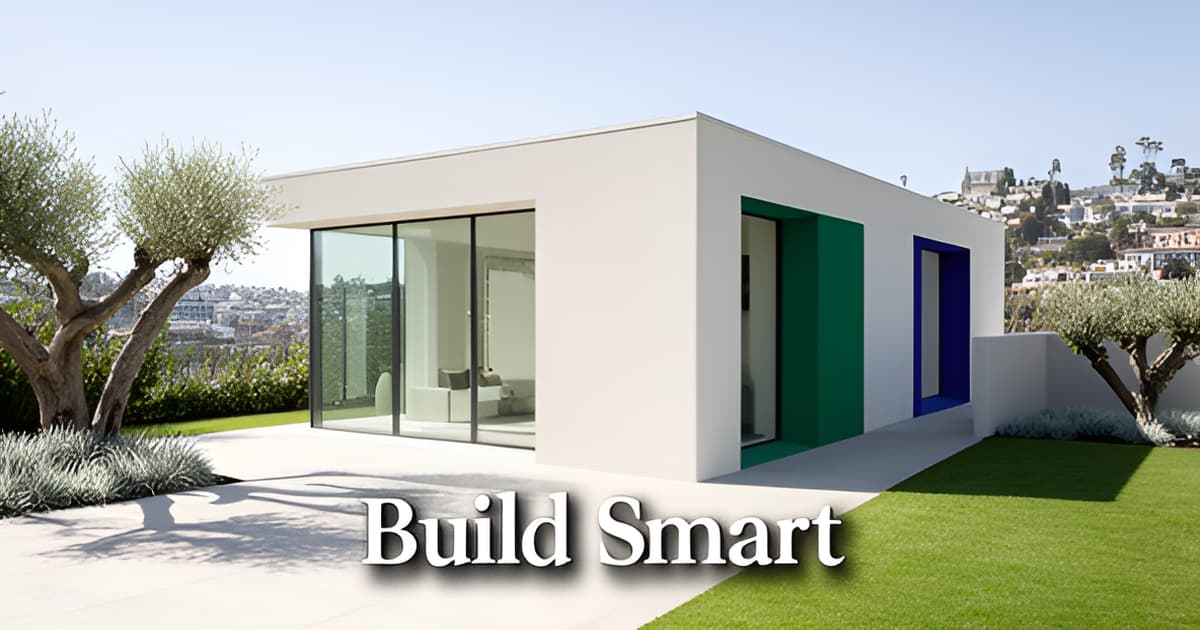
Detached ADU Cost in California: What Drives the Price Up
Key Facts
- Detached ADUs in California cost $200,000–$400,000+, per 2026 cost research.
- Permits, site work, utilities, and contingency typically add 20–35% to the 'house only' price.
- The same 600 sq ft detached ADU can cost $40,000+ more in LA County than the Central Valley.
- California's solar mandate adds $8,000–$15,000 to new detached ADUs but not garage conversions.
- Change orders are the #1 cause of budget overruns, averaging 10–15% on custom builds.
- California properties with ADUs appreciated 9.34% annually from 2013–2023 versus 7.65% without, per FHFA data.
- Factory-built detached ADUs deliver 10–25% savings over site-built equivalents.
The Detached ADU Premium: Why Standalone Units Cost 10–40% More
The first quote for a detached ADU often lands like a punch: $200,000 to $400,000 or more, sometimes $275–$600 per square foot. For homeowners used to remodel budgets, the number can feel disconnected from a 600–750 square foot cottage. The gap between expectation and reality is structural, not cosmetic.
Across independent California sources, the market ranges are consistent. Site-built detached units run $200,000–$400,000+, attached ADUs $150,000–$300,000, and garage conversions $80,000–$180,000. In Los Angeles, one design-build firm estimates detached units at $250,000–$380,000 ($400–$550 per square foot) versus $200,000–$310,000 for attached. The detached premium over attached units is variously reported as roughly 30%, 10–20%, or 20–40% depending on the source — the direction is unanimous, but the exact magnitude isn't.
| ADU Type | Typical CA Range | Why It Costs Less |
|---|---|---|
| Detached (site-built) | $200,000–$400,000+ | Full standalone structure |
| Attached | $150,000–$300,000 | Leverages existing walls, shared systems |
| Garage conversion | $80,000–$180,000 | Reuses foundation and framing |
| JADU | $60,000–$150,000 | Existing footprint, minimal shell work |
So why the premium? A detached unit is essentially a small house, and it pays for everything a house pays for:
- A separate foundation and site work, typically $15,000–$40,000 before the structure even rises
- An independent roof and full building envelope, with no shared walls to lean on
- Complete utility connections, including trenching that can add $5,000–$20,000 for 50–100 foot runs
- California's solar mandate, which applies to new construction only — roughly $8,000–$15,000 for a 3–5 kW system that garage conversions typically avoid
As one licensed LA practitioner puts it, cost is driven more by foundation type, size, and utility hookups than by finish level. Geography compounds this: the same 600 square foot detached unit can run $40,000+ more in LA County than in the Central Valley.
The premium isn't arbitrary — but it should be transparent. Because these figures are market estimates rather than verified project data, and because quotes without site visits are, in one builder's words, "a rough estimate before the actual variables are known," it pays to vet who you're talking to. The Altadena Builder Directory is a free, independent registry where every listing is license-verified against the California Contractors State License Board, and a free CSLB lookup tool lets you verify any California contractor before you request a bid — including featured firms like JMB Builders LLC (CSLB #1103479, paid placement).
socialProofText: Every ADU builder listing on the Altadena Builder Directory is verified against CSLB license records — no paid rankings, just confirmed credentials.
ctaText: Compare license-verified Altadena ADU builders or run a free CSLB lookup on any contractor before you accept a quote.
The Hidden Cost Drivers: Site Work, Solar Mandates, and the 'Box Price' Trap
The number on a contractor's quote is rarely the number you pay. Industry estimates warn that permits, site work, utility connections, and contingency typically add 20–35% to the "house only" price — a gap that catches thousands of California homeowners off guard each year (Tiny Home Cottages).
Site conditions are the first surprise. A sloped lot requiring grading or retaining walls adds $10,000–$50,000, and hillside builds needing caissons can run $30,000–$80, more on top of that (Design Onn Point). Utility trenching across 50–100 feet adds $5,000–$20,000, electrical panel upgrades another $3,000–$10,000, and long utility runs can tack on $8,000–$20,000.
Then there's the solar mandate — a cost unique to new detached construction. California's energy code requires solar on all new-construction ADUs, adding $8,000–$15,000 for a 3–5 kW system plus interconnection, along with $2,000–$5,000 in Title 24 solar engineering (Tiny Home Cottages). Garage conversions and JADUs built from existing footprints are typically exempt, which is part of why detached units carry the steepest premium of any ADU type.
Permits and fees add another layer. Expect $5,000–$15,000 in permits and fees statewide, with impact fees of $1,500–$5,000 in LA and San Diego for units over 750 square feet. And 2026 tariffs have added roughly $15,000–$30,000 to a typical $280,000 detached build, driven by increases in steel, aluminum window frames, imported cabinets, and appliances (Design Onn Point).
Beyond the predictable line items, change orders remain the #1 cause of budget overruns, averaging 10–15% on custom builds (CALI ADU). As one licensed practitioner puts it: "If a contractor quotes an ADU without visiting the property, that's not a quote — it's a rough estimate before the actual variables are known."
- Sloped lots, grading, and retaining walls: +$10,000–$50,000
- Utility trenching (50–100 ft): $5,000–$20,000
- Electrical panel upgrades: $3,000–$10,000
- Solar system plus Title 24 engineering: $10,000–$20,000
- Permits, fees, and impact fees: $5,000–$15,000+
The takeaway for Altadena homeowners: a low "box price" means little if the site work, utilities, and solar aren't included. Before comparing bids, verify any contractor's license — the Altadena Builder Directory offers a free CSLB license-lookup tool, and every listing in the directory is license-verified against the California Contractors State License Board.
Location and Lot: Why the Same ADU Costs $40,000+ More in LA County
Build the identical 600-square-foot detached ADU from the same plans in Sacramento and Los Angeles County, and the price gap can exceed $40,000 — $150,000–$210,000 in the Central Valley versus $240,000–$300,000 in LA County, according to 2026 California ADU cost research. That works out to roughly $250–$350 per square foot inland versus $400–$500 in LA County, before a single surprise cost surfaces.
For Altadena homeowners, those surprises tend to cluster around the lot itself. Depending on where your property sits, you may face:
- Geotechnical requirements — a geotechnical report on slopes steeper than 4:1 runs $3,000–$6,000, with hillside lots adding another $4,000–$7,000 in geotech costs
- Fire zone materials — in Very High Fire Hazard Zones, Chapter 7A-compliant materials add $6,000–$15,000 to the build, plus $500–$1,500 in fire zone fees
- Coastal and hillside review — review fees of $2,000–$5,000 and permitting timelines of 4–12 weeks longer than inland approvals
- LADWP separate-meter fees of $3,000–$6,000 for a standalone utility connection
These LA-specific line items explain why one licensed design-build practitioner notes that ADU cost is "the sum of six line items, four of which are LA-specific" — not a simple per-square-foot number. Local fee schedules vary by county even after statewide permitting reform, so two identical floor plans can price out very differently depending on the address.
Labor adds another layer of regional pressure. California faces a shortage of roughly 501,000 construction workers, which extends project timelines by an average of nearly two months. Detached ADUs already take the longest of any ADU type — 9 to 14 months from initial consultation to certificate of occupancy — and tight labor markets in high-cost counties stretch that further.
The practical takeaway for Altadena homeowners: budget for geography, not just square footage. Get itemized bids that account for slope, fire zone requirements, and utility runs specific to your lot, and verify any contractor's license through the California CSLB before signing. The Altadena Builder Directory lists local ADU builders and design-build firms — including JMB Builders LLC (CSLB #1103479) — with every listing license-verified against the Contractors State License Board, so you can compare qualified contractors before the first quote arrives.
Ways to Manage the Cost — and Why the Investment Can Pay Off
None of this changes the math if the project blows past budget — so smart homeowners attack costs from two directions: smarter construction methods and realistic contingency planning. Both can meaningfully narrow the gap between a detached ADU's sticker price and what you actually pay.
Prefab and factory-built units are the clearest cost lever. Factory-built detached ADUs typically run $150,000–$250,000, delivering 10–25% savings compared with site-built equivalents, and modular construction requires roughly 50% fewer subcontractors. A factory-built 600 sq ft unit can finish in 6–9 months at around $260,000, versus 9–12 months at roughly $360,000 for a comparable site-built project.
Contingency planning matters just as much. Change orders are the number one cause of budget overruns, averaging 10–15% on custom builds, and industry guidance recommends budgeting a 10–15% contingency on top of your base estimate. Remember that permits, site work, foundation, utility connections, and contingency typically add 20–35% to any "house only" price you're quoted.
A few practical guardrails:
- Get itemized bids that separate hard costs, site work, utilities, and soft costs — not a single lump sum.
- Insist on a site visit before accepting a quote; a contractor who quotes sight-unseen is giving you a rough estimate, not a real number.
- Budget 10–15% contingency plus design/architecture fees, which typically run 8–15% of the total project.
- Compare prefab and site-built quotes side by side using the same scope of work.
The premium can also pay for itself. Federal Housing Finance Agency data shows California properties with ADUs appreciated at 9.34% annualized from 2013 to 2023, versus 7.65% for properties without one. Detached units also command the highest rental income — roughly $39,000 per year versus about $27,600 for attached units, per one industry source — which partially offsets the higher upfront cost.
A note on all figures here: nearly every construction cost number comes from commercial vendor sources, so treat them as market estimates, not verified project data. Ranges vary widely by region, lot, and scope — which is exactly why verified local bids matter more than any statewide average.
That's where the Altadena Builder Directory comes in. Every listing — ADU builders, design-build firms, and remodelers — is license-verified against the California Contractors State License Board, with a verification seal shown once a license match is confirmed, and our free CSLB lookup tool lets you check any California contractor before you request a bid. (Featured listing: JMB Builders LLC, CSLB #1103479 — a paid placement, clearly labeled as such.)
ctaText: Browse the Altadena Builder Directory to compare license-verified ADU builders, or use our free CSLB lookup tool to verify any California contractor before you request a bid.
socialProofText: Every listing in the Altadena Builder Directory is verified against California Contractors State License Board records — no paid rankings, just attributed ratings from real public sources.
Getting Real Bids: Verify Before You Build in Altadena
A quote without a property visit is just a guess with a dollar sign on it. One licensed LA design-build practitioner puts it bluntly: "If a contractor quotes an ADU without visiting the property, that's not a quote — it's a rough estimate before the actual variables are known" (Design Onn Point). In Altadena, where hillside lots, utility runs, and fire-zone requirements can swing a budget by tens of thousands of dollars, that distinction matters.
Insist on a site visit before you take any number seriously. Sloped lots and grading alone can add $10,000–$50,000, and utility trenching at 50–100 feet runs another $5,000–$20,000 (industry cost breakdowns). A contractor who prices your detached ADU over the phone has no way to see any of that.
Compare all-in pricing, not box prices. Permits, site work, foundation, utility connections, and contingency typically add 20–35% to the "house only" figure (cost analyses), and change orders average 10–15% on custom builds (ADU builder estimates). A lowball bid that omits these line items is the most expensive quote you'll ever accept.
Before requesting bids, run this checklist:
- Require a written, site-visit-based quote with itemized site work, utilities, permits, and contingency
- Ask each bidder for an all-in total, not a per-square-foot or "house only" number
- Verify the contractor's license against the California Contractors State License Board before signing anything
- Budget a 10–15% contingency from day one
License verification is non-negotiable. The Altadena Builder Directory lists only contractors whose licenses are verified against CSLB records, with a verification seal shown once a match is confirmed — so you're comparing bids from builders who've already cleared that bar. Its free CSLB license-lookup tool lets you confirm any California contractor on your own, including builders you find elsewhere.
The directory is independent and free: ratings come only from real, attributed public sources, paid placements are always labeled as such, and it covers ADU builders, design-build firms, remodelers, and fire-rebuild specialists serving Altadena. Verify first, then bid. A five-minute license check today prevents the most expensive mistake in your ADU project tomorrow.
Frequently Asked Questions
How much does a detached ADU actually cost in California?
Why do detached ADUs cost so much more than attached ones or garage conversions?
What hidden costs should I expect beyond the quoted ADU price?
Does California's solar mandate apply to my detached ADU?
Is a detached ADU worth the money as an investment?
Can I save money with a prefab or factory-built detached ADU?
The Price Is Knowable — If You Ask the Right Questions First
A detached ADU in California costs $200,000–$400,000+ not because of finishes, but because it's essentially a small house: its own foundation, utilities, roof, and — uniquely for new construction — a mandated solar system. Add site work, permits, and change orders that can add 20–35% to any 'box price,' and the same 600-square-foot unit can cost $40,000+ more in LA County than the Central Valley. The good news: the premium is structural, and it can pay off — California properties with ADUs appreciated 9.34% annually over the last decade, outpacing those without. Your next steps are simple: insist on a site-visit-based, itemized bid; budget a 10–15% contingency; and verify every contractor's license before signing anything. The Altadena Builder Directory makes that last step easy — every listing is license-verified against CSLB records, and a free lookup tool lets you check any California contractor in minutes. Verify first, then bid, and the number on your quote will finally match the number you pay.