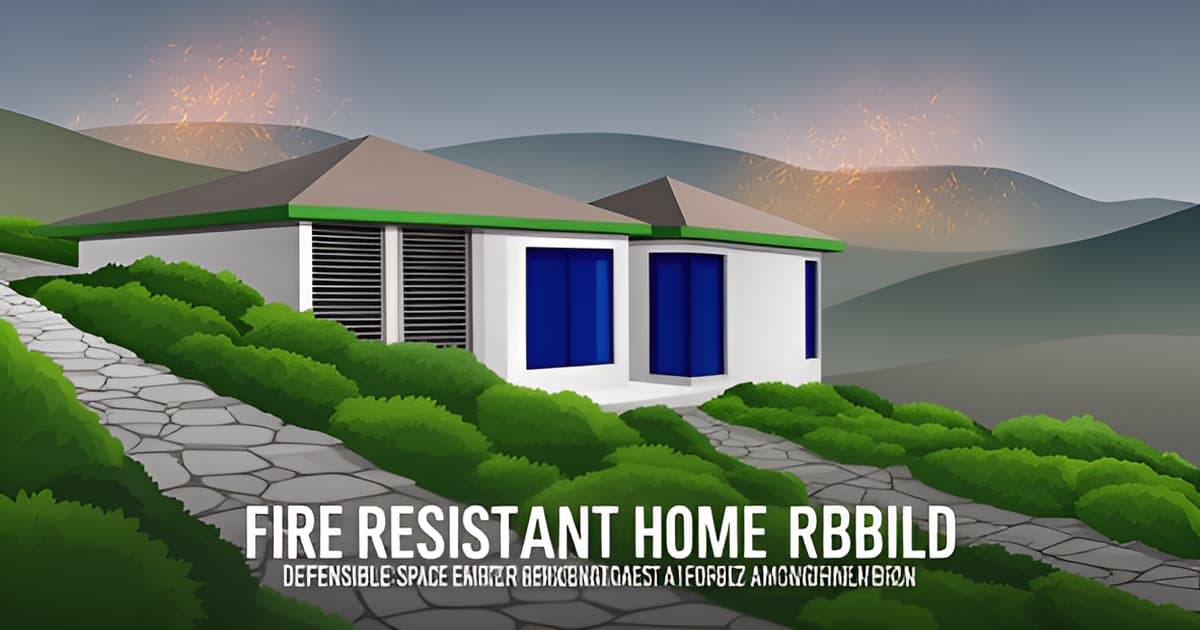
Fire Rebuild Design in Altadena: WUI Requirements and Materials
Key Facts
- Post-2008 WUI-compliant homes survived the Camp Fire at 43% versus just 12% for pre-1990 homes, fire safety research shows.
- Only 1% of homes destroyed or damaged in the nine costliest fires since 2017 were built in 2010 or later, a CBIA analysis found.
- Only 23% of significantly damaged Altadena-area homes sit in designated 'very high' fire hazard severity zones, Catalyst California reports.
- Rebuilding costs roughly $500 per square foot against average Altadena insurance coverage of $607,000 — a shortfall exceeding $140,000, recovery data shows.
- The like-for-like pathway allows rebuilds to grow up to 10% or 200 square feet while bypassing current zoning review, per county rebuild rules.
- The median permit timeline runs 155 days, but only 32 of those days are county review, rebuild tracking shows.
- Roughly 95% of Altadena homes predate 2000, meaning most survivors are rebuilding to standards their original homes never met, fire safety reporting notes.
The Altadena Rebuild Puzzle: New Codes, Old Maps, and a $500/Sq Ft Reality
Rebuilding in Altadena after the Eaton Fire means solving three problems at once: a code framework that just changed, hazard maps that failed to predict the disaster, and a price tag that outstrips most insurance payouts. Each one shapes what a smart rebuild looks like.
Start with the code. As of January 1, 2026, the wildfire provisions formerly in CBC Chapter 7A moved into the new California Wildland-Urban Interface Code (CWUIC, Title 24 Part 7), which LA County adopted for Very High and High Fire Hazard Severity Zones. Altadena is unincorporated LA County, so every permit and rebuild rule flows through LA County Public Works and Regional Planning — not the City of Pasadena — a distinction recovery guides call the single most important thing a survivor needs to understand.
Here's the puzzle: only 23% of significantly damaged homes sit in designated "very high" fire hazard severity zones. West Altadena, which suffered the worst destruction, has fewer properties in such zones (19%) than East Altadena (33%). The maps were finalized between April 2024 and March 2025 — developed before, during, and immediately after the fire, not in response to it. Meanwhile, Cal Fire's updated maps will expand "very high" and "high" designations by more than a million acres, potentially pulling more Altadena properties under WUI requirements over time.
The economics make right-sizing non-negotiable. At a rebuild benchmark of roughly $500 per square foot, a 1,500-square-foot home costs about $750,000 — against average Altadena insurance coverage of $607,000, a shortfall exceeding $140,000. A larger footprint deepens that gap. Fortunately, the like-for-like pathway allows floor area increases of up to 10% or 200 square feet (whichever is greater) while bypassing current zoning review, though Building, Fire, and WUI hardening codes still apply.
The case for investing in code-smart fire design is proven, not theoretical. In the Camp Fire, post-2008 WUI-compliant homes survived at 43% versus 12% for pre-1990 homes, and only 1% of homes destroyed or damaged in the nine costliest fires since 2017 were built in 2010 or later. The core CWUIC §504 material package includes:
- Class A roof assembly (ASTM E108 or UL 790)
- Ember-resistant vents with 1/16"–1/8" mesh, State Fire Marshal listed
- Noncombustible or ignition-resistant exterior walls
- Multilayered tempered glazing and enclosed, ignition-resistant eaves
- Noncombustible gutters with debris prevention
Executive Order N-29-25 offers some relief, suspending rooftop solar, battery storage, and 2025 Building Standards Code requirements for Eaton Fire rebuilds. But with roughly 70% of damaged homes still in rebuilding limbo and median permit times at 155 days — only 32 of which are county review — the bottleneck is design and preparation on the homeowner side. Choosing a fire-rebuild specialist who knows the CWUIC and the like-for-like envelope matters; Altadena Builder Directory lists license-verified contractors, each checked against the California Contractors State License Board with a free lookup tool. One featured option is JMB Builders LLC (CSLB #1103479), a labeled paid placement.
Verify any contractor's license at the Altadena Builder Directory before you sign — every listing is checked against CSLB records.
The Like-for-Like Pathway: How to Rebuild Without Overbuilding
For Altadena homeowners staring down a rebuild, the fastest path forward isn't the biggest house — it's the one that qualifies as "like-for-like." Under the county's rebuild rules, a replacement structure can grow by up to 10% or 200 square feet, whichever is greater, while bypassing current zoning review entirely.
That distinction matters enormously for timeline. Rebuilds that exceed the like-for-like envelope must pass through the Altadena Community Standards District review process, adding months to an already slow pipeline — as of December 2025, only 23 of nearly 6,000 significantly damaged residential properties had completed rebuilding, though 43% of owners had applied for or received permits. Importantly, "like-for-like" refers to purpose, not identical design, so you can modernize the layout while staying within the allowance.
Executive Order N-29-25 adds further flexibility. The order suspends rooftop solar and battery storage installation requirements, along with the 2025 California Building Standards Code, for structures rebuilding after the Eaton Fire. Homeowners may also use previously approved 2019-code plans. What these suspensions don't waive is just as critical: current Building, Fire, and Health & Safety Codes still apply — including full WUI exterior hardening under the new California Wildland-Urban Interface Code, which LA County adopted for Very High and High Fire Hazard Severity Zones effective January 1, 2026.
That means right-sizing the footprint while investing in the envelope. The research makes a compelling case for spending there: post-2008 WUI-compliant homes survived the Camp Fire at 43% versus 12% for pre-1990 homes. The core requirements include:
- Class A roof assembly tested to ASTM E108 or UL 790
- Ember-resistant vents with 1/16"–1/8" mesh
- Noncombustible or ignition-resistant exterior walls
- Multilayered tempered glazing
- Noncombustible gutters with debris prevention
There's also an economic argument for restraint. At roughly $500 per square foot, a 1,500 sq ft rebuild would cost about $750,000 — more than $140,000 above the average Altadena insurance coverage of $607,000. A like-for-like footprint with targeted fire hardening is simply more financially viable than a larger one.
Before committing to a pathway, verify who you're working with. Every contractor listing in the Altadena Builder Directory is license-verified against the California Contractors State License Board, and a free lookup tool lets you confirm any California contractor's credentials yourself. Featured placements, such as JMB Builders LLC (CSLB #1103479), are always labeled as paid, so you can weigh ratings and paid placement with full transparency.
The CWUIC Material Package: What a Code-Compliant Fire-Hardened Home Actually Requires
When the Eaton Fire destroyed 9,414 structures across 14,021 acres, it wasn't flames racing through neighborhoods that did most of the damage — it was embers. That's why the CWUIC material requirements under §504 aren't bureaucratic box-checking. They're the difference between the survival rates documented in the Camp Fire study, where post-2008 WUI-compliant homes survived at 43% versus just 12% for pre-1990 homes.
The CWUIC, which took effect January 1, 2026 as Title 24 Part 7 and absorbed the former CBC Chapter 7A provisions, lays out a specific material package for homes in Very High and High Fire Hazard Severity Zones. Here's what a code-compliant fire-hardened rebuild actually requires:
- Class A roof assembly tested to ASTM E108 or UL 790 (§504.2) — the roof is the largest ember-receptive surface on the home.
- Ember-resistant vents that are State Fire Marshal listed or ASTM E2886 compliant, with 1/16" to 1/8" mesh (§504.10) small enough to block embers that ignite attic debris.
- Ignition-resistant or noncombustible exterior walls — noncombustible materials, ignition-resistant labeled products, or fire-retardant-treated wood (§504.5.2).
- Multilayered tempered glazing, glass block, or 20-minute fire-rated assemblies (§504.8), paired with enclosed eaves that are noncombustible, ignition-resistant, 1-hour rated, or 2" nominal lumber (§504.3).
- Noncombustible gutters with debris prevention (§504.4) and decking tested to ASTM E2632/E2726 or built ignition-resistant/noncombustible (§504.7.3.2).
The evidence behind these choices is compelling. A CBIA analysis of the nine costliest fires since 2017 found only 1% of destroyed or damaged homes were built in 2010 or later. Robert Raymer, who consulted on California's first WUI standards, put it plainly: "This works. It really works."
For Altadena rebuilders, these material decisions carry extra weight. Roughly 95% of the town's homes predate 2000, meaning most survivors are rebuilding to a standard their original home never met. And with rebuild costs running around $500 per square foot against average insurance coverage of $607,000, every dollar spent needs to earn its place — which is exactly why the §504 package represents the highest-value design decisions in the entire rebuild.
When you're evaluating contractors for this work, recovery research shows 43% of owners had applied for or received permits as of late 2025 — moving fast matters, but so does verifying who you hire. Every builder listed on Altadena Builder Directory is license-verified against the California Contractors State License Board, so you can confirm credentials before design decisions like these get made.
Beyond the Code: Ember Defense, Defensible Space, and Future-Proofing Your Design
Meeting the code is the floor, not the ceiling — and in Altadena, the difference between a compliant home and a resilient one is measured in embers. The Eaton Fire's spread through Altadena was driven largely by wind-blown embers, the same ignition pathway that dominated the Camp Fire, where post-2008 WUI-compliant homes survived at roughly 43% versus 12% for pre-1990 homes, according to fire safety research.
That survival gap is why design choices beyond the CWUIC's minimum package deserve real attention. The code hardens the building envelope — Class A roofing, ember-resistant vents, ignition-resistant siding — but it doesn't yet address the five feet of ground immediately surrounding your home. That's where Zone 0 comes in.
Under AB 3074, California is developing a 5-foot ember-resistant zone around structures, but as of mid-2026 it remains a draft framework with a phased, education-first rollout — not yet enforceable law, per rebuilding guides tracking the regulation. Designing to its principles now is simply prudent: embers that land within a few feet of a wall, deck, or vent are the ones most likely to find a weakness.
Practical Zone 0 design choices include:
- Hardscape, gravel, or bare ground within 5 feet of the structure instead of mulch, shrubs, or woody plants
- Noncombustible materials for attached deck surfaces, stairs, and landings closest to the home
- Fencing that stops at least 5 feet from the wall, or uses noncombustible material for that final segment
- Keeping gutters, roofs, and eave intersections clear of debris that embers can ignite
Beyond Zone 0, PRC §4291 already requires 100 feet of defensible space in high and very high fire hazard severity zones: Zone 1 (0–30 feet) kept "lean, clean, and green," and Zone 2 (30–100 feet) with reduced fuel loads, as Catalyst California's rebuilding analysis confirms applies to property owners in designated zones. Landscape design should be part of your rebuild planning from day one, not an afterthought.
The strongest argument for exceeding minimums is that Altadena's maps undershot reality. Only 23% of significantly damaged homes sat in designated "very high" fire hazard severity zones, and the zones were finalized before, during, and immediately after the Eaton Fire — not in response to it. Meanwhile, CAL FIRE is expanding "very high" and "high" designations by more than 1 million acres statewide, and updated LA County maps issued March 2025 allow local agencies to raise — but never lower — severity levels.
A home built to today's minimum may face tomorrow's stricter rules, or worse, another ember storm the maps didn't predict. When vetting a fire-rebuild specialist, ask how they handle Zone 0 principles and defensible space in their site plans. The Altadena Builder Directory lists license-verified rebuild contractors, and every listing can be checked against the CSLB license-lookup tool before you sign anything. Given that roughly 95% of Altadena homes predate 2000 construction standards, the rebuilds rising now will define the community's resilience for decades — build for the fire that's coming, not the one the map remembers.
Putting It Into Action: Permit Pathways, Timelines, and Choosing the Right Builder
You can design a perfect CWUIC-compliant home on paper and still lose a year to permitting. The good news: Altadena's rebuild pathways are faster than most survivors expect — but only if you understand where the real delays live.
First, get the jurisdiction right. Altadena is unincorporated Los Angeles County, so all permits, fee waivers, and rebuild rules flow through LA County Public Works and Regional Planning — not the City of Pasadena. One rebuild guide calls this the single most important thing a survivor needs to understand. The Altadena One-Stop Permit Center at 464 W. Woodbury Road provides in-person help with exactly these questions.
The county is genuinely fast on its end. It commits to 10-business-day first reviews and 5-day subsequent reviews. Yet the median permit timeline runs 155 days, and only about 32 of those days are county review — roughly 122 days sit on the applicant side, waiting on homeowners and their design teams.
That makes your design team's speed the critical variable. As one contractor puts it, the bottleneck is no longer the government — it is the speed and quality of design and permitting on the homeowner side. Two pathways can compress your timeline further:
- The Self-Certification Pilot lets qualifying licensed architects and engineers bypass county plan review for single-family homes, garages, and ADUs outside Geologically Sensitive Areas (with random audits of at least 20%).
- The like-for-like pathway allows size increases up to 10% or 200 square feet (whichever is greater) while bypassing current zoning review — though WUI hardening still applies.
- Executive Order N-29-25 suspends rooftop solar, battery storage, and 2025 Building Standards Code requirements for Eaton Fire rebuilds, per LA County's recovery policies.
Choosing the right builder matters as much as choosing the right pathway. Look for firms with documented fire-rebuild experience in LA County — not just general construction credentials. Ask specifically about CWUIC §504 material packages, like-for-like submittals, and whether they've used the Self-Certification Pilot before.
Always verify the license. Any legitimate California contractor holds an active CSLB license, and checking it takes minutes. The Altadena Builder Directory includes a free CSLB license-lookup tool, and every listing in the registry is license-verified, so you're not taking a builder's word for it.
With rebuild progress still slow — only about 1% of destroyed homes fully rebuilt as of mid-2026 — the survivors who move fastest are the ones who pair a code-smart design with a builder who knows Altadena's specific pathways. Verify the license, confirm the WUI experience, and let the paperwork start working for you.
Frequently Asked Questions
What fire code do I have to follow when rebuilding in Altadena after the Eaton Fire?
Do WUI building codes actually work, or are they just expensive red tape?
How much bigger can I make my house when rebuilding without triggering a full zoning review?
Will my rebuild costs be covered by my insurance?
Why does the permitting process take so long, and how can I speed it up?
My property isn't in a 'very high' fire hazard zone — do I still need to fire-harden my rebuild?
How do I make sure I'm hiring a legitimate fire-rebuild contractor?
Build for the Fire That's Coming, Not the Map That Missed It
Rebuilding in Altadena comes down to three smart moves: stay within the like-for-like envelope to bypass zoning review and control costs, specify the CWUIC §504 material package from day one, and treat ember defense and defensible space as design priorities rather than afterthoughts. The evidence is unambiguous — post-2008 WUI-compliant homes survived the Camp Fire at 43% versus 12% for pre-1990 homes, and only 1% of homes lost in the nine costliest fires since 2017 were built in 2010 or later. With roughly 122 of the median 155 permit days sitting on the homeowner side, your design team's fluency with the CWUIC, the like-for-like pathway, and the Self-Certification Pilot is the real schedule lever. Before you sign anything, confirm your builder's fire-rebuild experience and verify their license — the Altadena Builder Directory lists CSLB-verified contractors with a free license-lookup tool so you can check credentials in minutes. Start there, and let a code-smart design work as hard for your timeline as it does for your safety.