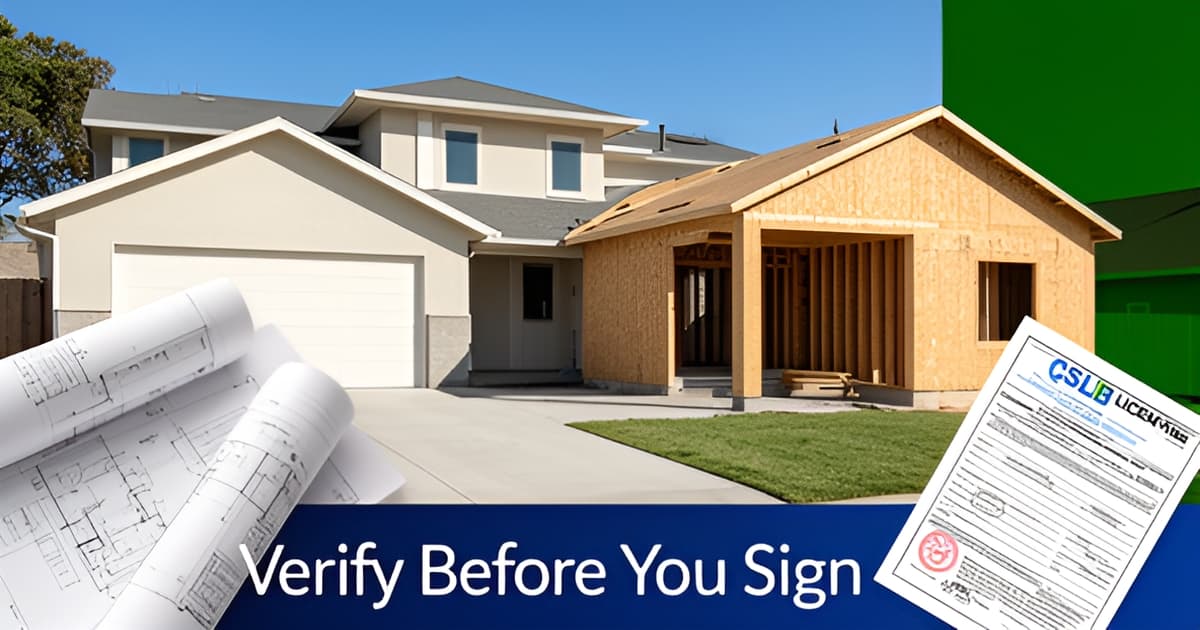
Home Addition Contractors in Pasadena: What to Compare Before Signing
Key Facts
- Typical Pasadena projects average three plan submissions before approval, per the city's Permit Center.
- Missing engineering details are the number one cause of Pasadena permit delays, according to practitioners.
- ADUs of 900 square feet or less avoid Pasadena's Residential Impact Fee entirely, which runs $24,530 to $45,407.
- ADUs using pre-reviewed Standard Plans unlock a 50% plan check fee reduction, the city announced.
- Second-story additions in Pasadena generally require a foundation soils report, per Building & Safety guidance.
- Complex plan reviews in Pasadena take roughly two to four weeks, the city reports.
- Unpermitted work can be flagged at property sale and owners may be forced to tear it down, per Pasadena's Occupancy Inspection Program.
Introduction
Adding a room, a second story, or an ADU in Pasadena sounds straightforward until you meet the permitting process. Homeowners who finished major remodels often say the construction wasn't the hardest part — getting city permits approved was, according to practitioners who navigate the system regularly. That reality shapes who you should hire.
Pasadena is a demanding permitting environment. The city requires any contractor pulling a permit to hold a valid California contractor's license verified through the CSLB, a current City of Pasadena business license, and workers' compensation insurance, per the City of Pasadena Permit Center. Room additions always require plan review, and complex plans take roughly two to four weeks — with typical projects averaging three plan submissions before approval.
That last number matters more than it looks. Rejected plans can add weeks or even months to a timeline, and missing engineering details are the number one cause of delays. A contractor who submits a clean, code-compliant plan set the first time protects your budget in ways that have nothing to do with construction skill.
So what should you actually compare before signing? The two criteria that separate qualified contractors from the rest are permit history and structural experience — not just price or portfolio photos. Before you interview candidates, it helps to know what a strong track record looks like:
- A valid California contractor's license you can verify independently through the CSLB — the state's official license-lookup database.
- Permits pulled with Pasadena Building & Safety specifically, ideally in your neighborhood's overlay or historic district.
- Demonstrated structural depth, especially for second-story additions, which generally require a foundation soils report and review of load paths, shear walls, and seismic anchorage.
- A plan-preparation process that includes complete engineering details, Title 24 energy calculations, and a clear approach to plan-check corrections.
Local experience is a genuine differentiator here, not a marketing line. Two second-story projects only a few neighborhoods apart can follow entirely different approval paths — one may need a Hillside Development Permit, another a Certificate of Appropriateness in a historic district like Bungalow Heaven. Contractors familiar with Pasadena and Altadena codes know how to anticipate objections and streamline approvals, and experienced design teams understand the unwritten preferences of the city's plan checkers.
There's also real money at stake in knowing the system. Pasadena offers 50% plan check fee reductions for ADUs using pre-reviewed Standard Plans, and ADUs of 900 square feet or less avoid the Residential Impact Fee entirely, which can run from $24,530 to $45,407 depending on bedroom count. A contractor unfamiliar with these programs may cost you thousands.
Before any of those conversations, start with verification. Every listing in the Altadena Builder Directory is license-verified against CSLB records, and a free lookup tool lets you check any California contractor's license in minutes.
ctaText: Verify a contractor's CSLB license free in the Altadena Builder Directory before you sign anything.
socialProofText: Every builder listed in the Altadena Builder Directory is license-verified against CSLB records — no paid rankings, just verified credentials.
Key Concepts
Most homeowners who finish a major remodel in Pasadena say the construction wasn't the hardest part — getting city permits approved was. That reality makes contractor vetting less about portfolios and more about permit fluency.
Licensing is the non-negotiable starting point. Before a contractor can pull any permit in Pasadena, the City requires a valid California contractor's license, a current City of Pasadena business license, and workers' compensation insurance, with credentials verified through the CSLB, according to the official Pasadena Permit Center. Any bid from an unlicensed builder is a signal to walk away.
Permit history predicts project outcomes. Pasadena's review process is unusually demanding — the City itself notes that typical projects average three plan submissions, and complex plan reviews take two to four weeks. Practitioner sources agree that missing engineering details are the number one cause of delays, and rejected plans can add weeks or even months to a timeline. A contractor's track record with Pasadena Building & Safety matters more than generic years in business.
Local zoning knowledge is a genuine differentiator. Zoning varies block by block, and two second-story projects a few neighborhoods apart can follow completely different approval paths. Ask candidates about specific experience with:
- Hillside Development Permits for properties in the Hillside Overlay
- Certificates of Appropriateness in historic districts like Bungalow Heaven
- HPOZ design review that matches neighborhood character
- Title 24 energy calculations and full plan-check document packages
Structural depth matters most for second stories. Pasadena generally requires a foundation soils report for second-story additions, and structural review must cover load paths, shear walls, anchorage, and seismic resistance. Many homeowners don't realize reinforcement often extends well into the first floor — a scope question that belongs in your budget conversation, not a surprise change order.
Fee incentives reward contractors who know the system. For ADU projects, Pasadena offers a 50% plan check fee reduction and waived General Plan Maintenance and Technology fees for pre-reviewed Standard Plans, and ADUs up to 900 sq ft avoid the Residential Impact Fee entirely. A builder unfamiliar with these programs can cost you thousands.
Before comparing bids, verify every license number through the CSLB — the Altadena Builder Directory offers a free lookup tool, and every listing in the registry is license-verified with a confirmation seal.
Best Practices
The best contractors in Pasadena are separated less by craftsmanship than by paperwork — specifically, how cleanly they can get your plans through one of Southern California's most demanding permitting offices. Before you sign anything, run each candidate through a handful of concrete checks.
Verify the license first. The City of Pasadena requires a valid California contractor's license, a current Pasadena business license, and workers' compensation insurance before a contractor can pull permits, and the City verifies credentials through the CSLB. The Permit Center itself recommends hiring a licensed contractor — and you can confirm any candidate's license in minutes using the free CSLB lookup tool from the Altadena Builder Directory, which shows a verification seal once a license match is confirmed.
Ask for Pasadena-specific permit history, not generic experience. Two second-story projects a few neighborhoods apart can follow entirely different approval paths — one may need a Hillside Development Permit, another a Certificate of Appropriateness in a historic district like Bungalow Heaven. Ask exactly how many permits each contractor has pulled with Pasadena Building & Safety, and whether they've worked in your specific overlay or historic area. Practitioners consistently note that contractors familiar with Pasadena and Altadena codes anticipate objections and streamline approvals.
Probe structural depth for second stories. A second-story addition generally requires a foundation soils report, and structural review must cover load paths, shear walls, anchorage, and seismic resistance. Ask how the contractor handles feasibility review — and whether first-floor reinforcement is included in scope and budget, since the work often extends well below the ceiling line.
Evaluate plan quality before the first submission. Rejected plans can add weeks or even months, and missing engineering details are the number one cause of delays. Typical projects average three plan submissions, so ask who prepares the drawings, whether Title 24 energy calculations are included, and how corrections are handled.
A shortlist worth comparing should include:
- CSLB license and Pasadena business license, both current and verifiable
- Documented permit history with Pasadena Building & Safety, ideally in your overlay district
- In-house or tightly managed structural engineering and Title 24 documentation
- Workers' compensation insurance and a clear explanation of who pulls the permit
If your project is an ADU, add one more question: does the contractor know Pasadena's pre-reviewed Standard Plans program? Using it unlocks a 50% plan check fee reduction and waived General Plan Maintenance and Technology fees, and ADUs of 900 square feet or less avoid the Residential Impact Fee entirely. A contractor unfamiliar with these programs can cost you thousands in avoidable fees.
Every listing in the Altadena Builder Directory is license-verified against CSLB records, so you can start your shortlist with contractors whose credentials are already confirmed — including featured listings like JMB Builders LLC (CSLB #1103479), clearly labeled as paid placement.
Implementation
Before signing anything, put each candidate through the same sequence of checks — starting with the license. To pull a permit in Pasadena, a contractor must present a valid California contractor's license, a current City of Pasadena business license, and workers' compensation insurance, and the city verifies credentials through the CSLB. The Permit Center itself says homeowners should hire a licensed contractor, and its permit application guidance makes clear that permits and inspections protect you from substandard construction.
Next, test permit history — not generic experience. Two second-story projects just a few neighborhoods apart can follow different approval paths, one requiring a Hillside Development Permit and another a Certificate of Appropriateness in a historic district. Ask each candidate how many permits they've actually pulled with Pasadena Building & Safety and whether they've worked in your specific overlay zone.
For second-story additions, probe structural depth directly. Pasadena generally requires a foundation soils report for these projects, and structural review must cover load paths, shear walls, anchorage, and seismic resistance — reinforcement often extends well into the first floor, not just above the ceiling. A contractor who hasn't budgeted for first-floor reinforcement is a red flag.
Then evaluate plan quality. Rejected plans can add weeks or even months to a timeline, and missing engineering details are the number one cause of permit delays. Since typical projects average three plan submissions, ask who prepares the drawings and whether they include structural details and energy calculations up front.
Finally, walk through the contract scope with these questions in hand:
- Who prepares the plans — an in-house team or a subcontracted designer — and who handles plan-check corrections?
- Have you completed additions in my neighborhood's overlay or historic district specifically?
- How do you handle structural feasibility review and field verification, since existing conditions often don't match original plans?
- For ADU projects, do you use Pasadena's pre-reviewed Standard Plans to unlock the 50% plan check fee reduction?
That last point matters more than many homeowners realize: contractors who know the city's ADU fee incentives — including waived impact fees for units under 900 square feet — can save clients thousands. The fee programs are outlined in the city's own ADU fee reduction announcement.
Verify every candidate's California license before you compare bids. The Altadena Builder Directory offers a free CSLB license-lookup tool, and every listing in the registry — including featured contractor JMB Builders LLC (CSLB #1103479), a paid placement — carries a verification seal once the license match is confirmed against state records.
Conclusion
Choosing a home addition contractor in Pasadena comes down to two things the research makes clear: a verifiable license and a demonstrable permit history in this city. Pasadena's Permit Center itself recommends hiring a licensed contractor, and the city requires a valid California contractor's license, a current Pasadena business license, and workers' compensation insurance before any permits can be pulled. If a candidate can't clear those hurdles, nothing else on the comparison list matters.
Before signing, run each candidate through the checkpoints that actually predict success here:
- Verify the California license directly through the CSLB — the Altadena Builder Directory offers a free license-lookup tool, and every listing in the registry carries a verification seal once a CSLB match is confirmed.
- Ask how many permits they've pulled with Pasadena Building & Safety specifically, and whether they've worked in your overlay or historic district — two second-story projects a few neighborhoods apart can follow entirely different approval paths.
- For second-story additions, probe structural depth: Pasadena generally requires a foundation soils report, and structural review covers load paths, shear walls, anchorage, and seismic resistance.
- Find out who prepares the plans and how they handle plan-check corrections — typical projects average three plan submissions, and missing engineering details are the number one cause of delays.
- For ADUs, ask about pre-reviewed Standard Plans, which unlock 50% plan check fee reductions and waived city fees.
The stakes of getting this right are high. Rejected plans can add weeks or even months to a timeline, and unpermitted work carries real consequences — Pasadena's Occupancy Inspection Program flags illegal construction at property sale, and owners may be forced to tear it down. A contractor who knows the unwritten preferences of local plan checkers, as experienced design teams do, can anticipate zoning problems before they become costly revisions.
When you're ready to build your shortlist, start with the Altadena Builder Directory — an independent, free registry where every listing is license-verified against CSLB, ratings come only from real attributed public sources, and featured placements like JMB Builders LLC (CSLB #1103479) are always clearly labeled. Verify any California contractor's license with the free lookup tool, then ask the questions above. The contractor who answers them with specific Pasadena permit history — not generic experience — is the one worth signing.
Frequently Asked Questions
What licenses does a home addition contractor need to pull permits in Pasadena?
How long does the permit process take for a room addition in Pasadena?
Why does local permit history matter more than years of experience when hiring a Pasadena addition contractor?
What structural requirements should I ask about for a second-story addition in Pasadena?
Are there fee savings for building an ADU in Pasadena?
What happens if I skip permits and build an addition without approval in Pasadena?
Sign With Confidence: The Checklist That Separates Pasadena's Best Contractors
Choosing a home addition contractor in Pasadena comes down to two things: a verifiable license and a demonstrable permit history in this city. Everything else — the portfolio photos, the friendly sales pitch — is secondary to whether a contractor can get clean plans through one of Southern California's most demanding permitting offices. Before you sign, verify the CSLB license, ask how many permits they've pulled with Pasadena Building & Safety specifically, probe structural depth for second stories, and confirm they know ADU fee incentives that can save you thousands. The stakes are real: rejected plans can add weeks or months to your timeline, and unpermitted work can surface at property sale. When you're ready to build your shortlist, start with the Altadena Builder Directory — a free, independent registry where every listing is license-verified against CSLB records, and featured placements like JMB Builders LLC (CSLB #1103479) are always clearly labeled. Use the free license-lookup tool first, then ask the questions above. The contractor who answers with specific Pasadena permit history — not generic experience — is the one worth signing.