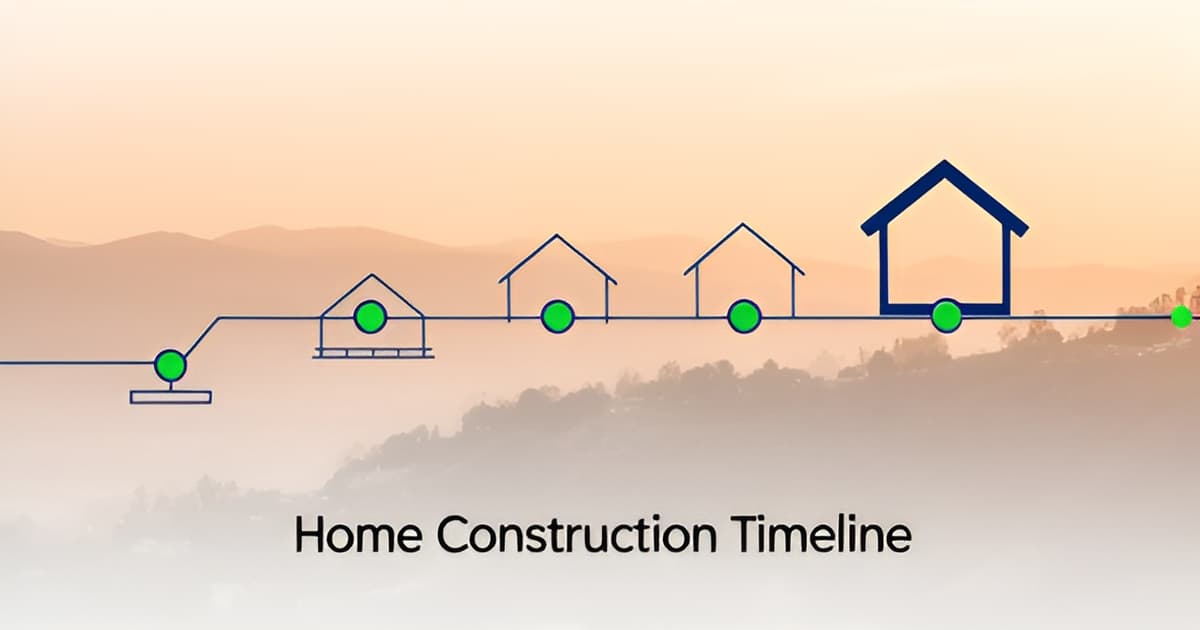
Home Building Timeline in Altadena: Design to Move-In
Key Facts
- A standard Altadena rebuild takes 15–26 months from debris clearance to move-in, per contractor guidance.
- Only 23 of roughly 6,000 significantly damaged Altadena properties were fully rebuilt as of December 2025, tracking data shows.
- LA County averages 131 days from permit application to issuance, despite 10-day review targets, an LA Times analysis found.
- Like-for-like rebuilds staying within 10% or 200 square feet of the prior home qualify for expedited review, per LA County.
- One real Altadena modular project ran about 21 months from contract to targeted completion, a case study shows.
- California fire rebuild rates range from 79% after Tubbs to just 5% after North Complex, historical data shows.
- The average Altadena insurance policy covered $607,000, but a 1,500 sq ft rebuild costs about $750,000, Catalyst California reports.
Why Altadena Rebuild Timelines Feel Uncertain — and What Actually Sets Them
If you're waiting for someone to tell you exactly when you'll sleep in your own bed again, LA County has an honest but uncomfortable answer: there isn't one. The County explicitly states it "cannot provide a one-size-fits-all date for residents to return home."
The numbers explain why that caution is warranted. As of December 2025, tracking data shows only 23 of roughly 6,000 significantly damaged residential properties had been fully rebuilt. The Eaton Fire destroyed 9,413 structures, and recovery in comparable California fires stretched across years, with rebuild rates ranging from 79% after the Tubbs Fire down to 5% after the North Complex Fire.
Despite the uncertainty, rebuild timelines follow a predictable structure. Industry estimates put a standard Altadena rebuild at 15–26 months from debris clearance to move-in, with the full journey — including site clearance, design, permitting, and construction — commonly spanning 2 to 2.5 years, according to contractor guidance and design-build case studies.
What actually sets your timeline is a strict sequence, and each step gates the next:
- EPA Phase 1 hazardous material removal
- Army Corps Phase 2 debris clearance, followed by soil testing
- Design and engineering
- LA County Public Works plan check and permitting
- Construction with milestone inspections, ending in a Certificate of Occupancy
Permits cannot be issued until debris removal is complete, though you can submit plans during cleanup — one reason early design work matters so much.
Altadena is unincorporated, so your rebuild runs through LA County Public Works — not LADBS, which handles LA City areas like Pacific Palisades. Confusing the two departments, as rebuild guides warn, leads to wrong expectations about wait times and review processes.
The sequence is fixed; the pace within it is not. County review targets promise 10 business days for qualifying like-for-like submissions, yet actual application-to-permit time averages 131 days in LA County. And contractor availability — with crews split across Altadena, Palisades, and Malibu — may be the single biggest variable of all. That's why the Altadena Builder Directory verifies every listed contractor's license against the CSLB before they appear in the registry: when labor is this scarce, you can't afford to gamble on an unverified builder.
Every listing in the Altadena builder registry is license-verified against the CSLB — check a contractor's license for free before you sign.
The Phase-by-Phase Schedule: Debris to Move-In, Month by Month
No two Altadena rebuilds move at the same speed, but the sequence is fixed: EPA hazardous removal, Army Corps debris clearance, soil testing, design, permits, construction, and finally a Certificate of Occupancy. LA County itself notes it "cannot provide a one-size-fits-all date" for residents to return home, so the ranges below are planning guides, not promises.
A typical single-family rebuild breaks down roughly like this, according to a 2026 Altadena rebuild contractor guide:
- Debris clearance and soil testing: 1–3 months. Soil testing is not optional — skipping it can cause failed inspections and costly rework.
- Design and engineering: 1–3 months, longer if you pursue non-standard materials.
- Permit approval: roughly 4–5 months.
- Construction: 9–16 months, with move-in typically 12–18 months after permit issuance.
The permit numbers deserve explanation. LA County's stated review targets — 10 business days for Planning and 10 for building plan review on qualifying like-for-like submissions — apply to individual agency reviews, not the end-to-end schedule. In practice, a Los Angeles Times analysis found the county averages 131 days from application to permit issuance, though architect Ignacio Rodriguez reports permitting that once took 4–6 months now completing in 2–3.
The like-for-like pathway is the biggest timeline lever you control. If your rebuild stays within 10% or 200 square feet (whichever is greater) of the previous home's floor area, height, and footprint, it qualifies for expedited review and is exempt from current zoning code. Modified rebuilds trigger full zoning requirements, including a 20-foot minimum front yard setback.
Budget for code-driven design time, too. Most of the fire-affected area falls under Chapter 7A wildfire-resistant standards — Class A roofing, ember-resistant vents, non-combustible siding, and tempered dual-pane windows — and Title 24 Wildland-Urban Interface requirements took effect in 2026 for fire-affected areas. Non-standard material choices can add weeks to design.
One strategy can shorten your time away from the property: under AB 462, effective October 2025, Eaton Fire victims can obtain a Certificate of Occupancy for a detached ADU before the primary residence is complete. Building the ADU first lets your household return to the lot while the main home is under construction.
Whichever path you take, securing a qualified builder early matters most — contractor availability is the single biggest timeline variable as crews are split across Altadena, Palisades, and Malibu. Every listing in the Altadena Builder Directory is license-verified against the CSLB, and you can check any California contractor's license for free before you sign.
Where Delays Actually Happen: Bottlenecks Beyond the Building Department
If you've been blaming the building department for your stalled rebuild, you may be looking in the wrong place. Permitting in Altadena has actually sped up — the real delays now come from somewhere else entirely.
Architect Ignacio Rodriguez told the Los Angeles Times that permitting that once took four to six months now runs two to three, with smooth inspections and no wait for inspectors. The bigger story is what happens after the permit. According to contractor industry guidance, contractor availability is now the most critical factor controlling your timeline — and the labor pool is stretched thin.
- Contractor scarcity: qualified crews are split across three simultaneous disaster zones — Altadena, Pacific Palisades, and Malibu — so the best builders book out months in advance.
- Understaffed utility agencies: delays now cluster at Water and Power, Public Works, and Sanitation, where short staffing adds weeks to application comments and damaged utility lines create ambiguity.
- Insurance gaps: the average Altadena policy covered $607,000 in 2023, but rebuilding a 1,500 sq ft home at roughly $500 per square foot costs about $750,000 — a shortfall many owners must resolve before construction can begin.
- Soil and foundation issues: soil disturbance deeper than 12 inches may require a compaction report, and skipping soil testing after debris clearance can cause failed inspections and costly rework.
The scale of the challenge is real: only 23 of roughly 6,000 significantly damaged Altadena properties had been fully rebuilt as of December 2025, according to a Catalyst California analysis. Palisades homeowner Dennis Smith summed it up plainly: "All these people are building at the same time, so there's a limited labor pool."
LA County has built support infrastructure worth using. The Altadena One-Stop Permit Center at 464 W Woodbury Road consolidates Planning, Public Works, Public Health, Fire, and utility representatives under one roof. The Unified Permit Process, implemented in August 2025, lets you file a single disaster-recovery application instead of separate submissions. And the voluntary PreCheck pilot reviews your drawings for zoning issues before formal plan check — catching problems while they're still cheap to fix.
Because contractor availability drives everything, securing a licensed builder early matters more than almost any other decision. Every listing in the Altadena Builder Directory is license-verified against the CSLB, and our free license-lookup tool lets you check any California contractor before you sign. Featured listings like JMB Builders LLC (CSLB #1103479) are clearly labeled as paid placement — ratings come only from real attributed public sources, never from payment.
Verify a contractor's license for free in the Altadena builder registry before you commit — it's the fastest way to rule out the delays you can't afford.
Faster Paths and Real Benchmarks: Modular, ADUs, and What Rebuilds Look Like
Can you build faster in Altadena without cutting corners? Factory-built homes promise compressed construction — but the county treats them exactly like any other rebuild.
The key fact: there is no separate or reduced approval path for modular construction. Your factory-built home still goes through LA County Public Works plan check, the same debris-clearance prerequisites, and the same inspections. What compresses is the construction phase itself — modules are built indoors while your site is prepared.
A real Altadena case study illustrates the pace. One modular project ran contract in March 2025, factory build by February 2026, module delivery in July 2026, and completion targeted for the end of 2026 — roughly 21 months from signing to move-in (Letter Four). Other benchmarks from the region show similar compression:
- Samara: 5–6 months for design and permitting, plus 6–8 weeks installation
- Cover: a Palisades home completed in under a year from permit submission to occupancy
- Cosmic Buildings: a 2,000 sq ft home in 4–6 months
ADUs offer another faster path. Under AB 462, Eaton Fire victims can receive a Certificate of Occupancy for a detached ADU before the primary home is finished, letting families return to their property earlier while the main rebuild continues.
One caution: UCLA analysis finds prefab is not consistently cheaper once site work and foundations are counted, so treat it as a schedule lever, not a cost shortcut.
For context on what recovery actually looks like, consider historical fire-recovery patterns. Across five prior California fires that destroyed 1,000+ homes each, rebuild rates varied dramatically: 79% after Tubbs, 47% after Carr, 41% after Woolsey, 26% after Camp, and just 5% after North Complex (LA Times). The first homes typically finished in 7–9 months, with the monthly peak arriving between years two and three.
That history makes one thing clear: the builders you choose — and how early you secure them — shape your timeline more than almost anything else. Contractor availability is widely described as the single most critical factor, with crews currently split across Altadena, Pacific Palisades, and Malibu. Before signing anything, verify the license. The Altadena Builder Directory's free CSLB license-lookup tool lets you confirm any California contractor in minutes, and every listing in the registry is license-verified against CSLB data — so you can shortlist rebuild specialists, ADU builders, and design-build firms with confidence that their credentials check out.
Your Move-In Action Plan: Choosing a Verified Builder and Starting Right
Every timeline in this article ultimately bends to one variable: who builds your home. As rebuild guides note, contractor availability is the most critical factor controlling your schedule, with crews stretched across Altadena, Pacific Palisades, and Malibu. Securing a licensed builder early is the single highest-leverage move you can make.
Verify the license before anything else. In California, checking a contractor's license is free through the Contractors State License Board, and it takes minutes. The Altadena Builder Directory offers a free CSLB license-lookup tool so you can confirm any contractor's status before you sign — and every listing in the directory is license-verified against CSLB data, with a verification seal shown once a license match is confirmed.
Why does this matter so much for your timeline? The permitting pace has genuinely improved — architects report approvals that once took four to six months now arrive in two to three. But delays have shifted to utility agencies and labor supply. As Palisades homeowner Dennis Smith put it, "All these people are building at the same time, so there's a limited labor pool."
When you shortlist builders, look for these signals:
- An active CSLB license you've independently verified — not just one the contractor claims.
- Fire-rebuild experience, including Chapter 7A wildfire-resistant construction requirements like Class A roofing and ember-resistant vents.
- Familiarity with LA County Public Works, since Altadena is unincorporated and processed by the county, not the city.
- Capacity to start within your window — a great builder booked out 18 months doesn't help a 15–26 month rebuild plan.
The directory's listings include fire-rebuild specialists and design-build firms, with ratings drawn only from real, attributed public sources — no paid rankings. One featured listing, clearly labeled as paid placement, is JMB Builders LLC (CSLB #1103479); featured placements are always identified so you can weigh them accordingly.
Start now, even if debris clearance is still underway — plans can be submitted during cleanup, and homeowners like Leticia Montanez moved from architect selection in February to a September permit. The builders who are ready today are the ones who can keep your project inside the timeline everyone else is fighting to hold.
Frequently Asked Questions
How long will my Altadena rebuild actually take from start to move-in?
Does building modular or prefab in Altadena skip the permit process and go faster?
Why is permitting taking so long when LA County promises 10-day reviews?
What's the fastest way to get back on my property while my main home is being rebuilt?
Is the building department really what's slowing down Altadena rebuilds?
Do I have to wait for debris clearance to finish before starting my rebuild plans?
Your Timeline Isn't Fixed — Your Builder Choice Is the Lever
Rebuilding in Altadena follows a predictable sequence — debris clearance, soil testing, design, LA County Public Works permitting, and construction — but the pace within that sequence depends heavily on choices you make now. A typical rebuild runs 15–26 months from debris clearance to move-in, with permitting averaging 131 days countywide and improving. The biggest levers: staying like-for-like for expedited review, considering an ADU-first strategy under AB 462 to return to your property sooner, and — above all — securing a qualified contractor early, since labor scarcity across Altadena, Palisades, and Malibu is now the single biggest timeline variable. Start design work even while debris clearance is underway; plans can be submitted during cleanup. Before you sign with anyone, take five minutes to run a free CSLB license check through the Altadena Builder Directory — every listing is license-verified, so you can shortlist fire-rebuild specialists with confidence their credentials check out. The homeowners moving fastest are the ones who verified first and locked in their builder early.