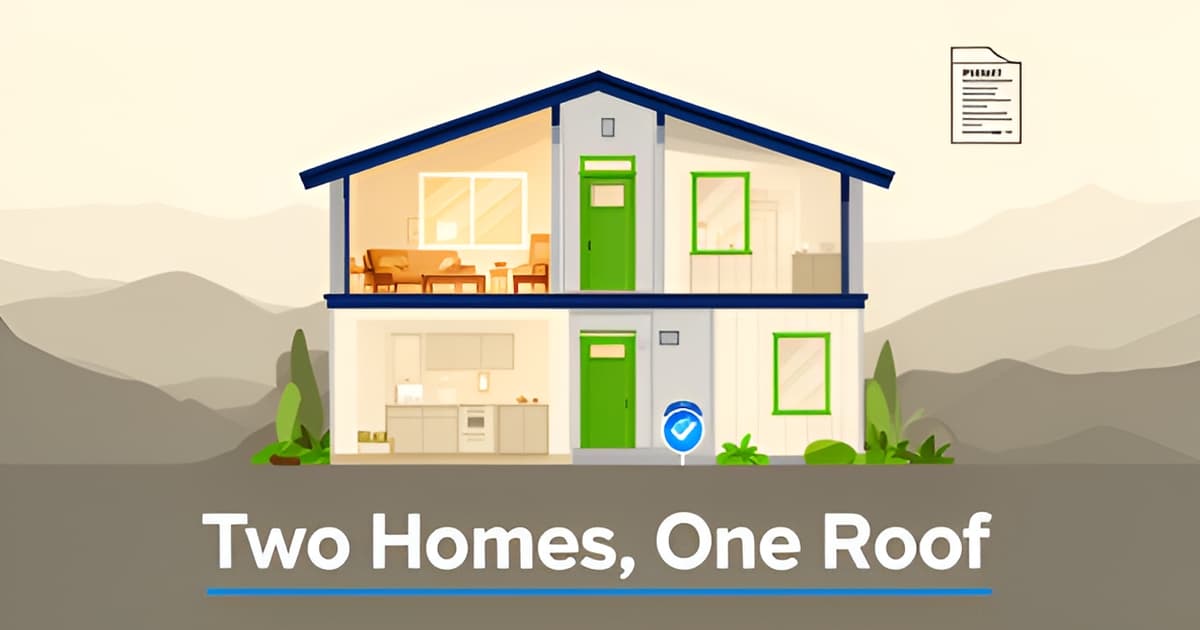
Mother-Daughter Renovations: Creating Two Living Spaces in One Home
Key Facts
- 77% of adults 50 and older want to remain in their homes long-term according to AARP data.
- 14% of recent homebuyers purchased multigenerational homes, and 41% did so to care for aging parents per NAR research.
- A Junior ADU maxes out at 500 square feet and typically costs $30,000–$90,000 with a 2–4 month timeline per California ADU cost data.
- California law exempts ADUs under 750 square feet and JADUs of 500 square feet or less from impact fees under SB 543.
- Garage conversions run 30–50% cheaper than detached ADU builds by reusing existing foundation, walls, and roof per ADU cost data.
- AB 976 permanently removed owner-occupancy requirements for ADUs as of January 1, 2024 per California ADU rules.
- Unpermitted ADU conversions make resale "harder fast," complicating appraisals, financing, and buyer confidence according to builders.
Why Altadena Families Are Building Two Homes Under One Roof
Two generations under one roof sounds simple until you try to share one kitchen, one thermostat, and one bathroom schedule. Across Altadena, families are discovering that making a mother-daughter arrangement work takes more than good intentions — it takes a real second living space.
The demand behind this shift is substantial. According to AARP survey data, 77% of adults 50 and older want to remain in their homes long-term — a figure that has held steady for more than a decade. Their adult children are responding: NAR research shows 14% of recent homebuyers purchased a multigenerational home, and 41% cited caring for or supporting aging parents as the reason.
The challenge is that families need two things at once: independence and closeness. An aging parent wants privacy, a private entrance, and control over their own daily rhythm. Their adult children want Mom or Dad steps away — but not in the next room. As one builder puts it, an attached unit "gives them independence while keeping you steps apart," with no crossing the yard in bad weather.
Cramming everyone into a shared house without a plan tends to fail in predictable ways:
- Friction over shared spaces — competing schedules, noise, and cooking routines in one kitchen breed daily tension.
- Privacy problems — no sound separation, no private entrance, and no personal space erode the dignity the arrangement was meant to preserve.
- Resale risk — unpermitted or poorly classified conversions make a home harder to sell fast when priorities change.
That last point deserves emphasis. Zoning and permitting are the biggest legal hurdles in any second-unit project, and small design details — like whether a kitchenette counts as a second kitchen — can change how the whole space is classified. Getting the classification right early, with a contractor who pulls proper permits, protects both family harmony and home value.
The good news for Altadena homeowners is that a well-planned conversion doesn't require a second house. California law now makes it easier and cheaper than ever to create a legal second living space inside or attached to an existing home. The families who succeed start with function, not floor plans — and with a licensed, verified builder. The Altadena Builder Directory lists ADU builders and remodelers whose licenses are verified against the California Contractors State License Board, so you can confirm credentials before anyone touches a wall.
The JADU: California's Fastest, Cheapest Path to a Second Living Space
If your goal is two comfortable living spaces under one roof, California's Junior ADU (JADU) is hard to beat. Carved directly out of your existing home, a JADU maxes out at 500 square feet and typically costs $30,000–$90,000 — roughly $150–$275 per square foot in the LA area, according to California ADU cost data. Most projects wrap up in just 2–4 months, making it the fastest conversion path available to homeowners.
The savings come from what a JADU doesn't require. Because it shares a wall, bathroom, or kitchen with the main house, you're not building new foundations, roofs, or utility hookups. An efficiency kitchen is permitted — a sink, counter, and small appliances suffice, with no full range required — which keeps both the budget and the footprint modest. For a mother-daughter setup, that shared-bathroom-or-not flexibility is exactly what makes the format work.
How does it stack up against the alternatives? A comparison of California ADU types puts garage conversions starting around $120,000 with 4–6 month timelines, while attached ADUs run $150,000–$350,000 over 6–10 months. Garage conversions do offer a middle path — reusing the existing foundation, walls, and roof makes them 30–50% cheaper than a new detached build — but a detached ADU at $300–$450 per square foot can easily reach $180,000–$270,000 for a 600-square-foot unit. The JADU simply asks for less.
California's legal landscape is unusually favorable right now:
- Under SB 543 (Gov. Code 66324), ADUs under 750 square feet — and JADUs of 500 square feet or less — are exempt from impact fees.
- Local agencies cannot charge JADU utility connection fees, eliminating one of the costliest line items in other ADU types.
- AB 976 permanently removed owner-occupancy requirements for ADUs as of January 1, 2024.
- Under AB 1154, effective January 2026, JADU owner-occupancy is only required when the unit shares a bathroom with the main house.
You can even pair a JADU with one full ADU on a single-family lot — two full ADUs aren't allowed, but the JADU-plus-ADU combination is. One caveat: classifications vary by jurisdiction, and small details like whether a kitchenette counts as a second kitchen can change how your project is treated. Confirm with your local planning office before finalizing designs.
Whatever path you choose, work with a properly licensed contractor. Every builder listed on the Altadena Builder Directory is verified against California Contractors State License Board records — try the free CSLB license-lookup tool to check any contractor you're considering, including featured builder JMB Builders LLC (CSLB #1103479).
Function First: Designing for Dignity, Accessibility, and Privacy
The best mother-daughter renovations don't start with a floor plan — they start with a question. As one builder puts it, "The first question should not be, 'What do we call it?' It should be, 'How does it need to function?'" Decide how the space must work before choosing a label or format.
The private entrance is the clearest example. "A private exterior door is a small line on the drawing that pays for itself in dignity," according to multigenerational design guidance. A mother coming home at 9 p.m. shouldn't have to walk through your kitchen to reach her own front door.
California's JADU framework keeps this simple: an efficiency kitchen is permitted — a sink, counter, and small appliances, with no full range required, per state ADU rules. That detail matters legally, too. Small choices like whether a kitchenette counts as a second kitchen can change how your local planning office classifies the entire project.
When adult children return, independence and sound separation top the priority list. Acoustic separation — insulated walls and solid-core doors — lets two households share one roof without sharing every conversation. Duplicating kitchen and laundry functions, even in compact form, prevents daily friction over shared appliances.
With 77% of adults 50+ wanting to remain in their homes long-term, per AARP data, universal design belongs in the original plans, not a later retrofit:
- Step-free entry and curbless shower with grab-bar blocking in the walls
- Wide, well-lit hallways and slip-resistant flooring
- Rollout trays and lazy susans in kitchens for easier access
- Single-story main living with a full bath and no steps between rooms
As AIA expert Susan Wright notes, subtle design choices profoundly affect how long someone can comfortably live in their own home — without compromising aesthetics.
Think beyond today's arrangement. Flexibly designed in-law suites have the broadest resale appeal, functioning later as a guest suite or office. Plan wings that can revert to bedrooms and kitchenette rough-ins that can be capped and cabineted over. And because unpermitted work makes resale "harder fast," every conversion should go through proper permitting — the Altadena Builder Directory's free CSLB license-lookup tool makes it easy to verify any California contractor before work begins.
Ready to plan your mother-daughter conversion? Browse the Altadena Builder Directory — every listing is license-verified against the California Contractors State License Board, and ratings come only from real, attributed public sources. Find a vetted ADU or design-build contractor in Altadena today.
Permits, Classification, and Avoiding the Unpermitted-Work Trap
If there's one step that can derail a mother-daughter conversion before a single wall moves, it's classification. What your project "counts as" under local zoning determines everything downstream — and the answer isn't always obvious.
Here's why: classifications vary by jurisdiction, and surprisingly small details can shift them. According to multigenerational design research, whether a kitchenette counts as a second kitchen can change how an entire design is classified — and with it, what approvals, fees, and occupancy rules apply. Zoning is widely described as the biggest barrier to ADU projects, with municipalities regulating everything from maximum square footage and setbacks to parking, utility connections, and rental permission.
The practical move is simple: call your local planning office before you finalize drawings. The question to ask is direct — "What does this count as, and what does that classification require?" Getting that answer early prevents expensive redesigns later.
California law is currently favorable, which makes the permitting process worth the effort rather than something to dodge. Under recent state legislation, ADUs under 750 square feet and JADUs of 500 square feet or less are exempt from impact fees, and JADUs cannot be charged utility connection fees. AB 976 removed owner-occupancy requirements for ADUs as of January 1, 2024, and under AB 1154 (effective January 2026), JADU owner-occupancy is only required when the unit shares a bathroom with the main house.
It can be tempting to skip permits entirely, especially for a conversion that stays inside the existing footprint. Resist that temptation. As one builder puts it, "If an ADU was built without proper approvals, resale gets harder fast." An unpermitted unit may save a few months and some fees today, but it can complicate appraisals, financing, and buyer confidence when you eventually sell — and it offers no protection if a dispute arises within the family arrangement itself.
Permitted work, by contrast, is protection in both directions: it safeguards the family living in the space and preserves the property's value. Flexibly designed, properly documented conversions also carry the broadest resale appeal, since a suite can later serve as a guest room or office.
Before hiring anyone, verify credentials. Altadena Builder Directory is a free, independent registry where every listing is license-verified against the California Contractors State License Board, and a free CSLB license-lookup tool lets you check any California contractor yourself. Listings show a verification seal once a license match is confirmed — for example, JMB Builders LLC (CSLB #1103479), a featured paid placement.
- Ask your planning office how the space will be classified before finalizing designs.
- Confirm which state fee exemptions and occupancy rules apply to your unit type.
- Pull permits for all conversion work — unpermitted ADUs make resale "harder fast."
- Verify your contractor's license through CSLB records before signing a contract.
The paperwork feels tedious in the moment, but it's the cheapest insurance you'll buy for a project meant to last decades.
Hiring the Right Altadena Builder: Verify Before You Sign
Your mother-daughter conversion lives or dies on who builds it. A JADU may be the affordable path — roughly $30,000–$90,000 and a 2–4 month timeline, per California ADU cost data — but only if the work is permitted and done right. As one builder puts it, "If an ADU was built without proper approvals, resale gets harder fast" (Garman Builders).
That makes contractor verification non-negotiable. In California, any contractor performing work valued above a minor threshold must hold a valid license from the Contractors State License Board (CSLB), and that license tells you the classification, bond status, and disciplinary history. Checking it takes two minutes — skipping it can cost you a five-figure mistake.
Before you sign anything, confirm the following:
- A current CSLB license in the correct classification, verified directly — not just claimed on a truck door
- Documented ADU or JADU experience, ideally attached-unit or in-home conversions like yours
- Familiarity with local permitting, since zoning is the biggest ADU barrier and rules vary by jurisdiction
- A written contract with a payment schedule tied to milestones, not large deposits upfront
The Altadena Builder Directory makes the first step easier: every listing is license-verified against CSLB records before it appears, and listings display a verification seal once the license match is confirmed. You can also use the directory's free CSLB license-lookup tool to independently check any California contractor in seconds.
If you prefer a head start, the directory features JMB Builders LLC (CSLB #1103479) — a paid placement, clearly labeled as such, and still license-verified like every other listing. Ratings in the directory come only from real, attributed public sources, so what you see reflects actual records rather than marketing.
One more caution: treat online cost averages carefully. Builders warn that broad figures are often "too broad to be useful" because costs depend on lot conditions, municipality, utilities, and finish level. Get itemized bids from two or three verified contractors, and remember that soft costs — design, permits, engineering — typically run 12–15% of construction on top of the build price.
Verify before you sign. A five-minute license check is the cheapest insurance you'll ever buy on a $40,000–$80,000 project.
Frequently Asked Questions
How much does it cost to convert part of my Altadena home into a separate living space for my mom?
Do I need a separate entrance and kitchen for a mother-daughter suite?
Can I skip permits since the conversion stays inside my existing house?
What California laws make adding a second unit easier right now?
How do I make sure the contractor I hire is legitimate?
Will a mother-daughter conversion hurt my home's resale value?
Two Front Doors, One Family: Your Next Step
A mother-daughter conversion succeeds when it starts with function — a private entrance, an efficiency kitchen, sound separation — and stays on the right side of classification and permitting. California's JADU path makes that easier than ever: up to 500 square feet, typically $30,000–$90,000, finished in 2–4 months, with impact fee exemptions and no utility connection fees under state law. And the timing reflects real need — 77% of adults 50 and older want to remain in their homes long-term, a figure that has held steady for over a decade. Your next steps are straightforward: call your local planning office and ask what your project counts as, design for dignity and accessibility from day one, and never skip permits. Then choose your builder carefully — verify every license before signing. The Altadena Builder Directory's free CSLB license-lookup tool lets you confirm any California contractor in seconds, and every listing is license-verified before it appears. When you're ready to turn one home into two, browse license-verified ADU and design-build contractors in Altadena — and start with confidence.