Multifamily and ADU Design in Altadena: Combining Units on One Lot
Key Facts
- Altadena homeowners can stack up to three extra units on one lot: a detached ADU, an attached ADU, and a junior ADU, per current zoning guidance.
- Altadena has no minimum lot size requirement for ADUs, so even small lots can typically fit extra units.
- Detached ADUs in Altadena can reach up to 1,200 square feet, while junior ADUs max out at 500 square feet inside the main home.
- ADUs under 750 square feet are exempt from impact fees in LA County — designing at 749 sq ft can save thousands.
- Eligible Eaton Fire-impacted homeowners can access a $100,000 ADU Infill Grant, plus a CalHFA grant of up to $40,000.
- As of January 1, 2025, local agencies must accept pre-approved ADU plans, and permit decisions are due within 60 days — or approval is automatic.
- Garage conversions skip setback rules and require no replacement parking, making them the lowest-cost path to a second unit.
One Lot, Multiple Units: What Altadena Homeowners Are Actually Allowed to Build
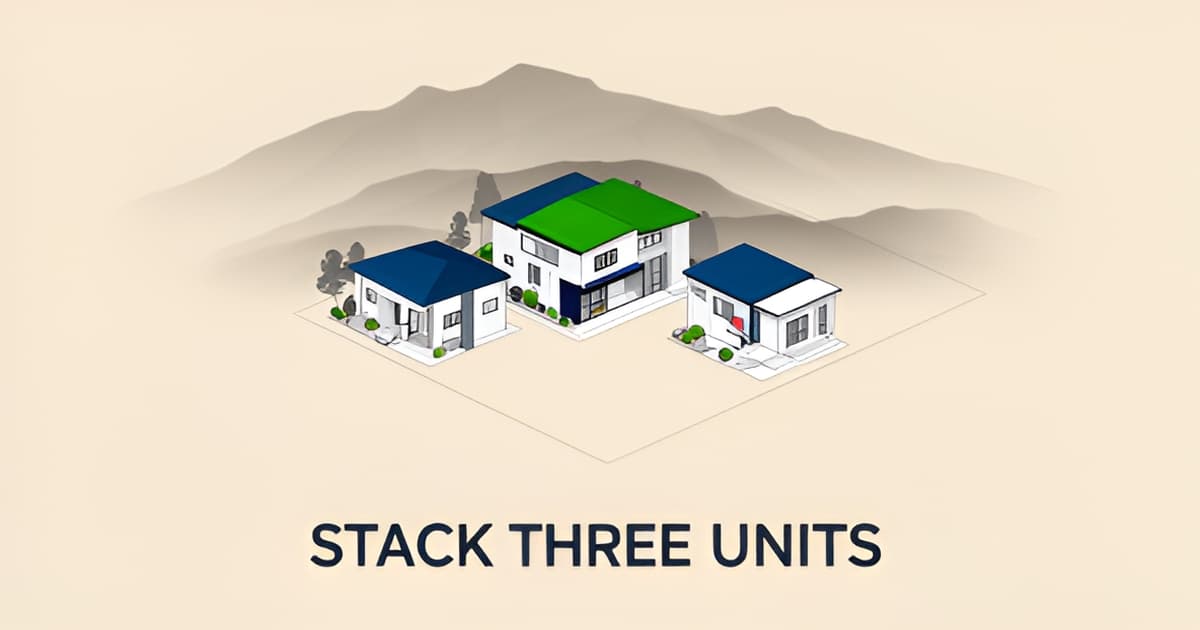
For many Altadena homeowners rebuilding after the Eaton Fire, the first question isn't what to build — it's how much their lot can legally hold. The answer is more generous than most expect: under LA County rules, most single-family properties can add one detached ADU, one attached ADU, and one junior ADU alongside the main home, according to current Altadena zoning guidance.
That "three-unit stack" works like this:
- A detached ADU of up to 1,200 square feet in the backyard
- An attached ADU sized at up to 50% of the primary dwelling, capped at 1,200 square feet
- A junior ADU of up to 500 square feet carved out of the main home, with its own exterior entrance and an efficiency kitchen
Just as important is what Altadena doesn't restrict. There is no minimum lot size requirement for ADUs in this unincorporated LA County area, per post-fire ADU guidance from Maxable. Even small lots can typically fit a second or third unit, and state law guarantees at least one 800-square-foot ADU even where setbacks would otherwise prohibit it.
Setback and parking rules are also forgiving. Detached ADUs need only 4-foot rear and side setbacks, and conversions of garages or existing structures are exempt from that requirement entirely — with no replacement parking required when a garage becomes a unit. A standard ADU requires one parking space, but that's waived within a half mile of public transit, for garage conversions, and under other state exemptions.
One area where homeowners should do their own homework: height limits. Published figures conflict — some sources cite 16 feet for detached ADUs, others 18 feet near transit, and up to 25 feet for attached units in most residential zones. Because these numbers vary by source and by lot conditions, verify the height limit for your specific parcel directly with LA County Planning before finalizing a design.
A few practical notes as you plan. Units under 750 square feet are exempt from impact fees, which makes a smaller detached ADU or JADU combination especially cost-effective. New detached ADUs must include their own solar panel system under California law. And because incomplete submissions are the most common source of permitting delays, it's worth working with a designer or builder who knows the county's requirements — the Altadena Builder Directory lists license-verified ADU builders and fire-rebuild specialists, with every listing checked against CSLB records (a free lookup tool lets you verify any California contractor yourself, including firms like JMB Builders LLC, CSLB #1103479, a featured paid placement).
Before you commit to a configuration, confirm the unit count, setbacks, and height limits for your exact lot. The rules are favorable — but they're parcel-specific.
Designing for Fire Resilience and Smart Lot Configuration
Laying out multiple units on one Altadena lot comes down to a handful of strategic decisions: where you build, what materials you choose, and how you size each unit. Get these right, and you can stack a detached ADU, an attached ADU, and a junior ADU onto a single property — while keeping costs and permitting friction low.
Start with fire resilience. Lots in Altadena's designated fire severity zones — concentrated in the hillside areas — require ember-resistant vents and non-combustible siding, along with stricter materials standards. Post-fire design guidance now emphasizes fire-resistant materials and site planning that accounts for future risk. The good news: LA County's pre-approved rebuild catalog includes fire-resilient, all-electric designs that have already cleared code review, which shortens permitting timelines considerably.
The lowest-cost path is usually a garage conversion. Conversions within the existing footprint are exempt from setback requirements, and no replacement parking is required when you convert a garage to living space. That eliminates two of the costliest surprises in ADU projects: new parking construction and lot-line reconfiguration.
Size decisions carry real financial weight. ADUs under 750 sq ft are exempt from impact fees in LA County, so designing at 749 sq ft rather than 800 can save thousands in upfront charges. For detached ADUs built from scratch, remember that California law requires them to include their own solar panel system — factor that into your budget and roof design early.
If you're adding a junior ADU, the requirements are specific but achievable:
- Maximum size of 500 sq ft, created within the existing main home
- Its own exterior entrance, separate from the main house
- An efficiency kitchen — though it can share a bathroom with the primary residence
A JADU is often the fastest unit to deliver because it adds no new footprint, no new parking, and minimal site disruption. Paired with a detached ADU capped at 1,200 sq ft, it gives many Altadena homeowners a realistic two-rental or multigenerational configuration on a standard lot.
Because post-fire Altadena has seen a rise in unlicensed contractors promising cut-rate builds, design decisions like these deserve a builder who will actually execute them correctly. The Altadena Builder Directory lists ADU and fire-rebuild specialists whose licenses are verified against CSLB records, and its free license-lookup tool lets you confirm any California contractor before signing. A legitimate professional, as one post-fire guide notes, will never pressure you to sign on the spot — and will be transparent about costs, timelines, and permits.
Cutting Cost and Time: Pre-Approved Plans, Grants, and Streamlined Permitting
Building multiple units on one Altadena lot sounds expensive and slow — but a set of new programs and state laws is quietly flipping that assumption. Between pre-approved plans, address-level zoning pre-checks, and five-figure grants, the biggest barriers to your ADU project are shrinking fast.
LA County's pre-approved standard plan catalog for fire rebuilds explicitly includes ADU designs, already reviewed for zoning and building code compliance. The County also offers a free pre-approved ADU plan catalog plus a Private Designer Catalog through LA County Planning. Because the plans come pre-reviewed, you skip months of custom design and plan-check back-and-forth.
The rules now back this up with teeth. As of January 1, 2025, local agencies must accept pre-approved plans — it's mandatory, not optional, per 2025 state ADU law.
For Eaton Fire-impacted homeowners, the Foothill Catalog offers county pre-approved, all-electric, fire-resilient designs ranging from 975 to 2,417 square feet, per SGV Habitat's rebuild program. These designs pair naturally with hillside fire severity zone requirements like ember-resistant vents and non-combustible siding. SGV Habitat's standardized designs (484–891 sq ft) can even serve as either a primary home or an ADU, giving you configuration flexibility on a multi-unit lot.
LA County partnered with Canibuild, an AI-powered pre-construction platform, so homeowners can pre-check zoning compliance by address before committing to a design. Combined with the state's 60-day permit decision deadline — with automatic approval if the county fails to act on a complete application — the permitting timeline is now bounded, not open-ended. Just remember: incomplete or incorrect submissions remain the most common source of delays.
Two funding programs can meaningfully reduce your out-of-pocket:
- $100,000 ADU Infill Grant for eligible Eaton Fire-impacted Altadena homeowners
- CalHFA grant of up to $40,000 for initial ADU expenses
- Impact fee exemption for ADUs under 750 sq ft in LA County
Stacked together, these can offset a substantial share of soft costs and fees before construction even begins.
Post-fire Altadena has seen a documented rise in unlicensed contractors offering cut-rate ADUs that promise more than they deliver, as Maxable's post-fire guidance warns. A legitimate professional will never pressure you into signing on the spot. Before committing to any builder, run their license through the Altadena Builder Directory's free CSLB license-lookup tool — every listing in the registry is license-verified against the California Contractors State License Board, so you can confirm you're working with someone qualified to execute a pre-approved plan correctly the first time.
Hiring the Right Builder: Avoiding Post-Fire Contractor Pitfalls
The Eaton Fire didn't just displace Altadena families — it also drew in a wave of unlicensed contractors peddling quick builds and cut-rate ADUs that promise more than they deliver, according to post-fire reporting. For a community where recovery has been slower and more financially strained than in wealthier burn areas, a bad contract doesn't just delay a project — it can derail an entire rebuild.
The good news is that verification takes minutes. California's Contractors State License Board maintains a public license database, and any builder who resists a license check is telling you everything you need to know. Before you sign anything, run this checklist:
- Look up the contractor's CSLB license number and confirm it is active and in good standing.
- Ask for itemized, written costs — including whether your ADU stays under 750 sq ft, which exempts it from LA County impact fees.
- Get a realistic timeline in writing, including the 60-day permit decision window the county must meet on complete applications.
- Confirm the builder handles permits themselves — incomplete or incorrect submissions are the most common source of delays.
- Walk away from anyone pressuring you to sign on the spot.
That last point deserves emphasis. As one post-fire guide puts it, a legitimate professional will never pressure you into signing a contract on the spot, and will be transparent about costs, timelines, and permit processes. Pressure tactics and vague pricing are not personality quirks — they are red flags.
You don't have to do this alone, either. The Altadena Builder Directory maintains a free registry of ADU builders, fire-rebuild specialists, and design-build firms serving Altadena, with every listing license-verified against CSLB data and a verification seal shown once a license match is confirmed. Its free CSLB lookup tool lets you verify any California contractor in seconds — including featured firms like JMB Builders LLC (CSLB #1103479), whose paid placement is always clearly labeled. Ratings come only from real, attributed public sources, with no paid rankings.
The right builder won't just build your ADU faster — they'll help you capture the incentives that make it pencil out, from the $100,000 ADU Infill Grant for eligible Eaton Fire-impacted homeowners to the county's pre-approved ADU plan catalog that shortens permitting timelines. Verify first, sign second — your rebuild depends on it.
Frequently Asked Questions
How many ADUs can I actually build on my Altadena lot?
Do I need to add parking when I build an ADU in Altadena?
Are there grants available to help Eaton Fire victims build ADUs?
How long does ADU permitting take in Altadena?
Can I use pre-approved plans to build an ADU faster and cheaper?
What should I watch out for when hiring an ADU builder after the Eaton Fire?
One Lot, Three Units, One Smart Rebuild
Altadena's rules make multi-unit living on a single lot more achievable than most homeowners expect: a detached ADU up to 1,200 sq ft, an attached ADU, and a 500 sq ft junior ADU can all coexist on one property — with no minimum lot size, forgiving 4-foot setbacks, and parking waivers in many cases. The financial levers stack up too: units under 750 sq ft dodge impact fees, pre-approved county plans must be accepted as of January 1, 2025, complete applications get a 60-day permit decision by law, and Eaton Fire-impacted homeowners may qualify for a $100,000 ADU Infill Grant. Your next steps are simple: verify height limits and unit counts for your specific parcel with LA County Planning, then choose a builder who can actually execute. Before signing anything, run any contractor through the Altadena Builder Directory's free CSLB license-lookup tool — because in a post-fire rebuild, verified hands make all the difference.