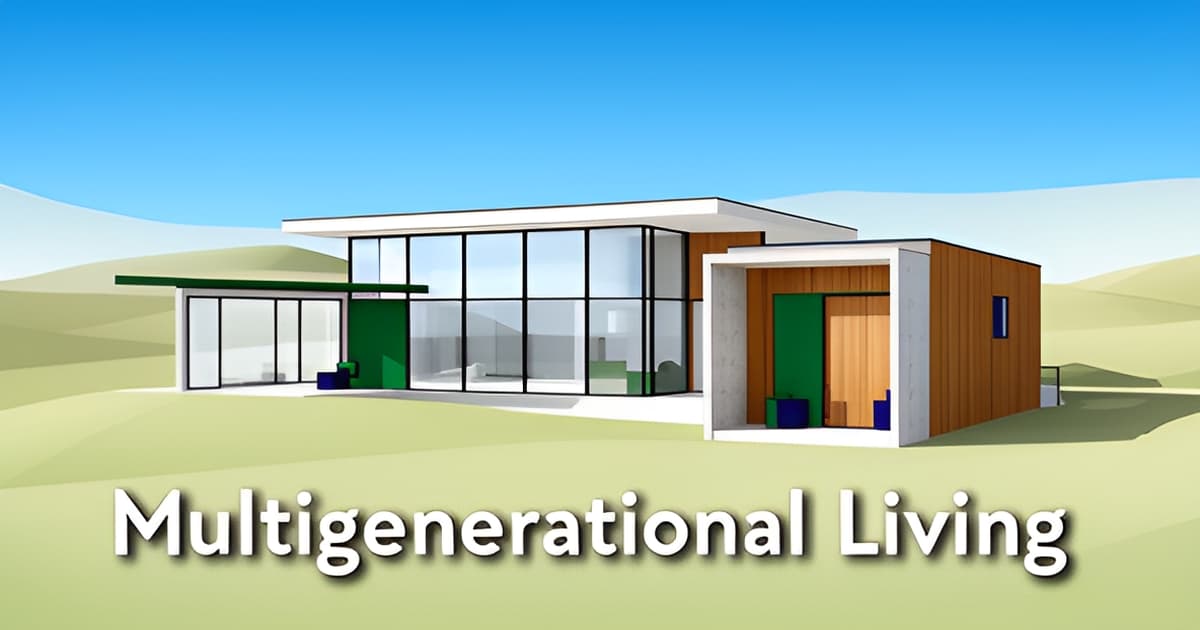
Multigenerational Home Remodels: Costs and Design Options
Key Facts
- California JADUs cost just $60k–$180k all-in, the cheapest multigenerational remodel pathway per planning data.
- Detached new-build ADUs in California run $240k–$520k statewide, over $300k more than a JADU according to cost guides.
- 98% of remodelers say consumers are familiar with aging-in-place design, up from 75% in 2004 NAHB reports.
- ADUs under 750 square feet are exempt from impact fees, while larger units can face fees up to $20,000 per LA planning data.
- The U.S. remodeling market hit $498.3 billion in 2024 and is projected to reach $812.8 billion by 2034 market research shows.
- Adding a bathroom ($40,000+ for a full bath) is one of the most effective multigenerational updates renovation guides note.
- Garage conversions beat attic conversions for aging relatives because ground-level access makes units genuinely workable per remodeling guidance.
Why More Altadena Families Are Remodeling for Multiple Generations
For a growing number of Altadena families, the math of moving no longer works. Housing costs keep climbing, aging parents need closer support, and adult children are returning home longer than anyone planned. Remodeling the house they already own has become the more practical answer.
That shift is showing up in the data. The U.S. home remodeling market was valued at $498.3 billion in 2024 and is projected to reach $812.8 billion by 2034. NAHB forecasts residential remodeling activity to grow 5% in 2025, and Harvard's Joint Center for Housing Studies projects renovation and repair spending at $509 billion for the year.
Two forces are driving this. First, the housing stock itself is old — the median age of U.S. homes is now above 40 years, and analysts say this aging inventory is single-handedly driving the remodeling market. Second, homeowners are choosing not to move. NAHB economist Eric Lynch notes that owners are "increasingly choosing to tap into their home equity and invest in improvements rather than relocate" amid affordability challenges.
At the same time, awareness of aging-in-place design has gone mainstream. NAHB reports that 98% of remodelers say most or some consumers are now familiar with aging-in-place — up from 75% in late 2004. Families aren't just adding square footage; they're planning for how the home will function across decades.
For Altadena homeowners weighing this path, the options vary widely in cost and scope:
- A junior ADU (JADU) inside the existing footprint, roughly $60k–$180k all-in in California
- Garage or interior conversions, typically $110k–$260k depending on scope
- Attached additions, generally $180k–$360k
- Detached new-build ADUs, ranging from $240k–$520k statewide
California's regulatory environment also tilts in favor of remodeling over relocating. ADUs no longer require owner-occupancy under AB 976, units under 750 square feet are exempt from impact fees, and Los Angeles offers a free pre-approved 455-square-foot plan that cuts plan-check time.
Whatever pathway a family chooses, the first step is due diligence on who does the work. The Altadena Builder Directory is a free, independent registry where every listing is license-verified against the California Contractors State License Board, and a free CSLB lookup tool lets homeowners verify any California contractor before signing a contract. With labor shortages and rising material costs still pressuring budgets, starting with verified, licensed remodelers is the surest way to keep a multigenerational remodel on track.
Three Pathways Compared: JADUs, Conversions, and Additions (With Real Cost Ranges)
When a family member needs a place to live on your lot, the biggest financial decision isn't the floor plan — it's which of three remodel pathways you choose. In California, the spread between the cheapest and most expensive option can exceed $300,000, so understanding the tradeoffs before you call a contractor saves months of redesign.
The most affordable route is the junior accessory dwelling unit (JADU): a 150–500 square foot unit carved from existing space, such as a spare bedroom, within your home's current footprint. Statewide planning guides put JADUs at $60,000–$180,000 all-in, and in Los Angeles specifically, $60,000–$170k, with a 300-square-foot unit running roughly $50k–$110k (California ADU cost data). The savings come from what a JADU doesn't require: no new foundation, no separate utilities, and no added stress on infrastructure. The tradeoffs are real, though — JADUs must connect to the main house interior, allow only an efficiency kitchen (sink, plug-in cooking appliance, counter space — no built-in oven or stovetop), and may share a bathroom with the main house. One ADU comparison describes this as somewhere "between having a roommate and a separate unit" (ADU vs. JADU guide). JADUs also carry an owner-occupancy deed restriction, so verify that requirement before planning.
Interior and garage conversions sit in the middle. California basement or interior conversions run $110,000–$240,000, and garage conversions $120,000–$260k statewide — though national estimates for garage conversions run lower, $40,000–$100,000, reflecting bare-bones scopes versus all-in California pricing. Garage conversions are especially well suited to multigenerational living because they deliver ground-level access for aging relatives, while attic conversions often fail accessibility needs. Before committing, check whether the space is dry, has legal egress, and has adequate ceiling height — if so, practitioners note you may be "halfway there."
Full additions and detached ADUs offer the most independence — a complete kitchen, private bathroom, and separate utilities — at the highest cost. Attached additions run $180,000–$360,000 in California, while detached new-build ADUs range from $240,000–$520,000 statewide ($219k–$459k+ in LA, where new detached units require solar). Nationally, additions and ADUs cost $200,000–$400,000+ with timelines of six months to a year.
A few levers can bend these numbers down:
- Units under 750 square feet are exempt from impact fees — one planning guide calls 750 sq ft "not just a design number... a fee strategy."
- LADBS offers a free pre-approved 455-square-foot, one-story standard plan that cuts plan-check time and soft costs.
- Budget contingencies of 8–10% for conversions, 10–15% for standard ADUs, and 15–20% for hillside or complex lots.
One caveat applies to every figure above: these are planning estimates, not quotes. Ranges shift with scope, lot conditions, and geography — as one guide puts it, the cheapest LA ADU is often on the simplest lot, not in the cheapest neighborhood. Before you commit to any pathway, verify your contractor's license; the Altadena Builder Directory offers a free CSLB license-lookup tool, and every listing in the registry is license-verified against the California Contractors State License Board.
California Rules That Cut Your Costs: Fee Exemptions, Pre-Approved Plans, and the 750 Sq Ft Strategy
Most California homeowners don't realize that the state has already written some of the biggest savings into the ADU rulebook itself. A handful of regulatory levers — ministerial approval, fee exemptions, and pre-approved plans — can shave thousands of dollars and months off a multigenerational remodel.
The first lever is approval speed. California requires ministerial approval for ADUs, meaning cities must approve compliant projects without discretionary hearings or neighbor input. Combined with AB 976, which eliminated the owner-occupancy requirement for ADUs, this dramatically lowers permitting friction for family-use projects, according to Los Angeles ADU planning data.
The second lever is size. Units under 750 square feet are exempt from impact fees, while larger ADUs can face fees up to $20,000. As one planning guide puts it, "750 sq ft is not just a design number. It is a fee strategy." That said, an 800-square-foot detached unit is described as the budget sweet spot — so it's worth weighing fee exposure against per-unit efficiency, since small units cost disproportionately more per square foot (a 400 sf ADU still needs a kitchen, bath, HVAC, permits, and utility routing).
Los Angeles homeowners have a third lever: LADBS offers a free pre-approved 455-square-foot, one-story, one-bedroom standard plan that reduces plan-check time and soft costs. For Altadena families rebuilding or remodeling, pairing a pre-approved plan with the fee exemption can meaningfully compress both budget and timeline.
It's also worth knowing that California permits both an ADU and a JADU on one property — potentially three separate living spaces on a single lot, per ADU vs. JADU comparisons. JADUs (150–500 sf, roughly $60k–$180k all-in statewide) remain the most affordable pathway, though they still require an owner-occupancy deed restriction.
Finally, budget for the unexpected. Recommended contingencies vary by project type:
- 8–10% for garage, basement, or interior conversions
- 10–15% for standard attached or detached ADUs
- 15–20% for hillside, coastal, or complex lots — a relevant consideration for many Altadena properties
These figures are planning ranges, not quotes. Before committing, verify any contractor's license — the Altadena Builder Directory offers a free CSLB license-lookup tool, and every listing in the registry is license-verified against the California Contractors State License Board, with a verification seal shown once a match is confirmed.
Designing for Privacy and Aging in Place From Day One
The best multigenerational remodels don't just add square footage — they plan for both independence and aging from the very first sketch. Retrofitting accessibility later costs far more than designing it in from day one, especially as awareness of aging-in-place has surged: 98% of remodelers now say most or some of their clients are familiar with the concept, up from 75% in 2004, according to the National Association of Home Builders.
Universal design features form the backbone of this approach. These details make a home usable for a 30-year-old and an 80-year-old alike, without looking clinical:
- Curbless showers with grab bars and comfort-height toilets
- 36-inch clear circulation paths for walkers and wheelchairs
- Lever handles instead of knobs
- Layered lighting with dimmers to compensate for aging eyesight
- Non-slip textured flooring and multiple kitchen work zones at varied heights
Privacy is the other half of the equation. Renovation guidance recommends at least one bathroom per generation or household group — adding a bathroom is described as one of the most effective and underestimated updates in a shared home. A full bath runs $40,000 or more, while a powder room starts around $15,000–$25,000. Beyond bathrooms, solid-core doors ($200–$400 installed), sound-insulation batts, and sliding or frosted-glass partitions can carve real acoustic and visual separation out of shared space.
When it comes to where older relatives actually live, garage conversions beat attic conversions almost every time. Ground-level access is what makes a unit genuinely workable for someone with limited mobility, and attics routinely fail accessibility needs. A garage conversion runs $40,000–$100 nationally, though California all-in costs land higher at $120,000–$260,000 — a reminder to treat published figures as planning ranges, not quotes.
Two more upgrades pay dividends beyond comfort. Adding a bathroom reduces morning bottlenecks and future-proofs the home for changing family needs. And upgrading insulation and windows during a remodel can cut energy costs by up to 20%, per Department of Energy data — meaningful savings when more people share one utility bill.
Because these details hinge on skilled execution — a curbless shower that actually drains, insulation that actually muffles sound — contractor selection matters as much as design. Altadena homeowners can browse the Altadena Builder Directory, where every listing is license-verified against the California Contractors State License Board and a free CSLB lookup tool lets you verify any contractor independently. Featured listings, such as JMB Builders LLC (CSLB #1103479), are always labeled as paid placement.
Your Next Steps: Budgeting Realistically and Hiring a Verified Altadena Contractor
A multigenerational remodel is one of the biggest investments you'll make in your home, and the difference between a smooth project and a painful one usually comes down to two things: a realistic budget and a vetted contractor. Getting both right before you sign anything is the most important work you'll do.
Start by matching your budget to the right pathway. A JADU carved from an existing bedroom runs $60,000–$180,000 all-in in California, while a basement or interior conversion typically lands between $110,000 and $240,000, according to California ADU planning data. Detached new-build ADUs range from $240,000 to $520, statewide, so exhaust lower-cost conversions before committing to new construction.
Whatever pathway you choose, build in a contingency. Planning guides recommend 8–10% contingency for conversions and 10–15% for standard attached or detached ADUs, with 15–20% for hillside or complex lots — a relevant consideration for many Altadena properties.
Before you commit to a basement, garage, or attic conversion, walk the space and check the fundamentals:
- Dryness — moisture problems must be resolved before finishing the space
- Legal egress — a safe, code-compliant exit route is non-negotiable
- Ceiling height — many attics fail this test outright
- Accessibility — garage conversions offer ground-level access ideal for aging relatives, while attic conversions often cannot meet those needs
If your basement is already dry and has legal egress, you may be halfway there, as one multigenerational remodeling guide puts it. If not, factor remediation into your budget from day one.
Then verify your contractor — and treat this step as seriously as the budget itself. Labor shortages in carpentry, framing, and masonry, plus supply chain disruptions from tariffs on construction goods, have stretched timelines and pushed up costs across the industry. In that environment, an experienced, properly licensed builder matters more than ever. Every listing in the Altadena Builder Directory is license-verified against the California Contractors State License Board, and a free CSLB license-lookup tool lets you check any California contractor's status in minutes. Our featured listing this month is JMB Builders LLC (CSLB #1103479), a paid placement serving Altadena homeowners.
Finally, get multiple bids in writing, confirm insurance and references, and never pay a large sum upfront. With Harvard's Joint Center for Housing Studies projecting the 2025 remodeling market at $509 billion, demand for quality builders is high — the homeowners who plan carefully and verify credentials first are the ones who end up with a home that works for every generation under its roof.
Frequently Asked Questions
How much does it cost to build a multigenerational living space in California?
What's the difference between a JADU and an ADU, and which is better for housing a parent?
Are there California rules that make ADUs cheaper or easier to permit?
Is a garage conversion or attic conversion better for aging parents?
What design features should we include for aging in place?
How do I make sure I hire a legitimate contractor for my remodel?
One Roof, Every Generation: Making Your Remodel Count
A multigenerational remodel comes down to three decisions made well: choosing the right pathway — whether that's a $60k–$180k JADU, a garage or interior conversion, or a full addition — building in a realistic contingency, and designing for privacy and aging in place from the first sketch. California's rules, from the 750-square-foot fee exemption to LA's free pre-approved plan, give Altadena families real levers to cut costs and timelines. But the numbers only hold if the person holding the hammer is qualified. With the remodeling market projected at $509 billion in 2025, skilled builders are in high demand, and verifying credentials before you sign has never mattered more. That's where the Altadena Builder Directory helps: every listing is license-verified against the California Contractors State License Board, and a free CSLB lookup tool lets you check any contractor in minutes. Browse the directory, verify your builder, and take the first step toward a home that works for every generation under its roof.