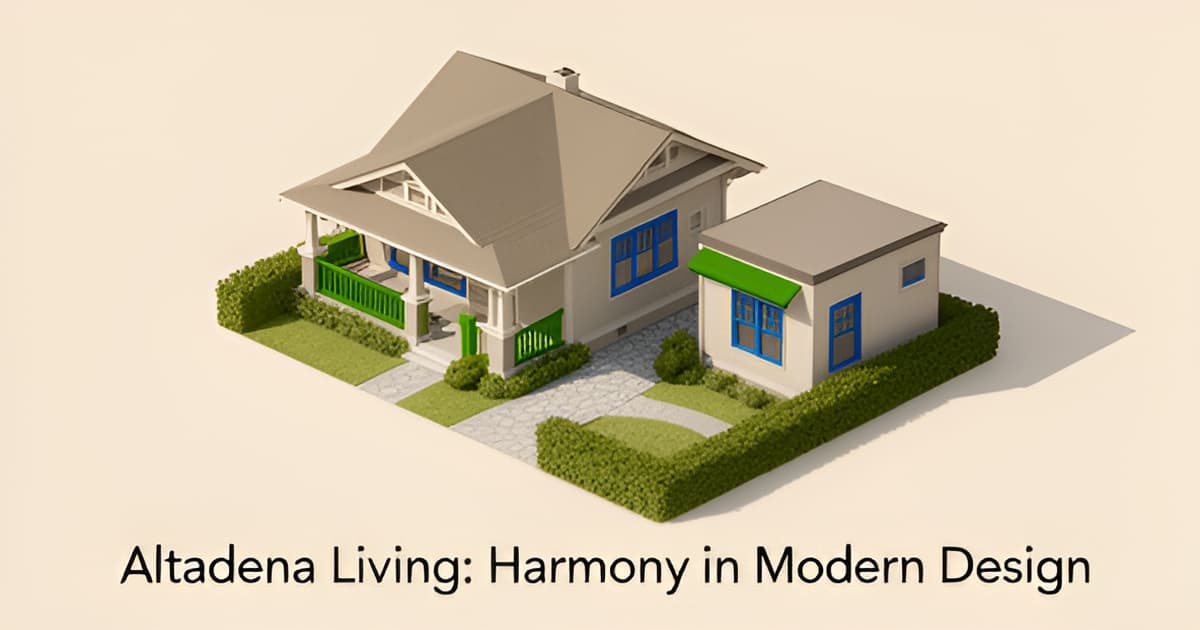
Multigenerational Living With ADUs: Two Homes, One Lot
Key Facts
- 66.7 million U.S. adults — more than 1 in 4 Americans — now live in multigenerational households.
- Households with three or more generations grew 271% between 2011 and 2021.
- Los Angeles leads all U.S. metros, with nearly 24% of listings geared toward multigenerational living.
- ADUs now make up nearly one-fifth of all new housing units permitted statewide in California.
- Los Angeles logged just 28 SB 9 lot split applications — and approved zero of them — in the law's first year.
- While 98% of multigenerational households function successfully, 75% admit the arrangement can be stressful.
- 1 in 4 homeowners over 50 have considered building an ADU for proximity with privacy.
The Multigenerational Squeeze: Why Altadena Families Need Two Homes on One Lot
Your mother needs help with the stairs. Your son needs a place he can actually afford. And your three-bedroom house needs to somehow hold all of you — comfortably, and without anyone feeling like a guest in their own home.
This is the squeeze millions of American families now find themselves in. According to Generations United, 66.7 million U.S. adults — more than 1 in 4 Americans — now live in multigenerational households. Households with three or more generations grew 271% between 2011 and 2021, and the reasons are rarely optional.
The motivations split almost evenly between care going up and care going down the family tree. The same research found that eldercare (34%) and childcare or education (34%) top the list, followed by job loss (30%), healthcare costs (25%), and cultural expectations (23%). Two-thirds of families cite the economic climate directly.
Altadena sits at the center of this national shift. Realtor.com market data shows Los Angeles leads every U.S. metro, with nearly 24% of home listings geared toward multigenerational living. Economist Jiayi Xu attributes California's dominance to deep-rooted multigenerational traditions in Asian and Hispanic communities, surging housing costs, and existing housing stock already adapted for multiple family units.
But here is the problem the listings don't solve: a single house, however large, rarely holds three generations comfortably. The typical multigenerational household squeezes five people into a four-bedroom home, and while 98% of these families say their arrangement functions successfully, 75% admit it can be stressful at times. Shared kitchens, shared bathrooms, and no private front door wear on everyone.
What families actually want is what AARP researchers call proximity with privacy — grandparents close enough for Sunday dinner and a fall-risk check, far enough that nobody manages anyone's schedule. One in four homeowners over 50 has already considered building an ADU to create exactly this arrangement.
The alternatives are worse:
- Moving aging parents into assisted living, at costs that can exceed any mortgage
- Buying a second home nearby, often out of reach at Altadena prices
- Adding everyone under one roof and hoping the privacy problem resolves itself — it rarely does
This is why the "two homes, one lot" model has become the defining answer for California families: a second, smaller home on the property you already own. When you're ready to explore that path, the Altadena Builder Directory lists ADU and custom home builders serving Altadena, each verified against the California Contractors State License Board — so the first conversation you have is with a builder who's actually licensed to build it.
Why an ADU Beats an SB 9 Lot Split for Most Families
When California families picture two homes on one lot, most imagine a backyard cottage — not a property line running through the middle of the yard. The data backs that instinct up.
According to the Terner Center's one-year assessment of SB 9, Los Angeles logged just 28 lot split applications through November 2022 — and approved none. By contrast, the city received 211 applications to add SB 9 units, approving 38. Meanwhile, ADUs have grown from a niche afterthought to nearly one-fifth of all new housing units permitted statewide in just six years.
Why the gap? Planners in high-ADU cities told researchers that California's permissive ADU laws — which limit impact fees, remove owner-occupancy requirements, and allow larger units — simply make the ADU path easier than a lot split. Families notice the difference.
The core appeal is proximity with privacy. AARP, which has documented ADU living extensively, describes exactly the arrangement multigenerational households want: aging parents close enough for daily support, independent enough to keep their own lives. One 72-year-old ADU resident called her 408-square-foot apartment "the smallest place I've ever lived and probably the freest I've ever felt." AARP also reports that 1 in 4 homeowners 50 and older have considered building one.
Flexibility matters just as much. As one industry analysis puts it, "an ADU rarely closes doors, while a recorded lot split is hard to undo." An ADU keeps your lot intact — you can convert it from a parent's suite to a rental to a guest house as your family's needs change.
That said, a lot split still makes sense in specific situations:
- You want a separately sellable lot — the one thing an ADU can never give you
- An adult child needs to buy in at a lower price point than the whole property commands
- You're dividing an estate among heirs who want legally distinct parcels
- You're comfortable with owner-occupancy requirements and higher construction complexity
The Terner Center cautions it's "still too early to say that SB 9 is not working" — planner inquiries remain high even where applications lag. But for most families weighing the two paths, the ADU wins on simplicity, flexibility, and speed. Garage conversions, in particular, are typically the fastest and cheapest ADU type to permit and build.
If you're leaning ADU, the practical first step is finding a builder you can actually verify. The Altadena Builder Directory lists ADU builders serving Altadena with every license checked against the California Contractors State License Board — including JMB Builders LLC (CSLB #1103479, labeled paid placement) — plus a free CSLB license-lookup tool so you can confirm any California contractor yourself before signing anything.
Designing for Proximity With Privacy: ADU Models That Work for Real Families
The right ADU isn't one-size-fits-all — it's the one that matches how your family actually lives, ages, and shares space. The families who make "two homes, one lot" work aren't choosing the biggest unit; they're choosing the configuration that preserves everyone's independence.
Four configurations dominate. According to ADU regulatory analysis, garage conversions are typically the fastest and cheapest route, since the structure already exists. AARP's case studies document the range: an 800-square-foot detached two-story unit, a 480-square-foot basement apartment, and a 408-square-foot in-law suite — proof that multigenerational housing works at nearly any scale.
The models that work for real families include:
- The "Step-Down" model — aging parents move from the main house into the ADU, staying close to family while keeping their own door to close.
- House hacking across generations — the family lives in one unit and rents the other, offsetting the mortgage.
- Capital pooling — multiple generations combine resources to afford a property in a top school district, with three generations benefiting from one address.
Bay Area agent Alexander Kalla describes families using ADUs to secure legacy properties in world-class school districts, per Realtor.com's market analysis. And the emotional payoff is real: 72-year-old Marianne Kelly told AARP her 408-square-foot apartment is "the smallest place I've ever lived and probably the freest I've ever felt."
Honesty matters here. Generations United's survey found that while 98% of multigenerational households say they function successfully, 75% admit the arrangement can be stressful at times. Privacy-focused design — separate entrances, sound insulation, distinct outdoor space — is what separates the thriving households from the strained ones.
Financing remains the biggest hurdle, with ADU-specific grants and loans still scarce. That complexity is exactly why Altadena Builder Directory verifies every listed contractor against CSLB records — before you commit to a builder, you can confirm their license yourself with a free CSLB lookup. When the structure you're building is meant to hold a family together, doing that homework isn't optional.
Your Implementation Roadmap: From Feasibility to Licensed Builder
Knowing where to start separates the families who actually build from the ones who stay stuck in spreadsheets. Here is a practical roadmap for Altadena homeowners ready to turn one lot into two homes.
Step one: assess your lot and unit type. Check setbacks, access, and existing structures before anything else. A garage conversion is typically the fastest and cheapest ADU route, according to ADU planning guidance, while a detached unit offers more privacy — the core "proximity with privacy" value for multigenerational households.
Step two: weigh a JADU against a detached ADU. Junior ADUs cap out at 500 square feet and carry an owner-occupancy requirement, so they work best when you plan to stay in the main house. A detached ADU gives aging parents or adult children genuine independence. Remember the flexibility principle: an ADU rarely closes doors, while a recorded lot split is hard to undo. That is why ADUs decisively outpace SB 9 lot splits statewide — Terner Center research found Los Angeles logged 28 lot split applications with zero approved in SB 9's first year, while ADUs grew to nearly one-fifth of all new units permitted in California.
Step three: plan financing early. AARP's ADU research identifies financing as the biggest hurdle, with ADU-specific grants and loans still scarce. Talk to lenders about construction loans, HELOCs, and any county programs before you commission designs — not after.
Step four: verify your contractor before signing anything. This step protects everything before it. Before you sign a contract:
- Look up the license number on the free CSLB license-lookup tool — it takes under two minutes
- Confirm the license is active and covers the classification your project requires
- Check the bond and workers' compensation status listed on the CSLB record
- Get everything in writing — scope, timeline, payment schedule
The Altadena Builder Directory makes this easier: every listing in the registry is license-verified against CSLB data, with a verification seal shown once a license match is confirmed. Ratings come only from real, attributed public sources, and the featured placement — currently JMB Builders LLC (CSLB #1103479) — is always clearly labeled as paid.
Whether you are housing aging parents, generating rental income, or pooling family capital, the sequence is the same: feasibility, unit type, financing, verification. With 1 in 4 homeowners 50+ having considered an ADU, the families who succeed are the ones who verify first and sign second.
Frequently Asked Questions
How common is multigenerational living, really?
Should I build an ADU or do an SB 9 lot split for my family?
What does 'proximity with privacy' actually mean for aging parents?
Does multigenerational living actually work, or does it just create family stress?
What's the cheapest or fastest way to add a second home on my lot?
How do I make sure an ADU builder in Altadena is legitimate before signing?
Two Homes, One Lot, One Family That Actually Thrives
The math is simple: one house, however large, rarely holds three generations comfortably — but one lot can. The data makes the path clear. ADUs now account for nearly one-fifth of all new housing units permitted in California, while SB 9 lot splits have barely registered, because ADUs deliver what families actually want: proximity with privacy, flexibility that never closes doors, and a structure that adapts as your family's needs change. Your next steps are practical, not overwhelming. Assess your lot and pick your unit type — a garage conversion is usually the fastest, cheapest route. Sort out financing early, since that's the biggest documented hurdle. And before you sign anything, verify your contractor's license — it takes under two minutes with a free CSLB lookup. The Altadena Builder Directory makes that easy: every listing is license-verified against CSLB records, so you can browse ADU builders serving Altadena and start your first conversation with a builder who's actually licensed to build it. Your family's Sunday dinners — and everyone's privacy — are worth it.