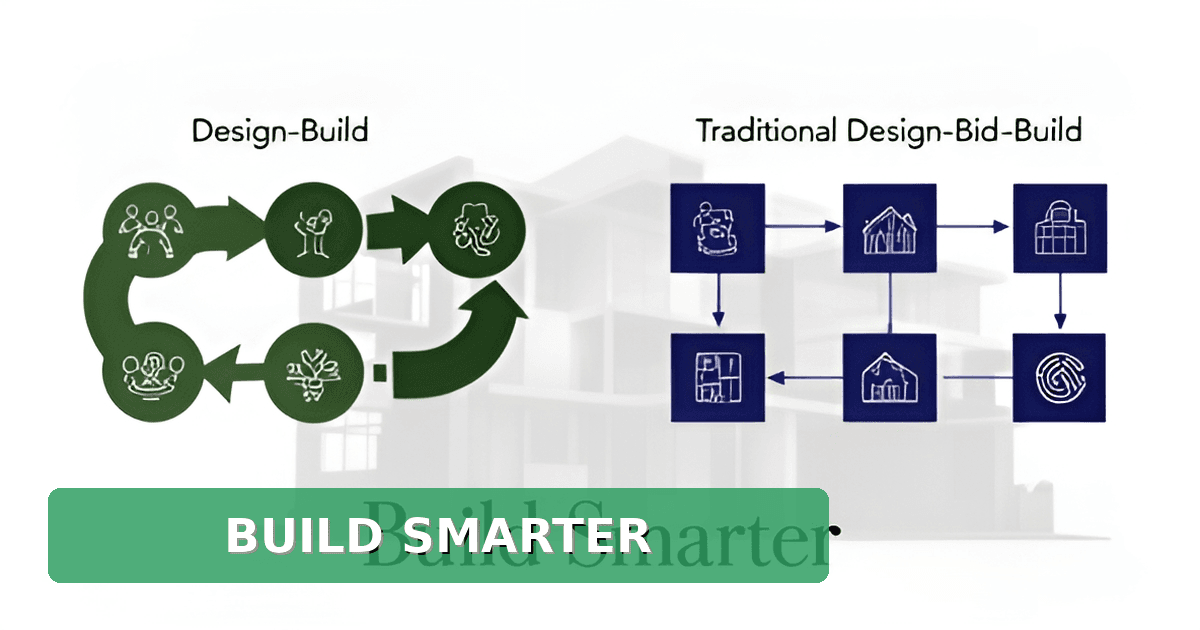
Pasadena Custom Home Builders: Comparing Design-Build and Traditional Routes
Key Facts
- Pasadena custom home construction runs $400–$600 per square foot, with soft costs adding another 25–35%, per local estimates.
- Design-build delivery saves an estimated 3–6 months, compressing custom home timelines from 16–26 months to 12–19, per delivery-method analysis.
- Some contractors underbid intentionally, planning to profit on change orders — a low bid can be a strategy, not a bargain.
- Over-budget traditional bids can add 2–4 months of redesign and rebidding to a Pasadena timeline already running 16–24 months, per bid-structure data.
- Pasadena's Design Commission review can add 2–3 months if plans don't align with city expectations, according to local guidance.
- Custom homes hit ~19% of U.S. single-family starts in Q2 2025 — the highest share since 2022 — per NAHB data.
- California's CSLB has licensed roughly 285,000 contractors across 45 classifications since 1929 — verify every builder through the state board.
Two Paths, Two Very Different Bids: Why Your Delivery Method Decides Who Owns the Risk
Before you compare a single bid, a bigger decision shapes everything about how your Pasadena custom home gets priced: who holds the contract — and who holds the risk. At $400–$600 per square foot and a 16–24 month timeline, per local cost estimates, the delivery method you choose determines how bids are solicited, how change orders get priced, and who absorbs the fallout when problems surface.
The traditional design-bid-build route separates design and construction into distinct phases with separate contracts. You hire an architect, complete plans, then solicit competitive lump-sum bids — typically from 3–5 builders over a 3–6 week bidding period, per this delivery-method comparison. Design-build flips that structure: one firm holds both design and construction under a single contract, and selection is qualifications-based rather than price-driven.
Here's what that structural difference means in practice:
- Traditional routes put risk in the gaps between contracts. If the architect's drawings conflict with field conditions, you — the owner — absorb the majority of the risk, since no single party owns both the design and its execution.
- Design-build assigns risk to one entity. The firm owns both design errors and construction execution, giving you a single point of accountability.
- Bidding creates its own budget risk: lump-sum bids frequently come back significantly above the architect's design-phase estimate, forcing scale-backs, budget increases, or rebidding — adding 2–4 months to an already long timeline.
- Change orders differ sharply. Traditional bid change orders lack markup visibility, and some contractors underbid intentionally, planning to profit on change orders; design-build prices changes using the original contract's cost structure.
Neither path eliminates risk. As one analysis puts it, the difference is where risk lives, who owns it, and how decisions get made when problems surface — and a design-build firm's single-point accountability depends on its internal culture, not the delivery method itself.
Whichever route you choose, due diligence is identical: verify the builder's license, ask who pulls the permits, and get more than one estimate, as Pasadena Heritage recommends. The Altadena Builder Directory makes that first step simple — every listing is license-verified against CSLB records, so you can compare delivery methods knowing the fundamentals are already confirmed.
How the Bidding Actually Works: Competitive Lump-Sum vs. Qualifications-Based Selection
The moment a Pasadena homeowner opens bid envelopes, the delivery method they chose has already written most of the script. Traditional design-bid-build and design-build don't just organize teams differently — they determine who sets the price, when you learn it, and what happens when the number moves.
In the traditional route, your architect completes plans — typically 75–100% finished — and you solicit competitive lump-sum bids from 3–5 builders over a 3–6 week bidding period, followed by 2–4 weeks of negotiation, according to a detailed delivery-method comparison. The winning number looks firm, but it often isn't: bids frequently come back significantly above the architect's design-phase estimate, forcing you to scale back the design, raise the budget, or rebid — adding 2–4 months to a timeline that already runs 16–26 months end to end.
The deeper problem is what happens after signing. Change orders in traditional bids lack markup visibility, and some contractors underbid projects intentionally, planning to make their profit on change orders. A low bid can be a strategy, not a bargain.
Design-build skips the competitive bid entirely. Selection is based on qualifications — experience, team, and track record — rather than price alone, as one delivery-method analysis notes, which can limit competitive price pressure. Contracts take several forms:
- Lump-sum, mirroring a traditional fixed price
- Cost-plus, with or without a guaranteed maximum price (GMP)
- Progressive design-build, where pricing locks in as design matures
The advantage is structural: budget becomes a design parameter, not a surprise revealed after months of architectural work. Cost-impact analysis happens before decisions lock in, and change orders are priced using the original contract's cost structure with line-item breakdowns — removing the underbid-and-recover trap.
Pasadena Heritage's guidance applies to both routes: get more than one estimate, ask who pulls permits, and verify licenses and insurance before signing. Given Pasadena's $400–$600 per square foot construction costs plus 25–35% soft costs, per local practitioner estimates, the stakes of a mispriced bid are substantial.
Request change-order pricing structures in writing from every finalist, whichever method you choose. And before comparing any bid or qualification package, confirm the builder's standing with the California Contractors State License Board — the Altadena Builder Directory makes this easy with a free CSLB license-lookup tool and license-verified listings, so every Pasadena or Altadena builder you shortlist starts from a confirmed baseline.
The Pasadena Factor: Why Local Regulatory Complexity Changes the Math
Pasadena doesn't build like other cities. Between historic district overlays and a design review process that can stall your project for months, the delivery method you choose here carries consequences it wouldn't in a neighboring suburb.
The regulatory layer is unusually thick. Pasadena's local construction landscape features block-by-block zoning, HPOZ design standards, tree and landscaping permit requirements, and Design Commission review that can add 2–3 months if your plans don't align with city expectations. If your property is designated historic or sits in a landmark district, you may also need a Certificate of Appropriateness before work begins — Pasadena Heritage recommends consulting the City's Design & Historic Preservation section early and asking exactly which permits are required and who will pull them.
This is where the math changes. Traditional routes in this market run 16–26 months end to end, and that's before over-budget bids add another 2–4 months of redesign and rebidding. Design-build's overlapping of design and preconstruction compresses the timeline to roughly 12–19 months — a savings of 3–6 months — which matters when every review cycle in Pasadena risks a quarter-year delay.
The cost structure amplifies the stakes:
- New construction runs $400–$600 per square foot, with sample 2,000 sq ft projects ranging from $800K basic to $1.4M–$1.6M+ for luxury builds on challenging lots.
- Soft costs add 25–35% on top of construction — including $20,000–$40,000 in permit and plan check fees, $30,000–$80,000+ in architectural and engineering fees, and $5,000–$15,000 for geotechnical work.
- A 2–3 month Design Commission delay doesn't just cost time; it extends carrying costs on a budget already stretched by California labor rates that have risen 21% since 2019.
Design-build's advantage in this environment is coordination: one team owns the HPOZ conversation, the budget, and the construction schedule simultaneously, so a design that won't pass review gets caught before months of architectural work are sunk into it. Budget becomes a design parameter rather than a surprise revealed after bidding.
Yet traditional delivery still earns its place. For genuinely complex designs — the kind that involve multiple stakeholders and nuanced historic integration — industry analysis suggests the traditional route's independent architect oversight provides checks that a single-contract structure can't replicate. A design-build firm's accountability ultimately depends on its internal culture, not the delivery method itself.
Whichever route fits your project, the baseline due-diligence step is the same: verify your builder's license through the California Contractors State License Board. The Altadena Builder Directory's free CSLB license-lookup tool makes that check quick — every listing in the registry is license-verified, with no paid rankings affecting what you see.
Choosing Your Route: Matching the Method to Your Priorities
By the time bids arrive, your delivery method has already shaped your project's fate — who owns the risk, how changes get priced, and whether your team collaborates or litigates. The smartest Pasadena homeowners make this choice before hiring anyone, matching the method to what they value most.
Choose the traditional route if design control, price competition, and independent oversight top your list. With 3–5 builders submitting lump-sum bids on plans that are often 75–100% complete, you get genuine competitive pressure on price, according to delivery-method analysis. Your architect also remains an independent advocate, watching the contractor on your behalf. The trade-off: bids frequently come back well above the architect's design-phase estimate, forcing scale-backs, budget increases, or rebidding — and over-budget bids can add 2–4 months to a timeline that already runs 16–26 months.
Choose design-build if single-source accountability, budget visibility, and speed matter more. One firm owns both design errors and construction execution, eliminating the handoffs that define the traditional route. Budget becomes a design parameter rather than a surprise revealed after months of architectural work, with cost-impact analysis before decisions lock in. Design-build timelines run an estimated 12–19 months, saving 3–6 months through design and preconstruction overlap — meaningful in Pasadena, where total project duration already runs 16–24 months and local permitting alone takes 3–6 months.
A quick self-assessment helps:
- Do you have a specific architectural vision and an architect you trust? Lean traditional.
- Is your budget firm and your timeline tight? Design-build fits better.
- Do you want to compare apples-to-apples prices from multiple builders? Traditional bidding delivers that.
- Do you prefer one throat to choke when problems surface? Design-build consolidates accountability.
One caveat deserves emphasis. As Marnella Homes puts it, neither path eliminates risk or guarantees a smooth project — both require a qualified, trustworthy team. The difference is where risk lives, who owns it, and how decisions get made when problems surface. Single-point accountability depends on the firm's internal culture, not an inherent advantage of the delivery method.
That's why verification matters more than method. Pasadena Heritage recommends getting more than one estimate and confirming current licenses before signing. The Altadena Builder Directory checks every listed builder's license against CSLB records, so whichever route you choose, you're comparing license-verified contractors — not just polished pitches.
Your Due-Diligence Checklist: Questions to Ask Before You Sign Anything
The contract you sign will determine who owns the risk when problems surface, how change orders get priced, and whether your team works as collaborators or adversaries. Before you commit to any Pasadena custom home builder — design-build or traditional — a few hours of due diligence can save you tens of thousands of dollars and months of delay.
Start with multiple estimates. Pasadena Heritage's guidance is blunt: "It is always wise to get more than one estimate." On the traditional route, that's built in — expect 3–5 lump-sum bids over a 3–6 week period. On the design-build route, selection is qualifications-based with no true bidding stage, so you'll need to create your own price pressure by interviewing several firms and comparing their cost-plus or GMP structures directly.
Then pin down risk and permitting in writing:
- Who pulls the permits? Pasadena Heritage recommends asking what permits are required and who is responsible for pulling them — critical in a city where Design Commission review alone can add 2–3 months.
- Who owns design errors? In traditional contracts, risk sits "in the gaps between contracts" and the owner absorbs most of it; in design-build, the firm should own both design and execution.
- How are change orders priced? Some contractors underbid intentionally, planning to profit on change orders later. Get the markup structure documented before signing.
Budget scrutiny matters just as much as bid scrutiny. Pasadena construction typically runs $400–$600 per square foot, with soft costs adding 25–35% and permit fees alone reaching $20,000–$40,000. A bid that comes in dramatically below others may signal a contractor planning to recover margin through change orders rather than a genuine bargain.
Finally, verify the license — every time. The California Contractors State License Board, established in 1929, licenses roughly 285,000 contractors across 45 classifications, and any Pasadena custom home builder must hold a valid license. A license check takes minutes and catches problems a polished portfolio never will.
The Altadena Builder Directory makes this step frictionless: every listing is license-verified against CSLB records and displays a verification seal once the match is confirmed, and a free CSLB license-lookup tool lets you independently verify any California contractor — including builders you found elsewhere. Ratings come only from real, attributed public sources, and any paid placement is labeled as such, so the verification you see is the verification you get.
Frequently Asked Questions
What's the difference between design-build and the traditional route for a custom home?
How much does it cost to build a custom home in Pasadena?
Why do bids often come in higher than my architect's estimate?
Is design-build actually faster than hiring an architect and bidding out the construction?
How do I vet a Pasadena custom home builder before signing anything?
Which delivery method should I choose for my custom home?
The Route Matters Less Than the Builder You Choose
Neither delivery method builds your Pasadena home for you — people do. The traditional route gives you competitive lump-sum bids and an independent architect in your corner, but leaves risk sitting in the gaps between contracts and can add 2–4 months if bids come back over budget. Design-build consolidates accountability, makes budget a design parameter, and can compress your timeline by 3–6 months — but its single point of contact is only as strong as the firm behind it. On a project running $400–$600 per square foot plus 25–35% in soft costs, per local practitioner estimates, the delivery method you choose shapes who owns the risk — but verification determines whether that choice pays off. Before you sign anything: get more than one estimate, ask who pulls the permits, request change-order pricing in writing, and confirm every builder's license. The Altadena Builder Directory makes that last step effortless — every listing is license-verified against CSLB records, and the free lookup tool lets you independently check any California contractor. Browse license-verified Pasadena and Altadena builders today, and start your project from a confirmed baseline.