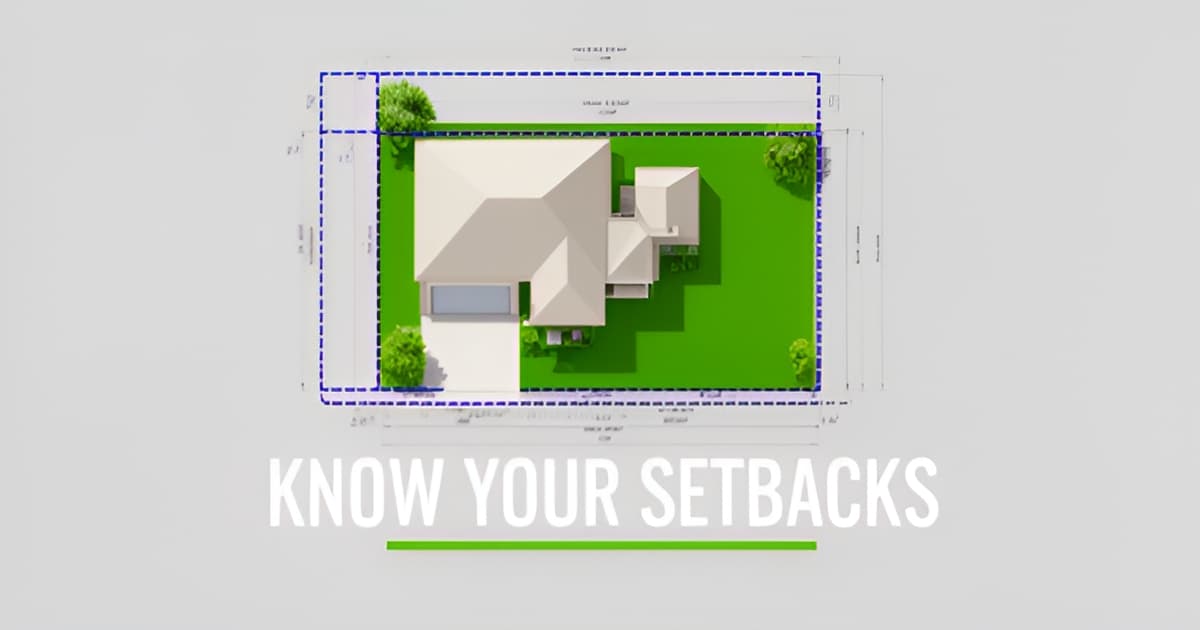
Property Setbacks in Altadena: What You Can Build Where
Key Facts
- Altadena doesn't follow general LA County zoning — its own Community Standards District supersedes the county code.
- A Setback District overlay supersedes even the Altadena CSD, so check the overlay map first.
- Altadena side yard setbacks equal 10% of average lot width, with 5-foot minimums (10 feet for reverse corner lots).
- Rear yard setbacks run 25 feet on smaller lots and 35 feet on lots of 20,000 square feet or more.
- Like-for-like Eaton Fire rebuilds are exempt from current zoning setbacks but must meet current Building, Fire, and Safety Codes.
- Fire rebuilds can expand up to 10% or 200 square feet, whichever is greater — more generous than the Palisades' 10%.
- A detached garage can sit at zero-foot setback if it's 75 feet from the front line, single story, and under 15 feet tall.
- No structure may exceed 23 feet in height within 15 feet of any property line — including rear-yard ADUs.
- The LA County Department of Regional Planning — not Public Works — governs setbacks for unincorporated areas like Altadena.
Altadena Doesn't Follow the County Rulebook — Why That Trips Up Homeowners
If you've been planning a rebuild or addition in Altadena using the general LA County zoning code, there's a good chance your numbers are wrong. Altadena is an unincorporated community, but it doesn't simply follow the county's standard Title 22 rules — it has its own Altadena Community Standards District (CSD) that supersedes the base zoning.
The layering goes deeper than most homeowners realize. Title 22 allows CSDs to impose different front-yard depths, height limits, and lot width rules than the base zone, and on top of the CSD sits a Setback District overlay that supersedes even the CSD. In practice, that means the rules governing your parcel depend on which overlays apply to it — and per county zoning code guidance, you should always verify the zoning map and any applicable district for your specific parcel before assuming anything.
Why do these rules exist at all? Setbacks serve practical purposes: they keep space open for emergency access, protect privacy between neighboring homes, and preserve room for utilities and drainage. In a hillside-adjacent community like Altadena, those functions matter enormously — which is why the county enforces them carefully through the Department of Regional Planning, the agency that governs setbacks for all unincorporated areas.
The CSD numbers themselves diverge from what you might expect. Under the Altadena CSD standards, side yard setbacks are calculated as 10% of average lot width, but never less than 5 feet for interior or corner lots — and 10 feet for reverse corner side yards. Rear yard setbacks run 25 feet on lots under 20,000 square feet and 35 feet on larger lots. These aren't round-number rules you can guess at.
Lot type changes everything. The same house design can face entirely different setback requirements depending on how your parcel is configured:
- Interior lots — the standard case, with side yards on both sides
- Corner lots — a street-facing side yard that's treated differently from an interior side yard
- Reverse corner lots — subject to the larger 10-foot minimum on the street-facing side
- Flag and through lots — unique configurations with their own setback applications
This is where homeowners most often stumble: they pull setback figures for an interior lot, then discover their corner or flag lot triggers different rules entirely. Because Regional Planning verifies zoning conformance while Building & Safety handles building code approval, projects like ADUs need to clear both hurdles — a process many local contractors navigate regularly. If you're weighing your options, the Altadena Builder Directory lists license-verified ADU builders and remodelers who work with these rules daily, and every listing is checked against California CSLB records so you can confirm credentials before you commit.
The Setback Numbers: Side Yards, Rear Yards, and the Front Yard Gap
Numbers are where setback rules stop being abstract and start shaping what you can actually build. Here are the dimensions Altadena homeowners need to know — with one important caveat about where they come from.
Under the Altadena CSD rules, side setbacks equal 10% of your average lot width. The catch is the floor: an interior or corner side yard can never be less than 5 feet, and a reverse corner side yard requires at least 10 feet — whichever figure is greater applies. A uniform 10-foot setback on both sides is also permissible if you prefer symmetry.
Rear setback rules split by lot size. Lots under 20,000 square feet need a 25-foot rear yard, while lots of 20,000 square feet or more require 35 feet. If your lot is under 75 feet deep, the rear yard may shrink to 20% of average lot depth, with a 10-foot minimum.
Here is where the picture gets incomplete. Standard front setback dimensions for non-rebuild construction in Altadena are not published in the sources available — and this matters, because front yard depth is often the number homeowners assume they already know. The only published front figure is 20 feet, and it applies specifically to Eaton Fire disaster recovery rebuilds, per the County's recovery guidance.
Before designing anything against a front property line, verify your parcel with the LA County Department of Regional Planning, which governs setback requirements for unincorporated areas. And remember the overlay hierarchy:
- The Altadena CSD supersedes the general county zoning code.
- A Setback District overlay supersedes even the CSD — check the Setback District Map for your parcel.
- Lot type changes everything: interior, corner, reverse corner, flag, and through lots each apply setbacks differently.
One transparency note: the side and rear dimensions above come from a secondary source — a design firm's visual guide based on the County's official summary sheet. Treat them as strong working numbers, not gospel, and confirm with Regional Planning before finalizing a site plan.
A licensed local builder can run that verification as part of early design. The Altadena Builder Directory lists ADU builders, remodelers, and fire-rebuild specialists, each verified against CSLB license records — a practical first step when setback math determines whether your project fits the lot at all.
Eaton Fire Rebuilds: Different Rules Entirely
For Altadena homeowners rebuilding after the Eaton Fire, the setback rules work differently than for any other construction project. According to the County's official recovery guidance, like-for-like rebuilds — those replacing a structure at the same size, location, and purpose — are exempt from current zoning setback requirements entirely.
That exemption comes with an important catch. Like-for-like structures don't need to comply with the current Zoning Code, but they must still meet current Building, Fire, and Health and Safety Code requirements. In other words, your new home can sit where the old one stood, but it has to be built to today's safety standards.
For rebuilds that don't qualify as like-for-like, different rules apply. All non-like-for-like disaster recovery rebuilds must observe a 20-foot minimum front setback, and the Altadena CSD front yard requirements do not apply to these fire rebuilds. The Setback District overlay, which supersedes even the CSD, also sets this 20-foot standard for disaster recovery rebuilds.
There's some flexibility built into the like-for-like pathway. Eaton Fire like-for-like structures may increase their floor area, size, height, or footprint by up to 10% or 200 square feet, whichever is greater. That's a more generous allowance than the Palisades area, which permits only the 10% increase.
Here's the nuance that trips up many homeowners: the like-for-like exemption applies to the rebuilt structure itself, not to anything you add to it. As the Altadena CSD visual guide notes, any new additions — even in a like-for-like project — need to follow current zoning rules. That means a new room bump-out or attached addition must satisfy the standard side, rear, and front setback requirements covered elsewhere in this article.
Before finalizing your rebuild plans, keep these points in mind:
- Confirm whether your project truly qualifies as like-for-like — same size, same location, same purpose — before relying on the setback exemption.
- Budget for current Building, Fire, and Health and Safety Code compliance even when zoning setbacks don't apply.
- Remember that any addition beyond the 10%/200 sq ft allowance triggers full current zoning review.
- Consult your assigned land use planner, since the County recovery site notes that rules may continue to evolve.
Because fire rebuilds sit at the intersection of zoning exemptions and updated safety codes, working with a contractor experienced in post-fire construction matters. The Altadena Builder Directory lists fire-rebuild specialists whose licenses are verified against California Contractors State License Board records, so you can confirm credentials before signing anything — including JMB Builders LLC (CSLB #1103479), a featured listing. Every listing in the free directory is license-verified, and a built-in CSLB lookup tool lets you check any California contractor yourself.
Special Cases: Detached Garages at 0 Ft, ADUs, and Height Limits Near Property Lines
Most homeowners assume a garage must sit several feet off the property line — but under Altadena's Community Standards District, a detached garage can legally sit at a zero-foot setback if every condition is met. Miss even one, and the structure must conform to standard yard requirements.
According to the Altadena CSD visual guide, all of the following must be true:
- The garage is detached and sits at least 75 ft from the front property line
- It covers no more than 50% of the rear yard
- It is a single story under 15 ft tall
- Roof drainage stays entirely on your property
Height near the lot line is the other trap. No portion of any structure — including rear-yard ADUs — may exceed 23 ft in height within 15 ft of any property line. On lots 20,000 sq ft and larger, overall height caps at 35 ft; smaller lots and all flag lots cap at 30 ft, with a maximum of two stories above grade.
Total buildable size follows its own formula: floor area is limited to 25% of lot size plus 1,000 sq ft, with a hard cap of 9,000 sq ft. Because these figures come from a secondary source summarizing the County's standards, confirm them with the LA County Department of Regional Planning before finalizing plans.
ADUs follow the same setback logic but add a second layer of approvals. Both Regional Planning (zoning conformance, including height and setbacks) and the Department of Building & Safety (building code) must sign off on your plans — a dual path that catches many first-time builders off guard. The payoff can be substantial: Altadena Heritage notes that CalHFA ADU grants offer up to $40,000 toward pre-development and closing costs, and Altadena already approved 458 granny flats between 2017 and 2022.
Because these rules interact in counterintuitive ways — a garage that qualifies for a 0-ft setback can still violate the 23-ft height plane, and an ADU that fits the floor-area formula can still fail rear-yard requirements — it pays to work with a contractor who navigates Altadena's CSD regularly. The Altadena Builder Directory lists license-verified ADU builders and design-build firms, with every listing checked against California Contractors State License Board records. Featured listings, such as JMB Builders LLC (CSLB #1103479), are always labeled as paid placement.
Your Action Plan: Verify First, Design Second, Build With Licensed Pros
Setback mistakes are expensive — and in Altadena, they're easy to make because the rules most homeowners assume apply often don't. The safest sequence is simple: verify your parcel's rules first, design second, and build with licensed professionals who know the difference between the county code and Altadena's overlay rules.
Start by checking the zoning map and any applicable Setback District overlay before assuming a neighborhood standard like front-yard depth. Title 22 guidance is explicit on this point: always verify the zoning map and any applicable CSD or Specific Plan for the parcel before treating a neighbor's setback as your own. Remember that the Setback District supersedes even the Altadena CSD, so the overlay map is your first stop, not the general code. Your lot type matters too — interior, corner, reverse corner, flag, and through lots each apply setbacks differently.
Next, take your questions to the right agency. The LA County Department of Regional Planning governs setback requirements for unincorporated areas — not Public Works. Ask for your assigned land use planner, who can confirm parcel-specific dimensions and flag rules that may still be evolving, particularly for Eaton Fire recovery projects. If you're planning an ADU, expect approvals from both Regional Planning for zoning conformance and Building & Safety for code compliance, per guidance on ADU permitting in LA County.
Before you finalize a design, confirm the numbers that most often trip up Altadena projects:
- Side yards: 10% of average lot width, minimum 5 ft interior/corner or 10 ft reverse corner
- Rear yards: 25 ft on lots under 20,000 sq ft; 35 ft on lots 20,000 sq ft and larger
- Fire rebuilds: 20 ft front setback for non-like-for-like rebuilds; like-for-like rebuilds are exempt from current zoning setbacks but additions must comply
Finally, hire contractors who have actually worked under Altadena's CSD rules — the nuances of lot-type setbacks, the 23-ft height limit within 15 ft of a property line, and the like-for-like expansion allowance of up to 10% or 200 sq ft (whichever is greater) all reward experience. The Altadena Builder Directory lists ADU builders, custom home builders, remodelers, and fire-rebuild specialists serving Altadena, with every listing license-verified against CSLB records — ratings come only from real, attributed public sources, and paid placements are always labeled as such.
Even if a builder comes recommended by a neighbor, verify their license yourself. The directory's free CSLB license-lookup tool lets you check any California contractor against state records in seconds, and listings display a verification seal once a license match is confirmed. Verify first, design second — and build with pros whose credentials you've confirmed yourself.
Frequently Asked Questions
Does Altadena follow the regular LA County setback rules?
What are the side and rear setback requirements in Altadena?
Can I rebuild my Eaton Fire home in the same spot even if it doesn't meet current setbacks?
What front setback applies to a fire rebuild that isn't like-for-like?
Can a detached garage sit right on the property line in Altadena?
Do ADUs in Altadena need special setback or height approvals?
Build on Solid Ground: Your Setbacks, Verified
Altadena's setback rules are a layered puzzle — the county's Title 22 code, the Altadena CSD that supersedes it, and a Setback District overlay that supersedes even that. Add in lot-type differences, the 23-foot height limit near property lines, and Eaton Fire rebuild exemptions that apply only to like-for-like structures, and it's clear why guessing at dimensions is the fastest way to derail a project. The numbers that matter most: side yards of 10% of average lot width (minimum 5–10 feet depending on lot type), rear yards of 25–35 feet, and a 20-foot front setback for non-like-for-like fire rebuilds — figures worth confirming with LA County Regional Planning before you finalize any site plan. Your next steps are straightforward: verify your parcel's overlays and lot type, consult your assigned land use planner, then design. When you're ready to build, the Altadena Builder Directory lists ADU builders, remodelers, and fire-rebuild specialists — every listing license-verified against CSLB records, with a free lookup tool so you can confirm any contractor yourself. Verify first, design second, and build with confidence.