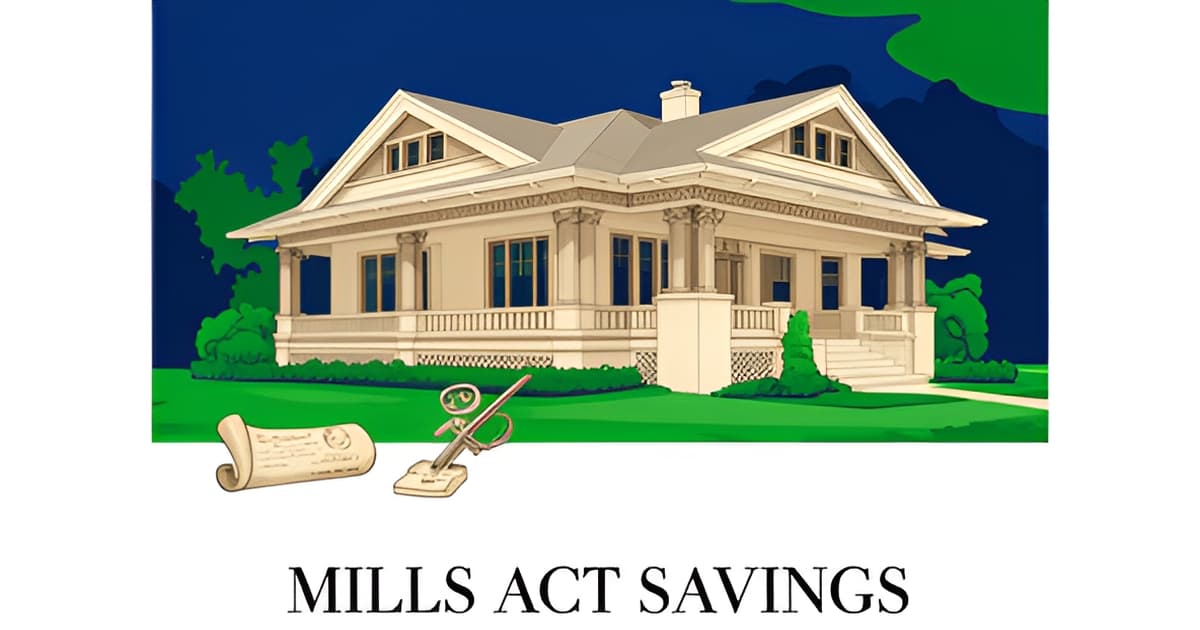
Restoring a Historic Home in LA: Permits, Tax Incentives, and Mills Act Basics
Key Facts
- Mills Act contracts can cut historic homeowners' property taxes by 40–60%, according to practitioner estimates.
- The California Office of Historic Preservation calls the Mills Act the single most important economic incentive for private historic property owners.
- Mills Act contracts run a minimum of 10 years, renew automatically, and transfer with the property when sold, per the state Office of Historic Preservation.
- The 20% federal Rehabilitation Tax Credit excludes owner-occupied homes, applying only to income-producing properties, per LA City Planning.
- In an HPOZ, all exterior work — even landscaping — faces a two-tier review process, according to LA City Planning.
- The California Historical Building Code offers alternative compliance methods, not waivers, for non-conforming historic structures, per LA City Planning.
- LA City's Mills Act program is currently on hold, though Unincorporated LA County runs active contracts, per Historic Real Estate LA.
The Real Cost of Restoring a Historic LA Home: Permits and Approvals You Can't Skip
Buying a century-old Craftsman in Los Angeles is only half the challenge — the other half begins the moment you pick up a hammer. Restoring a historic home here means navigating a regulatory layer most homeowners never see until their first permit application stalls.
If your property sits in a Historic Preservation Overlay Zone (HPOZ), the rules change immediately. According to LA City Planning, all exterior work — including landscaping, alterations, additions, and new construction — is subject to additional review and must complement the neighborhood's historic character. That fence you planned to replace? It needs approval first.
The review itself runs on a two-tier process. Some projects clear at staff level, while others must go before the district's HPOZ Board. Each district also carries its own Preservation Plan, complete with design guidelines, a boundary map, and an individual ordinance — meaning acceptable work in one neighborhood may be denied in another. Homeowners who skip this research routinely watch projects get delayed or rejected outright.
Before you start any exterior work, plan around these essentials:
- Confirm whether your home is a contributing resource in an HPOZ — that status triggers review requirements.
- Read your district's specific Preservation Plan before finalizing designs, since guidelines vary by district.
- Submit projects through the City's Online Application System rather than waiting in permit lines.
- Consult preservation professionals early — the National Park Service explicitly recommends this for any project touching historic fabric.
The regulatory benchmark for most work is the Secretary of the Interior's Standards for Rehabilitation, which cover four treatment approaches — Preservation, Rehabilitation, Restoration, and Reconstruction — with Rehabilitation the most commonly used. Contractors unfamiliar with these standards often propose modern materials or methods that fail review on the first pass, costing homeowners months of redesign.
There is one piece of good news for older buildings: the California Historical Building Code offers flexibility. Per LA City Planning, it doesn't waive code standards but provides alternative methods to achieve reasonable safety levels in non-conforming historic structures — valuable when a 1920s framing detail conflicts with modern requirements.
This is why contractor selection matters so much in historic districts. A builder who has shepherded projects through HPOZ Board review knows which window replacements get approved and which get bounced. The Altadena Builder Directory lists remodelers and design-build firms serving the area, with every listing license-verified against the CSLB — and its free license-lookup tool lets you confirm any California contractor's credentials before signing a contract.
Verify before you hire: a contractor's CSLB license check takes minutes and can save you a failed review cycle. In an HPOZ, experience with historic review isn't a luxury — it's the difference between a smooth approval and a stalled project.
The Mills Act: How a 10-Year Contract Can Cut Your Property Taxes 40–60%
Imagine cutting your property tax bill nearly in half simply by agreeing to preserve the historic character of your home. That is the core trade the Mills Act offers — and the California Office of Historic Preservation calls it the single most important economic incentive for private owners of historic buildings in the state.
The program, enacted in 1972, is a voluntary, contract-based arrangement. You pledge to restore, maintain, and protect your historic property, and in exchange the property is assessed under a special valuation method — often an income approach — that typically lowers your annual taxes. According to practitioner estimates from Historic Real Estate LA, reductions typically fall between 40 and 60 percent, varying by property type, location, use, and Assessor inputs. Single-family owners have reported savings ranging from several thousand dollars per year to much higher amounts.
The contract itself is a serious, long-term commitment. It is recorded on title, runs a minimum of 10 years, and renews automatically each year. When the property sells, the contract transfers with it — subsequent owners inherit the same rights and obligations. Because the contract "runs with the land," disclose it during any sale or refinance; most lenders simply request a copy during underwriting.
Your obligations under the contract include:
- A defined scope of work for restoration and ongoing maintenance
- Adherence to the Secretary of the Interior's Standards for Rehabilitation, the same benchmark used for federal tax credit projects
- Periodic reports and photographs documenting the property's condition
- Cooperation with periodic inspections — local authorities may impose penalties for breach, and noncompliance can lead to cancellation
One important clarification: Mills Act contracts are preservation contracts, not public access agreements. You are not opening your home to tours, though you should confirm the specific language in your contract.
Critical caveat for LA homeowners: the City of Los Angeles Mills Act program is currently on hold, even though LA City Planning describes it as "the City's most significant financial incentive for historic preservation" (https://planning.lacity.gov/preservation-design/historic-resources/incentives-resources). Meanwhile, Unincorporated LA County and other municipalities have active programs. Because each local government sets its own eligibility criteria, application procedures, and limits on contracts, you must verify your specific municipality's status before planning around tax savings — and if your city doesn't participate, you can ask it to adopt the program.
Eligibility generally requires a qualifying designation: Historic-Cultural Monument status, contributing status within an HPOZ, or National or California Register listing or eligibility, with a common 50-year age threshold. The program tends to benefit higher-assessed properties most, since the income-based valuation diverges most sharply from market value.
If you are planning restoration work under a Mills Act contract, the National Park Service recommends consulting preservation professionals early. When hiring, verify every contractor through the Altadena Builder Directory's free CSLB license-lookup tool before signing anything.
Other Incentives and Code Flexibility: What Owner-Occupants Can (and Can't) Use
The Mills Act gets most of the attention, but it's not the only tool in the historic homeowner's toolkit — and it's just as important to know which incentives you can't use before you build a restoration budget around them.
The 20% federal Rehabilitation Tax Credit sounds generous — and it is — but it doesn't apply to you if you live in the property. According to LA City Planning's incentives overview, the credit covers 20% of qualifying rehabilitation expenditures (both hard and soft costs), but only for income-producing properties — commercial, industrial, agricultural, and residential rentals — that are listed in or eligible for the National Register. It's jointly administered by the National Park Service, the IRS, and the California State Office of Historic Preservation. If you own a rental Victorian or a converted duplex, this credit may be on the table; if you occupy the home yourself, plan around other incentives instead.
Owner-occupants do have one federal option: the conservation easement. This is a one-time federal income tax deduction for donating a partial interest in a National Register-listed property to a qualified preservation organization or government agency, while you retain full ownership of the home. It's not a recurring benefit like a Mills Act contract, but for owners of significant registered properties, it can meaningfully offset restoration costs in a single tax year.
The third piece of the puzzle isn't a tax incentive at all — it's regulatory relief. The California Historical Building Code (CHBC) exists because pre-modern buildings often can't physically meet current code without destroying the very features that make them historic. The key distinction: the CHBC provides flexibility, not waivers. Per LA City Planning, it does not allow code standards to be waived outright, but it offers alternative methods to achieve reasonable levels of safety for non-conforming historic structures, with the State Historical Building Safety Board providing interpretations and hearing appeals.
In practice, that means your 1920s Craftsman may not need a full seismic retrofit designed to new-construction specs — but it does need to reach a defensible safety level through an approved alternative path. Contractors familiar with historic work know how to frame these conversations with building departments; the National Park Service recommends involving preservation professionals early in any project, before design decisions lock you into a compliance problem.
Here's a quick reality check for owner-occupants planning a restoration:
- 20% federal credit: income-producing properties only — owner-occupied homes do not qualify.
- Conservation easements: a one-time deduction available for National Register-listed properties.
- CHBC: alternative compliance methods for safety, not blanket exemptions from code.
- Mills Act: still the primary recurring incentive for owner-occupants — where the local program is active.
Setting expectations correctly here saves real money. An owner who budgets around a federal credit they can't claim, or who assumes the CHBC exempts their home from safety requirements, discovers the gap mid-project — the most expensive possible moment. When you're vetting contractors for this kind of work, verify their standing through the free CSLB license-lookup tool on the Altadena Builder Directory, where every listing is license-verified against the California Contractors State License Board. Preservation-grade work rewards builders who understand both the incentives and the constraints.
Your Restoration Roadmap: Eligibility, Approvals, and Hiring the Right Builder
A historic restoration succeeds or fails long before the first nail is pulled — it starts with confirming your property actually qualifies and assembling the right team. Here's the sequence to follow.
Step 1: Confirm your qualifying designation. Eligibility typically means one of three things: City Historic-Cultural Monument status, contributing status within an HPOZ, or listing (or eligibility) on the National or California Register. A common threshold is that the property be at least 50 years old, unless it has exceptional significance, according to Historic Real Estate LA.
Step 2: Check your municipality's Mills Act status. Local governments — not the state — administer the program, each setting its own eligibility criteria and contract limits per the California Office of Historic Preservation. Critically, the LA City program is currently on hold, while Unincorporated LA County and other municipalities run active programs, so verify with your local planning department before counting on the typical 40–60% tax reduction.
Step 3: Plan around HPOZ review if you're in a district. All exterior work — alterations, additions, even landscaping — requires additional review in an HPOZ, with a two-tier process of staff review and potentially the HPOZ Board. Each district has its own Preservation Plan with design guidelines, and projects can be submitted through the City's Online Application System per LA City Planning.
Step 4: Engage professionals early. The National Park Service recommends consulting preservation professionals early in any project, and practitioners advise looping in your lender early too — many simply request a copy of the Mills Act contract during underwriting.
Step 5: Verify your contractor's license. Before signing any contract, confirm your builder holds a valid California license. The Altadena Builder Directory offers a free CSLB license-lookup tool for verifying any California contractor, with license data attributed to the California Contractors State License Board; listings display a verification seal once a license match is confirmed.
When evaluating builders for your restoration, look for:
- A valid, active CSLB license verified against the state board's records
- Experience working within Secretary of the Interior's Standards for Rehabilitation
- Familiarity with HPOZ Preservation Plans and local review processes
- Attributed ratings from real public sources rather than paid rankings
Every listing in the Altadena Builder Directory registry is license-verified against CSLB, so you can browse local builders — from remodelers to design-build firms — knowing credentials are confirmed upfront. One featured listing, JMB Builders LLC (CSLB #1103479), appears as a labeled paid placement, and the directory clearly distinguishes it from organic listings.
Get the designation, permits, and team right, and the rest of your restoration becomes a matter of execution rather than crisis management.
Frequently Asked Questions
How much can I actually save on property taxes with a Mills Act contract in LA?
Is the Mills Act still available in the City of Los Angeles?
Can I claim the 20% federal rehabilitation tax credit if I live in my historic home?
Do I need approval to replace a fence or do landscaping if my home is in an HPOZ?
What happens to a Mills Act contract when I sell my house?
Does the California Historical Building Code exempt my 1920s house from modern safety codes?
How do I find a contractor who can actually get my project through HPOZ review?
Your Century-Old Home Deserves a Century-Proof Plan
Restoring a historic LA home rewards preparation more than ambition. The rules are clear once you know them: confirm your property's qualifying designation, read your HPOZ district's Preservation Plan before finalizing any exterior design, and verify your municipality's Mills Act status before budgeting around the typical 40–60% property tax reduction, since the City of LA's program is currently on hold while other municipalities run active ones. Remember that the 20% federal credit is off-limits to owner-occupants, and the California Historical Building Code offers flexibility, not waivers. The single most valuable investment you can make? A builder who has actually shepherded projects through HPOZ review. Before signing anything, run any California contractor through the Altadena Builder Directory's free CSLB license-lookup tool — every listing in the registry is license-verified against the state board, so you can hire with confidence and let your restoration become execution rather than crisis management.