SB 9 Urban Lot Splits in Los Angeles: Eligibility and Application Steps
Key Facts
- LA received just 28 SB 9 lot split applications in 2022 and approved zero, per UC Berkeley's Terner Center.
- A full SB 9 lot split in LA City can take up to 18 months from contract to recorded parcel, according to WIRE Associates.
- Each split parcel must be 40–60% of the original lot and at least 1,200 square feet, per the city's SB 9 rules.
- SB 9 applicants must sign a 3-year owner-occupancy affidavit, which planners say is likely limiting uptake statewide, Terner Center research finds.
- All-in fixed costs of $50,000–$70,000 and a roughly $600,000 property value are cited as the economic threshold, per market analysis.
- Urban Lot Split applications go to City Planning while Two-Unit Development applications go to LADBS, per official LADBS guidance.
- An SB 9 split doesn't trigger Prop 13 reassessment — only $200–$1,000 per year in per-parcel assessments, according to WIRE Associates.
Why SB 9 Lot Splits in LA Are Harder Than They Look
On paper, SB 9 promises California homeowners up to four units on a single-family lot. In Los Angeles, the reality has been far slower and far more expensive — and the numbers prove it.
Through November 2022, LA received just 28 urban lot split applications and approved zero, according to research from UC Berkeley's Terner Center. That same year, LA permitted nearly 20,000 new homes overall. The gap between interest and approvals is striking: planners reported high volumes of SB 9 inquiries but low application counts, citing cost, time, and the relative ease of building an ADU instead.
LA City has earned a reputation as the toughest place in California to run an SB 9 project. One engineering firm that handles a large share of statewide approvals describes LA as "the most challenging jurisdiction in the state," and reports that a full lot split — from contract to recorded parcel — can take up to 18 months in LA City, per WIRE Associates. Some consulting guides advertise 4–6 week approvals, but homeowners should plan around the longer, LA-specific reality.
Several structural hurdles explain the friction:
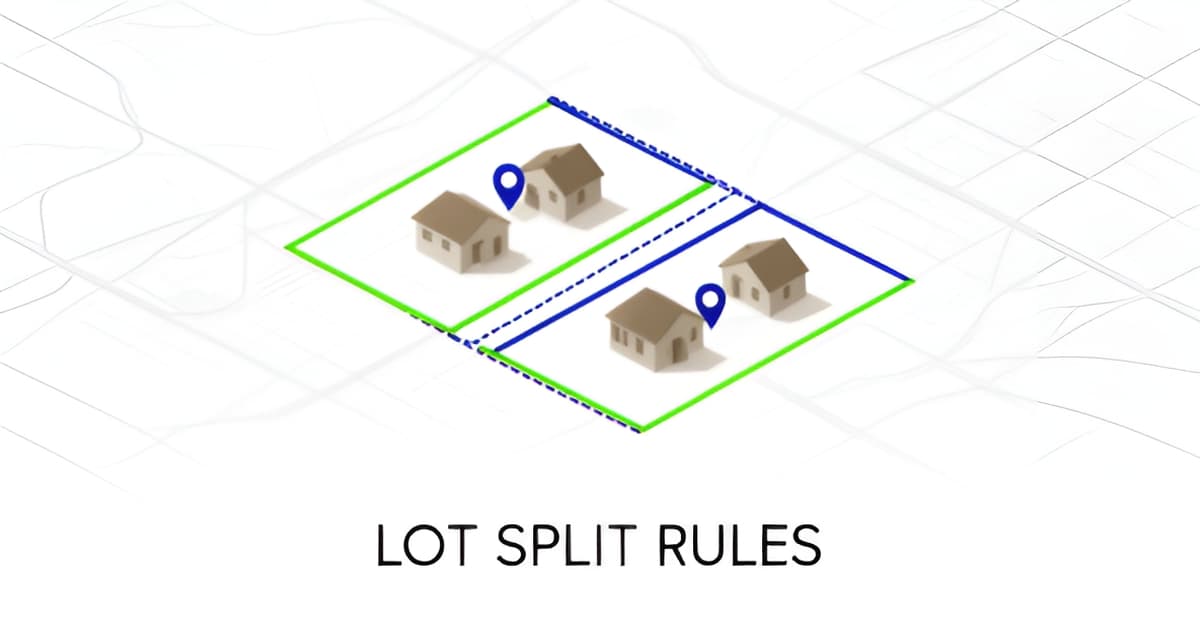
- Split parcels must each be 40–60% of the original lot and at least 1,200 square feet, which rules out many standard LA lots outright.
- Applicants must sign a 3-year owner-occupancy affidavit — a requirement planners say is likely limiting uptake across the state.
- Tenant protections bar splits on properties with recent rental history or evictions, disqualifying many investor-owned and income properties.
- Applications must be routed correctly: lot splits go to City Planning, while two-unit projects go to LADBS.
Money is the other filter. All-in fixed costs of $50,000–$70,000 and a roughly $600,000 minimum pre-split property value are cited as the economic threshold for viability. Planners also note that SB 9 works best on larger lots, since most homes sit centered on their parcel, making a second house "geometrically difficult" on smaller ones.
None of this means SB 9 is dead — the law remains valid and, after SB 450, applies even to charter cities like LA. But it does mean homeowners should screen eligibility early using the city's ZIMAS tool and budget realistically for time and cost. And once a split clears, the construction side matters just as much: any contractor you hire should hold an active state license, which you can verify for free through the CSLB lookup tool on Altadena Builder Directory, where every listing is license-verified against state records.
The Eligibility Checklist: Is Your LA Property SB 9-Eligible?
Before you spend a dollar on surveys or site plans, you need to know whether Los Angeles will even accept your SB 9 application. The good news: the city gives you a free, official way to find out in minutes.
Start with ZIMAS. The LADBS SB 9 page directs homeowners to screen their property through the city's ZIMAS portal — search your address, open the Planning and Zoning tab, and look for the "SB 9 Eligibility" indicator. It is the single most concrete first step, and it costs nothing.
Zoning is the first gate. Per the city's SB 9 memorandum as summarized by legal commentators, only single-family residential zones qualify in LA: A1, A2, RA, RE, RS, R1, RU, RZ, and RW. If your parcel sits in a multi-family or commercial zone, the lot-split pathway closes immediately.
The 40–60% split rule. Each new parcel must be at least 1,200 square feet and represent roughly 40–60% of the original lot's size — no lopsided splits allowed. Planners interviewed by the Terner Center at UC Berkeley note SB 9 works best on larger lots, since homes typically sit in the center of a parcel, making smaller lots "geometrically difficult" to divide.
Owner-occupancy and tenant protections. You must sign an affidavit committing to occupy one of the resulting lots as your primary residence for at least 3 years — a requirement planners say is likely suppressing applications statewide. Tenant-protection lookbacks also apply:
- No demolition or alteration of rent-stabilized or registered affordable housing.
- No units rented — currently or within the past 3 years — may be removed.
- Properties with any eviction in the last 15 years are disqualified.
- Short-term rentals are prohibited; leases must run at least 30 days.
Prohibited and conditional sites. Wetlands, floodways, conservation and habitat areas, and historic properties or districts are outright ineligible. Coastal Zone parcels can qualify with a Coastal Development Permit, while Very High Fire Hazard Severity Zone lots require fire mitigation criteria — a real consideration for hillside and foothill communities. Earthquake Fault Zone parcels need seismic code compliance.
Even with an eligible property, temper expectations. LA received just 28 lot split applications in 2022 with zero approved, and practitioners describe LA City as the most challenging SB 9 jurisdiction in the state, with timelines running up to 18 months.
Once your parcel clears these gates and you're planning post-split construction, the Altadena Builder Directory lets you verify any California contractor's CSLB license for free before hiring. Every listing in the registry is license-verified against CSLB records — including paid placements like JMB Builders LLC (CSLB #1103479), which is always clearly labeled.
ctaText: Check your contractor against CSLB records before your SB 9 build — browse the Altadena Builder Directory's free license-verified listings. socialProofText: Every Altadena Builder Directory listing is license-verified against the California Contractors State License Board — no paid rankings, and featured placements are always labeled.
Filing the Application: Which Agency, Which Documents, What Timeline
Filing your SB 9 application with the wrong agency is the fastest way to lose months. In Los Angeles, the two SB 9 pathways are handled by entirely different departments, and mixing them up is a fundamental process error, according to the official LADBS guidance.
The routing rule is simple but critical: Urban Lot Split applications go to City Planning, while Two-Unit Development applications go to LADBS for plan check and permitting. A project may combine both pathways, but each component is reviewed by its respective department. Before filing anything, screen your property using the ZIMAS "SB 9 Eligibility" tool — search your address, open Planning and Zoning, and check the eligibility checklist.
Your Urban Lot Split document package should include the following, per a step-by-step consulting guide:
- The City Planning lot split application form
- A site plan showing the proposed 40–60% parcel division
- The signed owner-occupancy affidavit (3-year primary residence commitment)
- Proof of ownership (title or deed)
- Environmental or safety reports if required — fire risk, flood hazard, seismic
Review is ministerial, meaning officials verify compliance with zoning, fire, environmental, and utility standards rather than exercising discretion. After approval, the new lots must be recorded with the county.
Now for the honest part. Some guides advertise a 2–4 week initial review and 4–6 week final approval. Industry practitioners with experience across California report a very different reality: 10–18 months from contract to recorded parcel, with LA City at the longer end — one engineering firm calls LA "the most challenging jurisdiction in the state" and hired a dedicated project manager just to handle its volume, according to SB 9 market analysis. The numbers back this up: Terner Center research at UC Berkeley found LA received 28 lot split applications in 2022 with zero approved.
Budget realistically, too. Fixed all-in fees typically run $50,000–$70,000, and the property generally needs a pre-split value of roughly $600,000 for the economics to work. The good news on taxes: an SB 9 split does not trigger Prop 13 reassessment — you'll only see per-parcel assessments of about $200–$1,000 per year, with reassessment occurring only when a parcel changes title.
Once your parcels are recorded, the construction phase begins — and that means hiring a licensed contractor. The Altadena Builder Directory's free CSLB license-lookup tool lets you verify any California contractor before signing, and every listing in the registry is license-verified against CSLB records.
From Approved Split to Built Units: Hiring a Verified Contractor
Getting your lot split approved is only half the battle — the new parcels don't legally exist until they're recorded with the county, and then the real construction begins. This is where your choice of builder matters more than at any earlier stage of the process.
After City Planning approves your Urban Lot Split application, the new lots must be recorded with the county before you can build, per the recorded process guidance. Once recorded, your Two-Unit Development plans go to LADBS for plan check and permitting — the same agency that provides the official SB 9 guidance homeowners use for initial screening.
Keep your timeline expectations realistic. While one consulting guide describes 2–4 week initial reviews and 4–6 week final approvals, firms handling significant SB 9 volume report the full contract-to-recorded-parcel process can run 10 to 18 months in Los Angeles City, which one engineering firm called the most challenging jurisdiction in the state. Budget accordingly: all-in fixed fees of $50,000–$70,000 are commonly cited, before construction costs even begin.
Verify before you hire. Any contractor you bring on should hold an active California license, and checking takes minutes. The Altadena Builder Directory offers a free CSLB license-lookup tool so you can confirm any contractor's standing yourself, with license data attributed to the California Contractors State License Board. Listings in the directory display a verification seal only after a license match is confirmed — no paid rankings, and featured placements are always labeled as such.
When evaluating builders for an SB 9 project, look for:
- Documented ADU and duplex experience — ADUs now account for nearly one-fifth of all new units permitted statewide, so builders with that track record understand small-lot infill construction
- Design-build capability, since SB 9 projects involve tight parameters like 800 sq ft minimum unit sizes and 4-foot side and rear setbacks
- Familiarity with LADBS plan check, which can save months of corrections cycles
- A verifiable CSLB license number you can independently confirm
The directory's featured listing, JMB Builders LLC (CSLB #1103479, paid placement), is one example of a listing that has been license-verified against CSLB records. Whether you find your builder through the Altadena Builder Directory or elsewhere, the verification step is non-negotiable — your 3-year owner-occupancy commitment means you'll be living with the results of this construction for years to come.
Frequently Asked Questions
Can I split my lot under SB 9 in Los Angeles, and how do I check eligibility?
How long does an SB 9 lot split actually take in LA City?
Is SB 9 still valid in 2026, or did LA opt out?
Do I have to live on the property after an SB 9 split?
Where do I file my SB 9 application — City Planning or LADBS?
How much does an SB 9 lot split cost, and will my property taxes go up?
Your SB 9 Roadmap Starts With One Free Check
SB 9 lot splits in Los Angeles are real but demanding: eligibility hinges on single-family zoning, the 40–60% parcel rule, a 3-year owner-occupancy affidavit, and tenant-protection lookbacks — and even qualified homeowners face 10–18 month timelines and $50,000–$70,000 in fixed costs, in a city that saw just 28 lot split applications with zero approved in 2022, per Terner Center research. Your path forward is straightforward: screen your parcel through ZIMAS, route lot split applications to City Planning and two-unit projects to LADBS, and budget for the long haul rather than the optimistic timelines some guides advertise. Once your parcels are recorded, the builder you choose determines whether this investment pays off — and because you'll be living on one of these lots for at least three years, verification matters. Before signing anything, use the Altadena Builder Directory's free CSLB license-lookup tool to confirm any contractor's standing against state records. Every listing is license-verified, featured placements are always labeled, and the check takes minutes. Start with your contractor's license number — it's the fastest due diligence you'll do all project.