Soil Compaction Requirements for Altadena Builds: What Testing You Need
Key Facts
- LA County inspectors often require proof of approved soil compaction — density results and certifications — before footing approval, per contractor guidance.
- Geotechnical engineers commonly recommend a minimum of 5 feet of engineered re-compaction beneath building pads on fire-damaged lots, according to rebuild contractors.
- Most California projects target 90% to 95% of maximum dry density, verified via ASTM tests like the D1557 Proctor and D6938 nuclear density method, per geotechnical engineers.
- A senior county inspector described an 'unspoken expectation to be lenient' in LA County's understaffed inspection system — 'passed does not mean protected,' warns a community rebuild guide.
- Of 50 intact, remediated Altadena homes tested by residents, 6 of 10 sampled properties remained uninhabitable due to elevated lead or asbestos, per rebuilding tracker data.
- LA County launched a free soil lead testing program on May 22, 2025, targeting roughly 26,000 homes with results in 7–10 business days, per the county recovery site.
- California law caps contractor down payments at 10% or $1,000, whichever is less, per design-build guidance.
Why Your Altadena Rebuild Can't Skip Soil Compaction
When the U.S. Army Corps of Engineers crews rolled heavy debris-removal equipment across thousands of Altadena lots after the Eaton Fire, they did more than clear rubble — they disturbed the soil beneath it. Per guidance from contractors working on fire rebuilds, that equipment often leaves building pads unsuitable for supporting a new structure without engineering review and corrective work.
That's why LA County Building and Safety treats soil work as a gate, not a formality. Inspectors often require proof of approved soil compaction — geotechnical reports, density testing results, and compaction certifications — before allowing foundation work to proceed. Compaction reports and soils reports remain among the required clearances for single-family rebuilds, and missing documentation can delay foundation approval. As one geotechnical engineering firm puts it: testing is not optional — it is part of permit approval, and inspectors do not accept verbal statements.
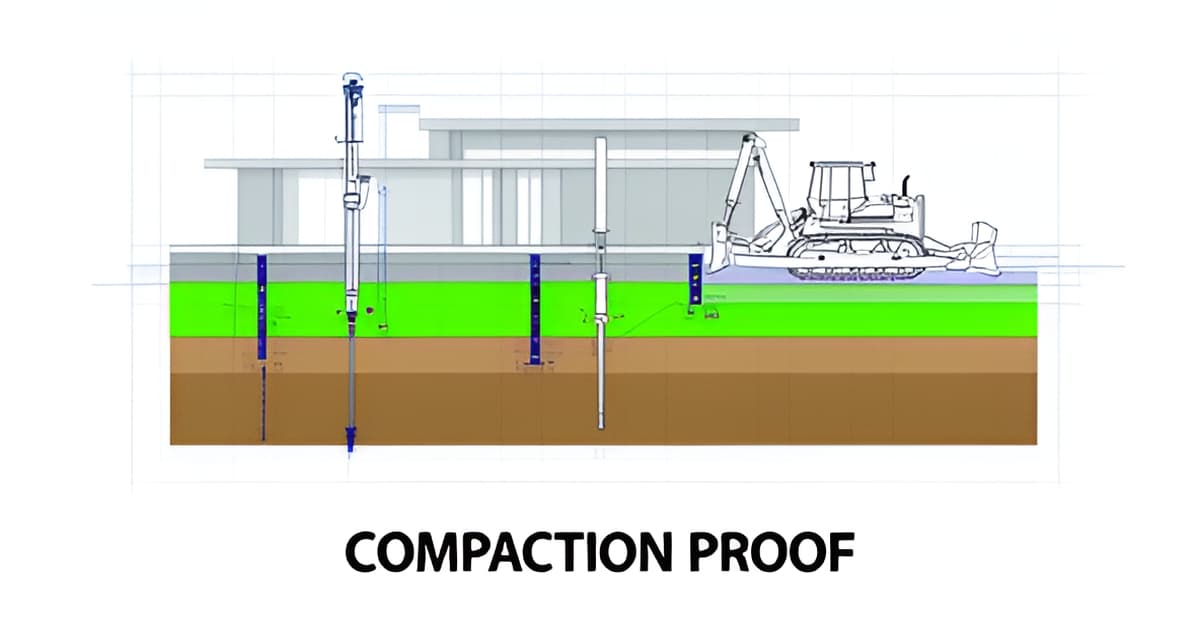
The stakes go beyond paperwork. Loose soil compresses under the weight of a new home, causing uneven settlement that cracks foundations and slabs and stresses framing. Properly done, the process removes unsuitable soils, then places engineered fill in controlled lifts that are moisture-conditioned and compacted, with density testing at various depths. On fire-damaged properties, geotechnical engineers commonly recommend a minimum of 5 feet of engineered re-compaction beneath the building pad, and most projects target 90% to 95% of maximum dry density. The exact numbers come from your project-specific geotechnical report — not a one-size-fits-all rule.
Here's the part many rebuilders miss: passed does not mean protected. A community rebuild guide describes the county inspection system as "woefully understaffed," citing a senior county inspector who described, off the record, "an unspoken expectation to be lenient and let things move forward, even when they might not otherwise pass." If proper soil testing doesn't happen before concrete is poured, problems may not surface until settlement, cracking, or seismic activity forces them into view.
So treat the documentation as your responsibility, not your contractor's:
- Request the formal compaction report, including moisture and density data, before footing inspection.
- Confirm testing occurred at every lift, not just at the end — skipped lifts create weak zones that settle unevenly.
- For imported fill, demand source information, clean-fill certification, and a geo firm's soil test report.
- Verify your builder's license and how they handle the soils report before signing anything.
That last point matters because fragmented teams cause real delays — one common failure is an architect who didn't know the soils report was still pending. The Altadena Builder Directory lists fire-rebuild specialists, custom home builders, and design-build firms whose licenses are verified against the California Contractors State License Board, with a free CSLB lookup tool you can use to check any California contractor yourself. And remember California's built-in protection: down payments are capped at 10% or $1,000, whichever is less.
Your foundation will only ever be as stable as the soil beneath it — and only as trustworthy as the records proving it was compacted right.
The Testing Process: From Soils Report to Footing Sign-Off
On an Altadena rebuild lot, the road from bare dirt to poured concrete runs through a strict sequence of documented tests — and skipping any step can stop the job cold. LA County Building and Safety inspectors often require proof of approved soil compaction before allowing foundation work to proceed, so understanding the sequence helps homeowners keep their rebuild on schedule.
The process begins with a licensed geotechnical engineer evaluating the site. On fire-damaged properties, debris removal equipment often disturbs existing soil conditions, leaving pads unsuitable for supporting a new structure without engineering review and corrective work. The engineer determines how much unsuitable soil must be removed down to suitable, undisturbed material — on many fire-damaged lots, geotechnical recommendations call for a minimum of 5 feet of engineered re-compaction beneath the proposed building pad.
Once over-excavation is complete, engineered fill goes back in controlled lifts, each moisture-conditioned and compacted with specialized equipment before the next lift is placed. Density testing at each stage verifies the soil meets the required criteria — commonly 90% to 95% of maximum dry density, measured against ASTM benchmarks such as the D1557 Modified Proctor and verified in the field with D6938 nuclear density testing. If a lift fails, it must be reworked and retested before work continues.
When fill work finishes, the geotechnical engineer issues a formal compaction report with moisture and density data. That documentation matters: inspectors do not accept verbal statements, and missing paperwork can delay foundation approval. Next comes footing excavation review, where the engineer verifies footing bottoms bear on approved material. Only after geotechnical approval and County sign-off can rebar be installed and concrete poured.
Homeowners should track the paper trail themselves rather than assume it is being handled. A community rebuild guide warns that the County inspection system is understaffed and lenient — "passed does not mean protected" — and problems from skipped soil testing may not surface until settlement, cracking, or seismic activity forces them into view. Before footing inspection, confirm you have:
- A geotechnical report and soils report cleared for permit
- Compaction records, including moisture and density reports from the geo firm
- For imported fill: source information, clean-fill certification, and geo firm soil testing
- Documented geotech footing review before rebar and concrete
Because delays often stem from fragmented teams — such as an architect who did not know the soils report was pending — it pays to ask builders upfront how they handle soils reports and compaction coordination. The Altadena Builder Directory lists fire-rebuild specialists and custom home builders whose licenses are verified against the California Contractors State License Board, including featured paid-placement listing JMB Builders LLC (CSLB #1103479), so you can confirm credentials before signing. Getting the testing sequence right the first time protects your foundation — and your timeline.
The Documents You Must Collect and Verify Yourself
Your foundation approval in Altadena doesn't hinge on the concrete pour — it hinges on a stack of paperwork that you, not your contractor, should be holding copies of. LA County Building and Safety inspectors often require proof of approved soil compaction before allowing foundation work to proceed, and missing documentation can delay the entire project (Centrepoint Construction).
Start with the geotechnical (soils) report. This document drives everything downstream: over-excavation depth, engineered fill specifications, and the foundation design itself. After a complete burn, foundations often cannot be reused, and a new foundation must be designed to the soils report (Bela Development). On fire-damaged properties, geotechnical engineers frequently recommend a minimum of 5 feet of engineered re-compaction beneath the building pad — though this is site-specific, so confirm what your own report says.
Next, collect the lift-by-lift testing records. Fill is placed in lifts, each compacted and tested before work continues, and a moisture and density report documents that each layer met the required criteria. Most California projects benchmark compaction at 90% to 95% of maximum dry density, verified through ASTM-standardized tests like the D1557 Proctor and D6938 nuclear density methods (Marshall Geotechnical). The final compaction report — signed by the geo firm — is what inspectors ask to see before footing sign-off.
If your project uses imported fill dirt, the documentation burden grows. Unverified fill import is a reported problem in Altadena, with contaminated soil sometimes buried under clean fill and new foundations. For any imported soil, require:
- Source or supplier information identifying where the dirt originated
- A clean fill certification
- Soil testing and a written report from a geo firm
The stakes are real. In one Los Angeles case, a building pad with more than 6 feet of imported fill failed nuclear density testing, forcing the contractor to rework the fill, re-test, and update the grading report before the city would approve it.
Here's the critical caveat: a passed inspection is not a guarantee. A community rebuild guide describes the County inspection system as understaffed and lenient, quoting a senior inspector's off-record admission of "an unspoken expectation to be lenient" — its summary: "Passed does not mean protected" (Beautiful Altadena). If proper soil testing doesn't happen before concrete is poured, problems may not surface until settlement, cracking, or seismic activity forces them into view.
Verify these records yourself, in writing. And vet who's managing them: ask any builder specifically how they handle the soils report, since fragmented teams are a common source of delays. Before you sign anything, confirm your contractor holds an active license — the free CSLB license-lookup tool from Altadena Builder Directory verifies any California contractor against California Contractors State License Board records, and every directory listing carries a verification seal once a license match is confirmed.
Separating Compaction from Contamination Testing
Two soil tests dominate every Altadena rebuild conversation right now, and confusing them can leave your home either structurally unsound or environmentally unsafe. Compaction testing asks whether your soil can carry a foundation. Lead testing asks whether that soil is safe to live on. You need to treat them as separate workstreams with separate documentation.
The Eaton Fire made lead contamination a real concern for Altadena lots. LA County Public Health launched a free residential soil lead testing program on May 22, 2025, targeting roughly 26,000 homes with results delivered in 7–10 business days. The County defines high-lead areas as those with average lead concentrations at or above 80 mg/kg, and tracking of the rebuilding effort found lead levels dropped after debris removal but some properties still exceeded acceptable residential thresholds.
A passing compaction report tells you nothing about lead, and a clean lead result tells you nothing about density. Community testing underscores the point: of 50 intact, remedified homes tested by a residents' group, six of ten sampled properties remained uninhabitable due to elevated lead or asbestos. None of that would appear in a nuclear density test.
Where the two concerns converge is imported fill. Unverified fill dirt import is a reported problem in Altadena, with contaminated soil buried under clean fill and new foundations, according to the Beautiful Altadena rebuild guide. That makes documentation for any imported soil non-negotiable:
- Source or supplier information for the fill
- Clean fill certification
- Soil testing and a report from a licensed geo firm
- Moisture and density data confirming proper compaction
Clean-fill certification matters twice over. Environmentally, it's your evidence that imported soil isn't bringing lead onto your lot. Structurally, a documented fill source supports the compaction record your County inspector will want before approving footings — one Los Angeles case study describes a pad with more than 6 feet of imported fill that failed nuclear density testing and had to be reworked, re-tested, and re-reported before approval.
Because a lenient, understaffed inspection environment means "passed" doesn't guarantee "protected," verify this paperwork yourself rather than assuming your contractor handled it. The Altadena Builder Directory's free CSLB license-lookup tool lets you confirm any California contractor's credentials before you rely on their paperwork — every listing in the registry is license-verified against CSLB, so you can choose a builder who takes both sides of your soil story seriously.
How to Vet a Builder Who Handles Soils Work Right
The soils report can make or break your rebuild timeline — and the builder you sign with determines whether it becomes a formality or a six-month stall. The good news: you can screen for this in a single conversation before any contract is signed.
Ask one direct question first: "How do you manage the soils report?" Design-build professionals note that rebuild delays frequently trace back to fragmented teams — an architect who didn't know the soils report was pending, a geotech engineer hired late, or a contractor who assumed someone else ordered the testing. A builder who handles soils work right will answer immediately, name their geotechnical engineer, and explain how the report drives the foundation design.
Then confirm two operational habits. First, testing must be scheduled into the timeline, not squeezed in after the fact — geotechnical practitioners emphasize that lift-by-lift testing gates every stage, and wet weather can force re-testing, so a builder with no buffer in the schedule is setting you up for delays. Second, ask how they keep records. LA County inspectors often require proof of approved soil compaction — density results, moisture reports, and certifications — before approving footing inspections, and missing paperwork stalls foundation approval.
That documentation burden is heavier than many homeowners realize. Local reporting on the county inspection system describes it as understaffed and lenient, with the blunt warning that "passed does not mean protected" — meaning you, not the inspector, are the final check on your own build. Before signing, request copies of:
- The project-specific geotechnical report and its compaction requirements
- Density and moisture testing results for every lift of engineered fill
- Clean-fill certification and source documentation for any imported soil
Finally, verify the license before money changes hands. The Altadena Builder Directory offers a free CSLB license-lookup tool that lets you confirm any California contractor's standing in minutes, with license data attributed directly to the California Contractors State License Board. And know your legal protection: California caps contractor down payments at 10% or $1,000, whichever is less — a builder demanding more up front is violating state law and telling you something about how they run projects.
A builder who answers the soils question crisply, schedules testing properly, and keeps organized records is one who treats your foundation as engineering rather than hope. Verify their license, keep your own copies of every report, and sign with confidence.
Frequently Asked Questions
Do I really need soil compaction testing before rebuilding my Altadena home after the fire?
How deep does the soil need to be re-compacted on a fire-damaged lot?
What documents should I personally collect before my footing inspection?
If the county inspector passed my soil work, am I protected?
Is lead testing the same thing as soil compaction testing?
How do I know if my builder will handle the soils report and compaction work properly?
The Ground Rules: Your Soil Paperwork, Your Responsibility
Your Altadena rebuild will rise or settle on the soil beneath it — and on the paper trail proving that soil was compacted right. The path is clear: a licensed geotechnical engineer evaluates your lot, engineered fill goes in tested lifts targeting 90% to 95% of maximum dry density, and a signed compaction report lands in your hands before any footing inspection. But remember the community guide's warning that "passed does not mean protected" — with inspections understaffed and lenient, you are the final check on your own build. Keep your own copies of every density and moisture report, demand clean-fill certification for any imported dirt, and confirm testing happened at every lift, not just the last one. Then make sure the person coordinating all of it is qualified: ask any builder directly how they manage the soils report, and verify their license before signing anything. The Altadena rebuild guide notes only a fraction of the nearly 6,000 damaged properties have completed rebuilding — the homeowners moving fastest are the ones who got their documentation right the first time. Browse the Altadena Builder Directory's license-verified listings or run any California contractor through the free CSLB lookup tool before you commit.