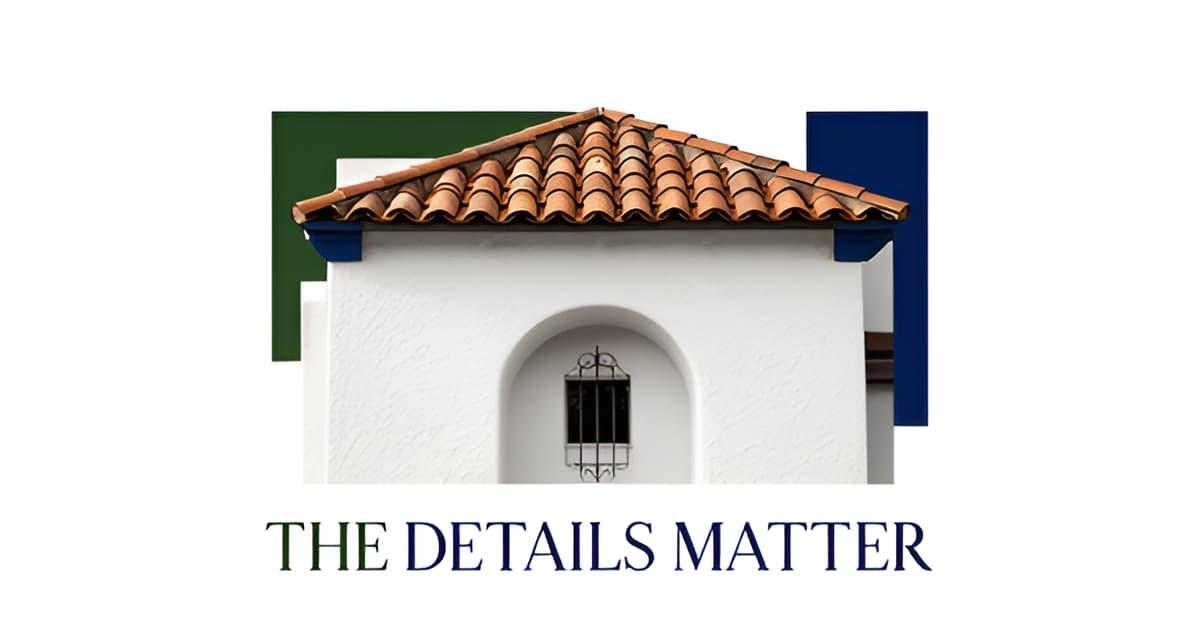
Spanish Revival Home Builders: Getting the Details Right
Key Facts
- The roof — low pitch, minimal eave overhang, varied clay tiles — is the single detail separating authentic Spanish Revival from generic Mediterranean.
- Petite sandcast tiles tapered 6.75" to 6" over 17.5 inches create a more historic profile than standard 20-inch barrel tiles.
- An 80/20 blend of Old Hacienda and Cafe Antigua clay tiles creates the "aged look" buyers pay for.
- "The value lives in the details, not the square footage," says 24-year architectural real estate specialist Debbie Pisaro.
- Mixing Mission Revival with Spanish Revival can create "disjointed additions that reduce resale value," warns Los Angeles builder Homefront Build.
- Spanish Colonial Revival debuted at the 1915 Panama-California Exposition and peaked in popularity between 1915 and 1931.
- Authentic Revival arches are wider and lower than the tall, pointed arches builders tend to default to.
Why Authentic Spanish Revival Details Make or Break Your Home's Value
Two Spanish homes on the same block can sell for very different prices — and the difference often comes down to authenticity alone, according to real estate specialists who specialize in the style. If you're rebuilding or remodeling in Altadena, that gap is exactly where your budget lives or dies.
The most common value-killer is the builder-grade "Mediterranean" imitation: machine-perfect tiles, oversized eaves, and details borrowed from everywhere and nowhere. Rendering studios that specialize in Revival projects report that the roof is the single detail that separates authentic Spanish Revival from generic Mediterranean — a genuinely low pitch, minimal eave overhang, and clay tiles with slight color variation that "read as hand-laid rather than machine-perfect" (Maverick Frame).
The second trap is style confusion. Mission Revival and Spanish Revival are frequently mistaken for one another, and mixing them produces what one Los Angeles builder calls "disjointed additions that reduce resale value" (Homefront Build). A builder who can't articulate the difference between the two styles is a red flag before the first tile is ordered.
Where the value actually lives is captured bluntly by Debbie Pisaro, a 24-year architectural real estate specialist: "The value lives in the details, not the square footage." She reports she can identify a true Spanish house by its plaster and tile alone, and that original features — Batchelder fireplaces, exposed beams, courtyard fountains — are what move the price (coastline840.com).
What authentic detailing looks like in practice:
- Petite sandcast tiles — tapered 6.75" to 6", 17.5" length — rather than standard 20" barrel tiles, for a more historic profile (Jeff Doubét's Santa Barbara guidance).
- Color blending, such as an 80/20 mix of two clay tile blends, to create the "aged look" buyers pay for.
- Staggered tile courses — extra labor, but a "timeless, handcrafted appearance that will increase the perceived value of your home."
- Stucco that is "not too textured or smooth," with Santa Barbara-style plaster shadow lines radiating from the roof tiles.
- Arches that are wider and lower than the tall, pointed arches builders tend to default to.
For Altadena homeowners rebuilding after fire or remodeling an older Revival home, these decisions are permanent. Pisaro's advice applies directly: restore the character and modernize only the systems — uncovering an original detail often returns more than a glossy kitchen. That means vetting builders on tile craft and plaster standards from day one, and verifying credentials before signing. The Altadena Builder Directory lets you check any California contractor's license against CSLB records for free, so the team you hire has both the paperwork and the craft to get the details right the first time.
The Four Details That Separate Authentic Revival From Imitation
Two Spanish homes on the same block can sell for very different prices on authenticity alone, and real estate specialists confirm the value lives in the details, not the square footage. The good news: those details are learnable. Here are the four that matter most.
1. The roof. A rendering studio specializing in Revival projects identifies the roof as the single detail separating authentic work from generic "Mediterranean": a genuinely low pitch, minimal eave overhang, and clay tiles with slight color variation that read as hand-laid rather than machine-perfect. Architectural references confirm the canonical form — a low-pitched red-tiled roof with little or no eave overhang.
Tile specifics matter here. Santa Barbara designer Jeff Doubét recommends petite sandcast tiles — such as the Redland Baja Mission Sandcast 4300 series, tapered 6.75" to 6" with a 17.5" length — over standard barrel tiles for a more historic appearance. He also blends colors, typically 80% Old Hacienda Sandcast with 20% Cafe Antigua, and staggers tile courses to achieve what he calls a timeless, handcrafted appearance that increases a home's perceived value.
2. Arch proportion. Revival arches are wider and lower than the tall, pointed arches builders tend to default to. Round-arched openings over doors, windows, and porches are a defining feature of the style, and getting the proportions wrong instantly signals imitation.
3. Stucco finish. Authentic stucco is not too textured or smooth — a middle ground many production builders miss in both directions. The original thick stucco walls weren't cosmetic; they kept houses cool, which is why the finish texture carries so much visual weight.
4. Plaster shadow lines. The signature Santa Barbara detail integrates roof and wall: subtle shadow lines in the stucco radiating down from individual clay roof tiles. Achieving this requires a multi-step process — scratch coat, roofers set the gable-end tiles, then the brown coat is applied up to the tiles with protective tape. Few builders bother, which is exactly why it reads as authentic.
When vetting builders, ask about specifics:
- Tile staggering, color blending, and booster courses at the eave
- Attachment systems suited to seismic regions, such as twisted wire
- Whether they can execute the Santa Barbara shadow-line plaster process
- Whether they distinguish Spanish Revival from Mission Revival — mixing the two can create disjointed additions that reduce resale value
The underlying truth: expert installation matters more than materials alone. As Doubét puts it, hiring a roofing team that knows the idiosyncrasies of laying these particular clay tiles sits at the top of his list for success. Before you commit, verify any California contractor's license through the free CSLB lookup tool on the Altadena Builder Directory — craftsmanship claims are only as reliable as the license behind them.
Don't Mix Styles: Mission Revival vs. Spanish Revival
Two Spanish homes on the same block can sell for very different prices on authenticity alone — and nothing undermines authenticity faster than mixing two revival styles that look similar but aren't. Mission Revival and Spanish Revival are often mistaken for one another, even by contractors. The consequences are more than aesthetic: blending the two can produce "disjointed additions that reduce resale value," according to Los Angeles builder Homefront Build.
The confusion is understandable. Both styles draw on the same Spanish colonial heritage, use white stucco, and feature clay tile roofs. But Spanish Revival — which peaked between roughly 1915 and 1931, debuting at the 1915 Panama-California Exposition in San Diego — is the richer, more decorative of the two. Mission Revival is plainer, drawing specifically on the austere forms of California's mission churches.
When a builder doesn't know the difference, the damage shows up in the details. A Mission-style parapet grafted onto a Spanish Revival addition, or generic "Mediterranean" arches substituted for correct ones, breaks the design language of the whole house. And as one architectural real estate specialist puts it, "the value lives in the details, not the square footage."
Before signing a contract, inspect the builder's portfolio for these markers:
- Roof pitch and overhang — a genuinely low pitch with minimal eave overhang, not a steep generic roof with barrel tile bolted on
- Arch proportion — Revival arches are wider and lower than the tall, pointed arches builders tend to default to
- Tile craft — staggered courses and blended tile colors that read as hand-laid rather than machine-perfect
- Stucco finish — not too textured, not too smooth, consistent across the whole structure
- Consistency — additions that match the original home's proportions, materials, and window shapes exactly
Ask prospective builders directly whether they can articulate the Mission-versus-Spanish distinction. A contractor who shrugs at the question is telling you something. One who explains why a Spanish Revival arch sits lower, or why tile color blending matters, has the fluency your project needs.
When vetting candidates in the Altadena Builder Directory, pair that portfolio review with the free CSLB license-lookup tool — craftsmanship knowledge and a verified California license together tell you far more than a polished website ever will.
How to Vet a Builder Who Can Actually Execute These Details
Most contractors can describe Spanish Revival style. Far fewer can build it — and the difference shows up in resale, because two Spanish homes on the same block can sell for very different prices on authenticity alone. The right interview questions separate the two quickly.
Start with the roof, the single most important authenticity marker. Ask how the builder handles tile staggering and color blending — for example, whether they mix tile colors to achieve the "aged look," as Santa Barbara designer Jeff Doubét describes, since blending "enhances the three-dimensional aesthetic of your roof" (Creating Spanish Style Homes). Ask about booster courses too: authentic first courses use pan tiles set in mortar extending 2–3 inches over the eave edge, with 3-inch booster tiles and 14.5-inch starters.
Then probe the details that expose a builder's real experience:
- Wire attachment: In earthquake country, clay tiles should be secured with twisted wire attachment systems, not just mortar.
- Shadow-line plaster: Can they execute the multi-step scratch coat → gable tile → brown coat sequence that produces shadow lines radiating from each roof tile?
- Arch proportions: Revival arches are wider and lower than the tall, pointed arches builders default to (Maverick Frame).
- Style literacy: Mixing Mission and Spanish Revival can create "disjointed additions that reduce resale value" (Homefront Build).
A builder who answers these fluently has done this work before. One who changes the subject to "Mediterranean" finishes has not. As Doubét puts it, hiring an expert team who knows the idiosyncrasies of these clay tiles is "at the top of my list for success."
Once the technical interview passes, verify the paperwork. Use the free CSLB license-lookup tool to confirm any California contractor's license before signing — it takes minutes and costs nothing. The Altadena Builder Directory makes this easier: every listing is license-verified against the California Contractors State License Board, and listings display a verification seal once a license match is confirmed. Ratings come only from real, attributed public sources, and any featured placement — such as JMB Builders LLC (CSLB #1103479) — is clearly labeled as paid.
Craft questions first, license verification second. A contractor needs both to execute a Spanish Revival home that reads as hand-laid rather than machine-perfect.
Frequently Asked Questions
What's the difference between Mission Revival and Spanish Revival, and does mixing them really matter?
Which details actually add the most value to a Spanish Revival home?
How can I tell an authentic Spanish Revival roof from a generic Mediterranean one?
What should I ask a builder to make sure they can actually execute Spanish Revival details?
What kind of roof tiles should I use for a historic Santa Barbara-style look?
How do I verify a Spanish Revival builder is legitimately licensed before signing?
Where the Value Lives: Building It Right the First Time
Two Spanish homes on the same block can sell for very different prices — and as real estate specialists confirm, the difference comes down to authenticity alone. The roof is the tell: genuinely low pitch, minimal eave overhang, and hand-laid clay tiles with staggered, color-blended courses. Add correct arch proportions, stucco that's neither too textured nor too smooth, and Santa Barbara shadow-line plaster, and you have a home that reads as Revival rather than generic Mediterranean. Just as important: never mix Mission and Spanish Revival, because disjointed additions directly reduce resale value. Your next steps are practical — interview builders on tile staggering, booster courses, and wire attachment systems; confirm they can articulate the Mission-versus-Spanish distinction; then verify every candidate's license. The Altadena Builder Directory makes that final step easy with a free CSLB license-lookup tool, and every listing carries a verification seal once confirmed. Browse the directory, run the checks, and hire a builder who gets the details right the first time.