WUI Fire Code Requirements for Rebuilding in Altadena
Key Facts
- Only 23% of significantly damaged Altadena homes sit in designated very-high fire hazard zones, per county rebuilding data.
- The Eaton Fire destroyed 9,414 structures across 14,021 acres, making it California's second most destructive wildfire.
- Homes built to Chapter 7A standards were more than three times as likely to survive the 2018 Camp Fire, post-fire analysis found.
- Homes built to Chapter 7A are 40% more likely to survive a wildfire, a study cited by NPR found.
- FEMA projects California's wildfire building codes could save $24 billion in single-family home damages over 75 years.
- WUI code compliance typically adds only a few thousand dollars to a rebuild, according to NPR reporting.
- Embers can travel more than a mile on the wind, LA County guidance notes, entering through gaps as small as a dime.
The Altadena Rebuilding Puzzle: Most Fire Survivors Aren't Legally Required to Harden Their Homes
The Eaton Fire destroyed 9,414 structures and damaged 1,074 more across its 14,021-acre footprint, making it the second most destructive wildfire in California history. Yet here is the contradiction at the heart of Altadena's rebuilding effort: only 23% of significantly damaged homes sit in designated very-high fire hazard severity zones, according to an analysis of county rebuilding data — meaning most rebuilders face no mandatory wildfire-hardening requirements at all.
The gap is geographic and stark. West Altadena, hit hardest by the Eaton Fire, has only 19% of properties in very-high hazard zones versus 33% in East Altadena — despite roughly twice the rate of single-family home destruction. NPR reporting on the new hazard maps found more than 7,800 buildings burned in the Eaton Fire fall outside the zones where fire-resistant construction is legally required.
LA County Fire Deputy Chief Albert Yanagisawa put it plainly: "I thought the very high fire severity zones were really going to reach deep, deep down into Altadena, and they haven't." County Regional Planning Director Amy Bodek says the county will be "strongly encouraging" voluntary hardening even where it isn't mandated.
Three regulatory facts every Altadena rebuilder needs to know:
- Effective January 1, 2026, WUI provisions moved from CBC Chapter 7A into the new California Wildland-Urban Interface Code (CWUIC), which LA County has adopted for designated hazard zones.
- Altadena is unincorporated LA County — permits, fee waivers, and rebuild rules flow through LA County Public Works and Regional Planning, not the City of Pasadena.
- Executive Order N-29-25 suspends the 2025 Building Standards Code and rooftop solar requirements for fire rebuilds, but WUI exterior hardening requirements still apply where designated zones exist, per rebuild guidance for the Eaton Fire area.
The voluntary-compliance math is compelling. Homes built to Chapter 7A standards were more than three times as likely to survive the 2018 Camp Fire, and code-level hardening typically costs only a few thousand dollars — overall construction costs can be roughly the same as a standard house.
That makes contractor selection consequential. Altadena Builder Directory maintains a free registry of fire-rebuild specialists and custom home builders serving the area, with every listing license-verified against the California Contractors State License Board — a practical first step for owners navigating these rules.
Whether your lot sits inside a hazard zone or not, the evidence argues for building to CWUIC standards anyway. As Headwaters Economics researcher Kimiko Barrett warns, "This will not be the only time that L.A. experiences a catastrophic wildfire."
Why You Should Build to WUI Standards Anyway: The Survival and Cost Evidence
The Eaton Fire didn't check the hazard zone maps before it burned. Only 23% of significantly damaged Altadena-area homes sit in a designated "very high" fire hazard severity zone, which means most rebuilders face no legal mandate to harden their new homes. That regulatory gap makes the survival data worth a hard look.
Homes built after 2008 under Chapter 7A standards were more than three times as likely to survive the 2018 Camp Fire than homes built before 1997, according to post-fire analysis by the Western Fire Chiefs Association. A separate study cited by NPR found homes built to Chapter 7A are 40% more likely to survive a wildfire overall.
The financial case scales up, too. FEMA analysis projects California's wildfire building codes could save $24 billion in single-family home damages over 75 years. Kimiko Barrett of Headwaters Economics puts it bluntly: "If homes are being rebuilt, they should be built with wildfire in mind... This will not be the only time that L.A. experiences a catastrophic wildfire."
The most common reason homeowners skip hardening is cost — but the numbers don't support the fear. A Headwaters Economics/IBHS study found code compliance adds only a few thousand dollars to a build, and overall costs "can be roughly the same as a standard house." Premium upgrades like metal roofing can push costs up to 13% higher, but the core package — Class A roofing, ember-resistant vents, tempered glazing — is a rounding error on a $750,000 rebuild.
For context on what's at stake, the average Altadena insurance payout was $607,000 against a typical rebuild cost exceeding $750,000 — a shortfall of more than $140,000. Protecting that investment with a few thousand dollars of hardening is one of the better risk trades available to a rebuilder.
County officials aren't hiding behind the zone maps. Amy Bodek, LA County's Regional Planning director, told NPR: "Even if they're not going to have to comply, we're going to be strongly encouraging it for future resiliency." Supervisor Kathryn Barger has committed to exploring grant opportunities to offset hardening costs for homeowners who can't afford them.
If you're rebuilding outside a designated hazard zone, the practical takeaway is simple: treat WUI standards as your baseline anyway, and work with a builder who knows the CWUIC requirements cold. The Altadena Builder Directory lists fire-rebuild specialists — every one license-verified against the CSLB — so you can confirm credentials before signing anything.
The Seven Hardening Requirements Every Altadena Rebuild Should Meet
Embers, not walls of flame, destroy most homes in wildland-urban-interface fires — and they can travel more than a mile on the wind, entering through vents, chimneys, and gaps as small as a dime. That reality drives every hardening requirement in CWUIC Chapter 5, which Los Angeles County enforces for rebuilds in designated fire hazard severity zones. Homes built to the predecessor standard, Chapter 7A, were more than three times as likely to survive the 2018 Camp Fire, and a study cited by NPR found they are 40% more likely to survive wildfires overall.
Here are the seven requirements every Altadena rebuild should meet, whether or not your parcel sits in a mapped hazard zone.
1. Class A roof assembly (§504.2). The roof is the largest ember-catchment surface on the house. Use coverings tested to ASTM E108 or UL 790 — composition shingles, standing seam metal, clay, concrete, or flat/barrel tile all qualify under LA County's resilient rebuilding guidance.
2. Ember-resistant vents (§504.10). This is the most commonly missed detail. Vents must be listed by the State Fire Marshal or tested to ASTM E2886, with corrosion-resistant noncombustible mesh sized between 1/16-inch minimum and 1/8-inch maximum — small enough to block embers, large enough to maintain attic airflow.
3. Ignition-resistant exterior walls (§504.5.2). Walls must be noncombustible, carry an ignition-resistant material label, or use fire-retardant-treated wood.
4. Tempered or multilayered glazing (§504.8). Single-pane glass is a known failure point — a 2017 post-fire investigation found it shattered within minutes. LA County recommends double- or triple-paned windows with tempered glass.
5. Enclosed eaves (§504.3). Open eaves expose vulnerable soffits to ember intrusion. Enclosures need noncombustible or ignition-resistant material, a one-hour rating, or 2-inch nominal lumber.
6. Noncombustible gutters (§504.4). Vinyl gutters melt and drop burning debris at the foundation. Metal gutters with debris guards are the standard.
7. Decking standards (§504.7.3.2). Attached decking must be tested to ASTM E2632/E2726 or built from ignition-resistant or noncombustible material.
The paperwork matters as much as the products. Inspectors typically want to see:
- CAL FIRE Building Materials Listing (BML) numbers for vents and materials
- ICC-ES evaluation reports where applicable
- Manufacturer data sheets and ASTM E2886/E2912 test reports for vents
Skipping this documentation is a common cause of inspection delays — and with median permit times already running 155 days, avoidable holdups hurt. The good news: per a Headwaters Economics/IBHS study, full code compliance typically costs only a few thousand dollars and can be roughly the same as a standard build. When hiring a fire-rebuild specialist, verify their CSLB license first — the Altadena Builder Directory offers a free license-lookup tool, and every listing in the registry is license-verified before it appears.
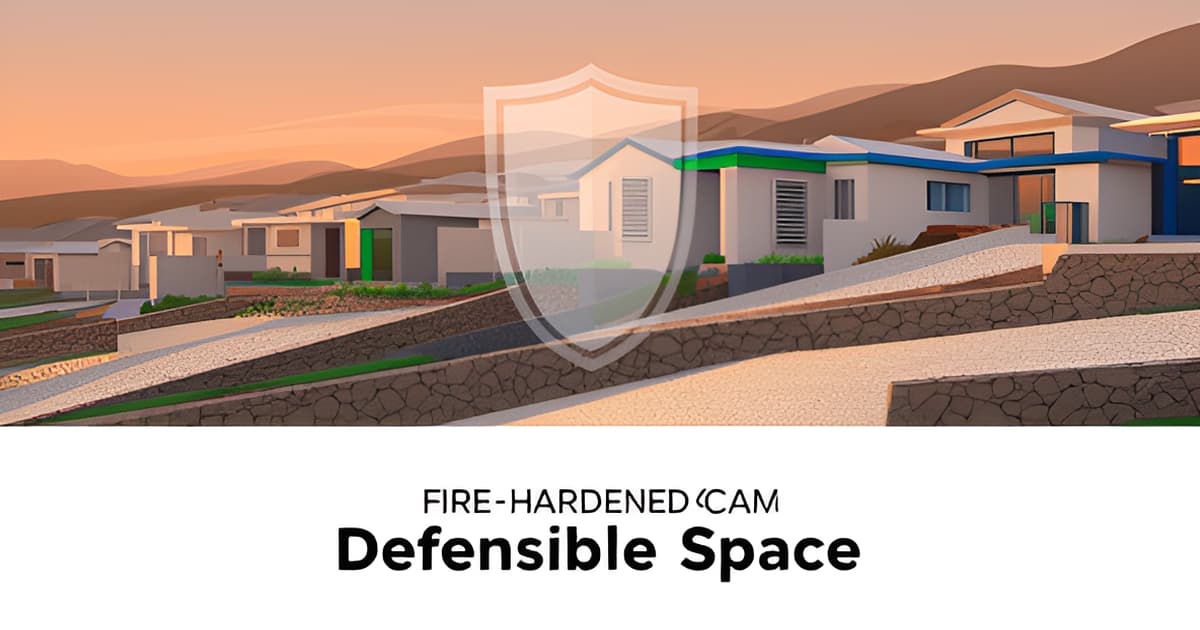
Defensible Space and Zone 0: The Rules in Flux You Should Follow Today
Embers can travel more than a mile on the wind, and research shows they are the leading cause of home ignitions in wildland-urban fires. That reality sits behind two defensible space rules every Altadena rebuilder needs to understand: the long-established 100-foot requirement and the newer, still-evolving 5-foot ember-resistant buffer known as Zone 0.
The 100-foot standard is settled law. Under PRC §4291, California requires defensible space in two parts: Zone 1 (0–30 feet from the structure, kept "lean, clean and green") and Zone 2 (30–100 feet, focused on fuel reduction). The new California Wildland-Urban Interface Code mandates defensible space for all structures, new and existing, per the Western Fire Chiefs Association.
Zone 0 — the first 5 feet immediately around your home — is where the rules get murky. Sources genuinely disagree on enforceability timing. One rebuild analysis states the AB 3074 ember-resistant zone is not enforceable as of July 2026, with a Board of Forestry draft proposing a three-tier framework. WFCA, citing Cal Fire, reports a February 2026 addition requiring new buildings in Very High Fire Severity zones to comply within a year. We won't pretend to resolve that dispute here.
What matters practically: LA County's own resilient rebuilding guidance already instructs owners to clear the first 5 feet — no vegetation, no mulch, noncombustible ground cover only, plus at least 6 inches of noncombustible material on exterior walls measured from the ground. Treat Zone 0 as a do-it-now investment, not a future obligation:
- Remove all dead plants, vegetation, and burnable materials within 5 feet of the structure
- Replace bark mulch with gravel, pavers, or other noncombustible ground cover
- Extend 6+ inches of noncombustible material up exterior walls
- Design landscaping now so future enforcement requires no costly rework
The evidence for acting early is strong. Homes built to Chapter 7A standards were more than three times as likely to survive the 2018 Camp Fire than pre-1997 construction, per WFCA. Zone 0 targets the specific threat: embers landing in bark mulch or dry vegetation right against your walls.
One more point LA County makes explicitly: hardening and defensible space become exponentially more effective at neighborhood scale. A single hardened home surrounded by unmitigated lots remains vulnerable. Talk to your neighbors, and coordinate where you can — the directory at Altadena Builder Directory can help you find fire-rebuild specialists familiar with these standards, and its free CSLB license-lookup tool lets you verify any contractor's credentials before they touch your defensible space plan.
Your Rebuild Roadmap: Permits, Fee Waivers, and Hiring a Verified Contractor
Navigating the rebuild process in Altadena moves faster when you know exactly where to go and what you're entitled to. Since Altadena is unincorporated, every permit, fee waiver, and rebuild rule flows through LA County rather than Pasadena, and the county has set up dedicated resources to streamline the path back home.
Start at the One-Stop Permit Center at 464 W Woodbury Rd, Suite 210, in Altadena, where six agencies are co-located under one roof, or file online through the EPIC-LA portal, per the county rebuild guide. Before you apply, know what you qualify for:
- Owner-occupant fee waivers. LA County approved waived and refunded permit fees on June 17, 2025, with no application deadline. Trusts qualify if the beneficial owner lived in the home; LLCs do not.
- Like-for-like expansion allowance. You can increase your floor area, height, or footprint by up to 10% or 200 square feet — whichever is greater — without triggering a full redesign.
- Suspended code provisions. Executive Order N-29-25 suspends certain 2025 code requirements for Eaton Fire rebuilds, though WUI exterior hardening still applies per local enforcement.
Set realistic expectations on timing. The median permit timeline runs 155 days, but only 32 of those days are county review — roughly 122 days come from applicant-caused delays, according to permitting analysis. The county commits to a 10-business-day first review and 5-day subsequent reviews, so the real bottleneck is the speed and quality of your design and permit package, not the government.
That makes your contractor choice the single biggest factor in how quickly you rebuild. Before hiring a fire-rebuild specialist, verify their CSLB license — the Altadena Builder Directory offers a free license-lookup tool that checks any California contractor against California Contractors State License Board records, and listings display a verification seal once a license match is confirmed. You can also browse license-verified Altadena builders directly in the registry, where ratings come only from real attributed public sources and any paid placement is clearly labeled.
A verified, experienced builder helps you assemble a complete package the first time — CAL FIRE Building Materials Listing numbers, ICC-ES reports, and ASTM test documentation for your vents and glazing — so your 32-day county review doesn't stretch into months of resubmittals. Verify first, then build.
Frequently Asked Questions
Do I legally have to build to wildfire-resistant standards when rebuilding in Altadena?
What does WUI code compliance actually cost on a rebuild?
What are the key fire-hardening requirements for my new home?
Is the 5-foot Zone 0 rule around my house actually required yet?
Do I go through Pasadena or LA County for my rebuild permits?
Why is my permit taking so long, and how do I speed it up?
Build Like the Map Doesn't Matter
The Eaton Fire burned where the hazard maps said it shouldn't, and that's the lesson every Altadena rebuilder should carry forward. Whether your lot sits in a designated zone or not, the evidence is unambiguous: homes built to Chapter 7A standards were more than three times as likely to survive the Camp Fire, and full code compliance typically adds only a few thousand dollars to a $750,000 rebuild. Treat the seven CWUIC hardening requirements — Class A roofing, ember-resistant vents, tempered glazing, and the rest — as your baseline, clear your Zone 0 buffer now, and file through the One-Stop Permit Center with a complete documentation package to keep your county review at 32 days instead of 155. Your contractor choice is the single biggest variable in both speed and survival. Before signing anything, browse the Altadena Builder Directory's free registry of fire-rebuild specialists — every listing license-verified against the CSLB — and use the free license-lookup tool to confirm credentials. Verify first, then build. Your future self — and your neighborhood — will thank you.